
Last updated November 3, 2026
 Wrought iron
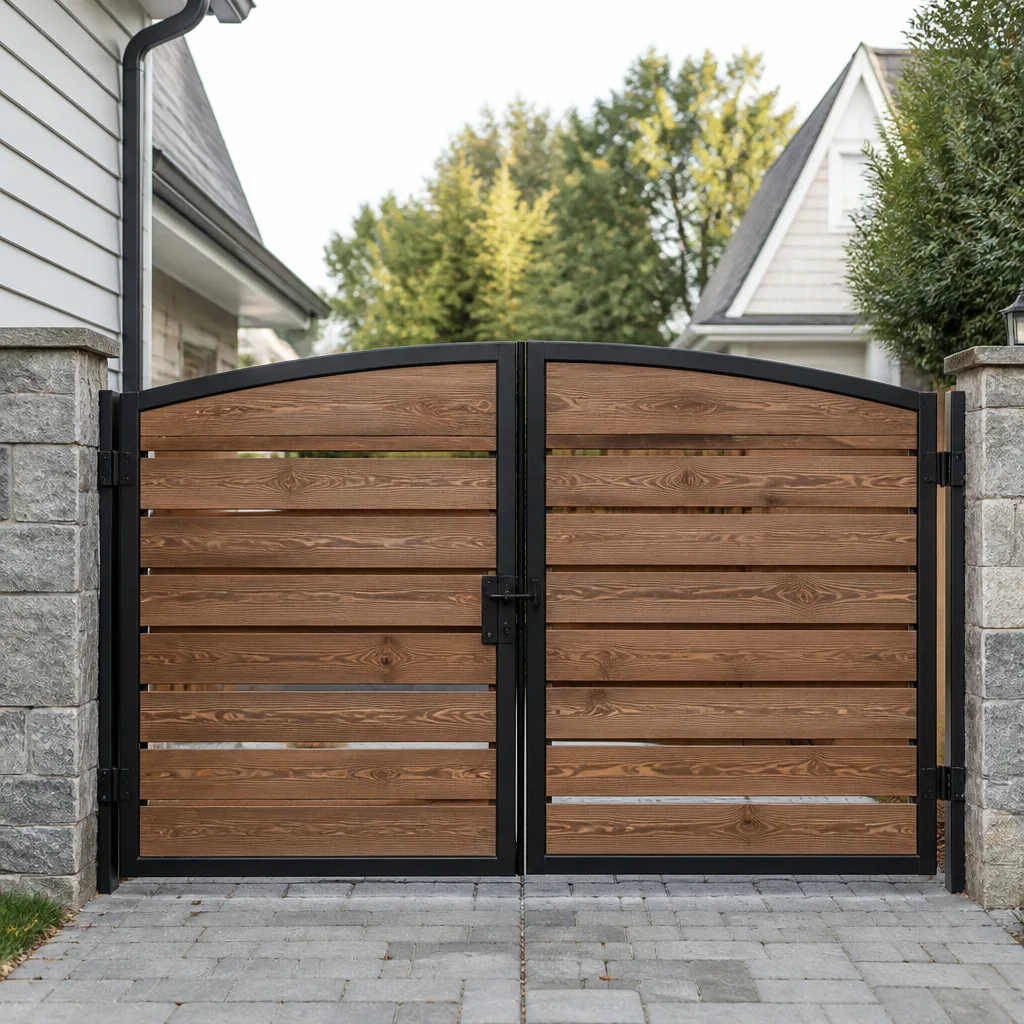 Wood & steel frame
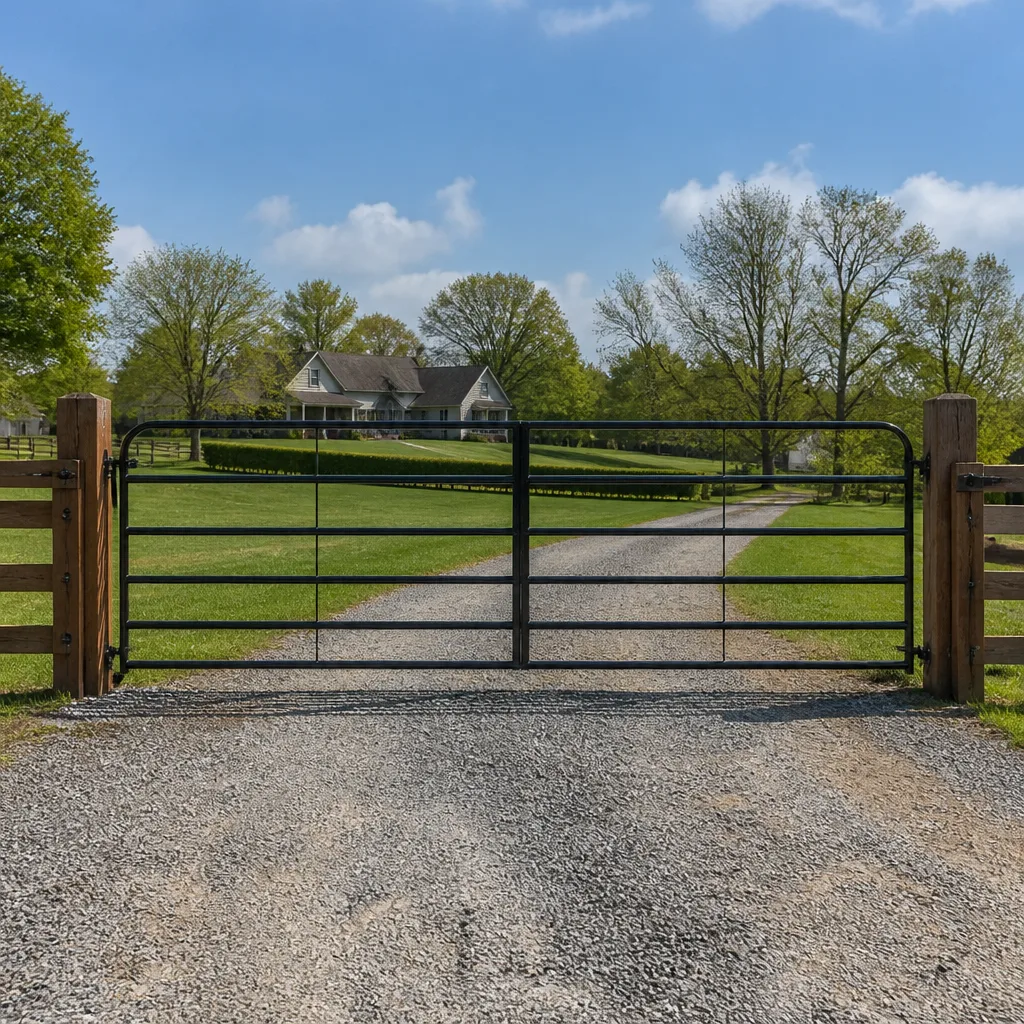 Farm & ranch
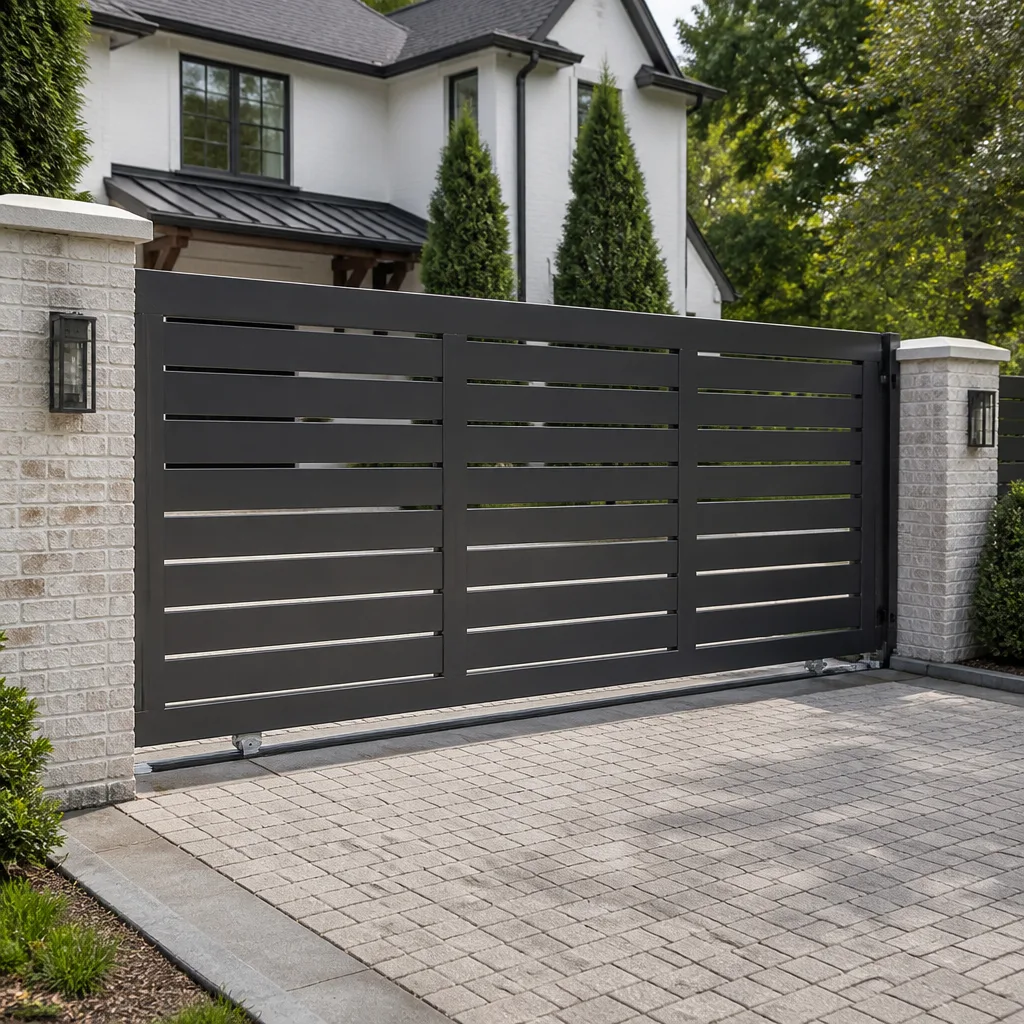 Sliding driveway gates
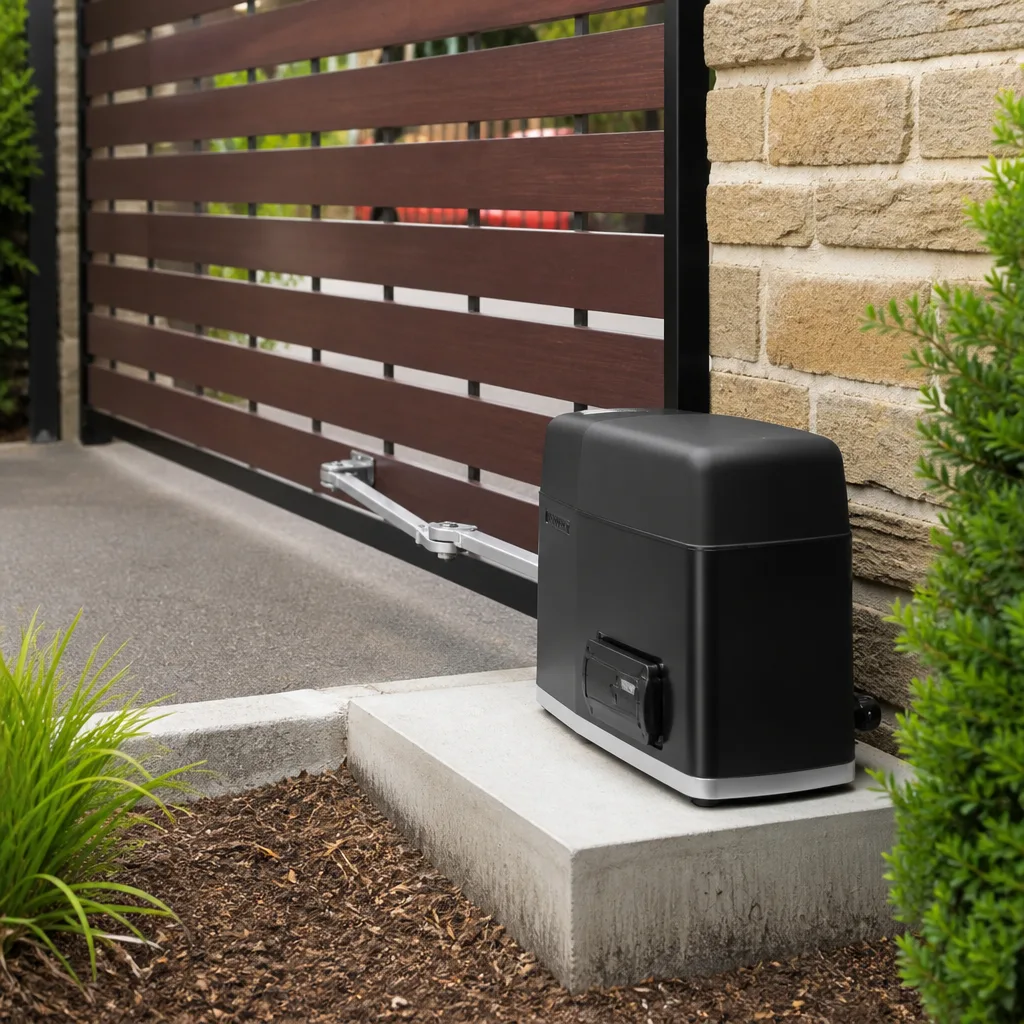 LiftMaster operators
Free on-site gate assessment - hinges, posts, and your LiftMaster or Nice gate operator checked before anything is quoted
The assessment is free and the quote is the invoice.
Get your free estimateThe Complete Gate Repair Guide for Hemet Homeowners
Most gate failures in the Inland Empire don’t start with the motor. They start at the hinge post, months earlier, because alkali soil in the San Jacinto Valley accelerates base corrosion at a rate that coastal guides never account for. Hemet’s combination of 100-degree summer days, Santa Ana wind gusts, and mineral-heavy groundwater creates a distinct damage pattern in gate systems – one that shows up faster here than in manufacturer timelines developed in milder climates. This guide maps that local damage timeline so you know what to expect before failure happens, not after. You’ll learn how Hemet’s specific conditions stress each component, which repairs you can safely handle yourself, and which ones need a specialist who knows the brand on your gate. We’ve spent years servicing Gate Repair in Hemet systems, and what follows is what we’d tell a neighbor over the fence.
Quick Answer
Gate repair in Hemet, CA typically starts with a $75 – $150 diagnostic visit, with most common repairs – hinge replacement, sensor realignment, capacitor swaps – running $150 – $400 including parts and labor. Because Hemet’s heat and alkaline soil accelerate wear on hinges, posts, and operator electronics, the cheapest long-term strategy is catching corrosion early rather than waiting for a gate to sag, bind, or stop responding entirely. Full gate installation in Hemet generally ranges from $1,800 – $6,500 depending on gate type, operator brand, and whether you’re automating an existing manual gate. For an exact assessment of your gate, call (866) 321-6910 – estimates are free.
Styles & brands we work with
- Wrought iron
- Wood & steel frame
- Farm & ranch
- Sliding driveway gates
- LiftMaster operators
Table of Contents
- Why Hemet’s Climate Ages Gates Faster Than Coastal California
- The Soil Corrosion Factor: Why Hinge Posts Fail First in the San Jacinto Valley
- Manual vs. Electric Gates: Two Different Failure Timelines
- Component-by-Component Inspection Checklist
- Which Repairs Are DIY-Safe and Which Need a Specialist
- Brand-Specific Notes: What We See on FAAC, BFT, Linear, and Viking Systems in Hemet
- Upgrading a Manual Gate to Electric: What Hemet Homeowners Should Know
- Common Mistakes to Avoid
- When to Call a Professional
- Frequently Asked Questions
Why Hemet’s Climate Ages Gates Faster Than Coastal California
Hemet sits in a thermal pocket that behaves differently from San Diego, Orange County, or even Riverside. Summer temperatures routinely exceed 100°F for consecutive weeks, and the overnight cooling that coastal areas enjoy doesn’t fully arrive here. That sustained heat does two things to gate systems. First, it breaks down lubricants faster. Grease in hinge bearings and operator drive mechanisms thins out, runs off, or oxidizes into a gummy residue that collects grit. Second, it expands and contracts metal components – hinges, track rollers, operator arms – through wider daily swings than manufacturers’ test cycles assume. Those cycles fatigue metal faster. A gate hinge in Hemet sees more thermal stress in five years than a Huntington Beach gate sees in twelve.
Santa Ana winds add a different load. They don’t just push against a closed gate; they cause sustained buffeting on swing gates, which transfers torque through the hinge line and into the operator mount. A solid steel gate panel becomes a sail in 40 – 50 mph gusts. That repeated loading loosens mounting bolts, flexes hinge plates, and can knock a slightly misaligned safety sensor out of tolerance. These wind events arrive most often in fall, which is also when we see a spike in service calls for gates that were “working fine all summer.” The heat weakened the lubrication; the wind finished the mechanical fatigue.
For electric gates, Hemet’s dust is an underrated problem. The San Jacinto Valley sees fine airborne silt, especially during wind events and dry months. That dust infiltrates control boards, settles on photo-eye lenses, and clogs keypad contacts. A control board that works fine in Seal Beach fails in Hemet because dust combined with heat accelerates capacitor aging and shortens board life. We regularly open control boxes in Hemet and find a quarter-inch of silt on the board itself. That’s not a design flaw – it’s a local environment issue that generic repair guides never mention.
The Soil Corrosion Factor: Why Hinge Posts Fail First in the San Jacinto Valley
Here’s what manufacturers don’t tell you: their corrosion timelines assume neutral soil pH and consistent moisture. Hemet’s native soil is alkaline, with elevated pH levels and mineral salts that act as an electrolyte when combined with irrigation water or winter rains. The result is accelerated galvanic corrosion at the exact point where a steel gate post meets the soil line. We’ve pulled posts in Hemet neighborhoods – from Valle Vista to East Hemet – that showed significant pitting within three years of installation. In coastal Southern California, that same post might go a decade before showing comparable damage.
The failure pattern is predictable. First, hairline rust blooms appear at the concrete collar or soil line. Then the post begins to lean, usually toward the gate load. A leaning post shifts the hinge geometry, which makes the gate drag, bind, or refuse to latch. Homeowners notice the gate “rubbing” at the latch side long before they connect it to a corroding post. By the time the gate visibly sags, the post typically needs either reinforcement or full replacement. Replacement means excavation, fresh concrete, and resetting the hinge line – a $600 – $1,400 repair that would have been a $40 rust treatment and paint job if caught in stage one.
Alkaline soil also affects underground conduit, especially older installations that used galvanized steel pipe instead of PVC. Corrosion at the conduit elbow, right where it exits the concrete, can pinch or sever low-voltage wiring to the operator. Symptom: an electric gate that trips its breaker intermittently, or a keypad that sometimes works and sometimes doesn’t. These intermittent faults are notorious for driving homeowners and generalist technicians in circles. The fix is specific: locate the corroded conduit section, cut and re-pull the wire, and seal the penetration properly against further mineral intrusion.
Manual vs. Electric Gates: Two Different Failure Timelines
Manual gates and electric gates fail along very different timelines in Hemet. A manual gate’s life is dictated almost entirely by mechanical wear and corrosion. Hinges, latch hardware, and post integrity carry the whole load. In Hemet’s climate, a well-built steel or wrought-iron manual gate with properly maintained hinges can go 15 – 25 years before the post or hinge hardware needs major attention. What kills manual gates early is neglect at the bottom of the hinge line – where irrigation overspray, soil contact, and alkaline corrosion all concentrate. A manual gate that’s never been re-greased and never had its post bases inspected will typically show binding or sag by year six or seven in Hemet soil.
Electric gates add a second failure layer: the automation system. The gate itself may be fine, but the operator – the motor, control board, safety sensors, and loop detector – has a much shorter service life. In Hemet’s heat, an entry-level operator control board can fail in five to seven years. The motor itself often lasts longer than the board, which is why many electric gate failures present as “dead” systems with a perfectly functional motor. Homeowners describe the gate as “completely dead” or “only works from the remote, not the keypad.” That symptom pattern usually points to board-level failure, not motor failure. Replacing the board on most residential operators costs $250 – $600, which is often a smarter repair than replacing the entire operator when the motor still has life.
Then there’s the third layer: the relationship between mechanical wear and electric system stress. A sagging gate forces the operator motor to work harder. Higher current draw shortens board life, overheats capacitors, and accelerates gear wear. In Hemet, where post corrosion is the leading cause of sag, the most common “electric gate failure” we see is actually a mechanical failure that took the electronics down with it. That’s why our diagnostic approach at Electric Gate Repair in Hemet always starts with the gate’s physical condition before we open the operator box. Fix the hinge geometry first, then evaluate the electronics. You’ll spend less and the repair will last longer.
Component-by-Component Inspection Checklist
Here’s a working inspection list we use for Hemet properties. Do this twice a year – once in spring before the heat builds, once in fall after Santa Ana season. For manual gates, the list is mechanical only. For electric gates, run both sections.
Manual Gate Inspection
- Hinge post base: Look for rust bloom, flaking paint, or a visible gap forming between the post and the concrete collar. Tap the post lightly with a wrench – a dull thud versus a metallic ring often indicates internal corrosion. If you see rust scale at the soil line, you’re in early-stage trouble.
- Hinge bearings and pins: Open and close the gate slowly. Watch for vertical movement – the gate should not “lift” as it swings. Any vertical play means worn hinge pins or elongated bearing holes. In Hemet’s dust, worn hinges that aren’t greased will seize completely within one dry season.
- Latch alignment: Close the gate and check the latch gap. More than a quarter-inch of misalignment means the post or hinge line has shifted. Lubricating the latch won’t fix a post that’s leaning – it only masks it for a few weeks.
- Cantilever wheels or track rollers (slide gates): Spin each wheel by hand. Any rough spot, flat side, or wobble means replacement. A seized roller on a slide gate turns the gate into a plow – it then damages the track, the operator gear, or both.
- Weld joints and pickup points: Check all welds at stress points – the hinge brackets, the latch bracket, and any decorative scrollwork that intersects structural members. In Hemet’s thermal cycling, small cracks open at weld toes and propagate through the season. Mark them with a grease pencil and check again in three months.
Electric Gate Inspection
- Control board visual check: Power down at the breaker, open the operator housing, and look for dust accumulation, bulging capacitors, or darkened spots on the board. A bulging or split capacitor top is the most common heat-related failure we see in Hemet – it’s a $20 – $50 part that can take a $400 board with it if not caught.
- Photo-eye sensors: Wipe the lenses with a dry cloth (no chemicals). Check that both indicator lights are steady. A flickering or weak indicator usually means the sensor body has shifted in its mount – often from Santa Ana wind vibration – not that the sensor is bad.
- Safety edge or obstruction sensor: On swing gates with an edge sensor, press along the gate’s leading edge and confirm the gate reverses when the edge is triggered. If it doesn’t, the edge strip or its transmitter has failed. This is a safety item – don’t postpone it.
- Ground and wiring connections: Inspect the low-voltage wire run from the operator to the keypad, the photo-eyes, and any loop detector junction boxes. Look for cracked insulation, especially where the wire transitions from underground to exposed at the gate post. In alkali soil, white powdery corrosion on wire connections is a sign the sealing compound has broken down.
- Operator mounting bolts and arm geometry: With the gate in manual mode, move it through its full travel. The operator arm or slide drive should move smoothly without binding. If the arm flexes, buzzes, or the gate hesitates midway, the operator mount has shifted. Tightening bolts is a short-term fix; the shift usually signals hinge-line wear.
Which Repairs Are DIY-Safe and Which Need a Specialist
We’re direct about this because the wrong DIY decision costs more than a service call. Here’s the honest split for Hemet homeowners.
DIY-Safe Repairs
- Lubricating hinges and rollers: Use a lithium-based grease on hinge pins and a dry silicone spray on track rollers. Do this twice a year. It’s the single highest-value maintenance task you can do yourself, and in Hemet’s heat, skipping it turns a $10 task into a $300 hinge replacement.
- Cleaning photo-eye lenses and keypad contacts: A soft dry cloth for lenses, compressed air for keypads. Dust accumulation is the #1 cause of “phantom” sensor faults in the San Jacinto Valley.
- Tightening visible mounting bolts: If you can reach a bolt with a wrench and it’s on the gate panel or latch assembly, tightening it is generally fine. Mark the bolt head with a paint dot after torquing so you can tell if it backs out again – that tells you the real problem is vibration or wear, not looseness.
- Replacing remote batteries and re-syncing remotes: Owner’s manually covers this. If the gate responds to the keypad but not the remote, it’s almost always the remote.
Specialist-Only Repairs
- Any spring replacement: Gate springs – especially heavy swing gate tension springs and slide gate counterbalance springs – are under high tension. If a spring is broken or you hear a “twang” while the gate moves, do not attempt removal. A released spring carries enough force to cause serious injury. Call a specialist.
- Hinge post replacement or re-setting: This requires cutting the post, excavation, new concrete, and precise re-hanging so the gate closes properly. Get the geometry wrong and you’ll be fighting latch alignment forever. In Hemet’s soil, the new concrete needs proper drainage or you’ll repeat the same corrosion in three years.
- Control board replacement: Boards are brand-specific – wiring harnesses, voltage tolerances, and dip-switch settings differ between FAAC, BFT, Linear, Viking, and the rest. Installing the wrong board, or wiring it incorrectly, can destroy the new board instantly. This is where brand-specific knowledge saves real money.
- Loop detector installation or repair: Cutting asphalt or concrete, laying loop wire, and tuning the detector frequency is not a weekend job. A poorly tuned loop either fails to detect your car or triggers the gate to open randomly – both security problems.
- Operator motor or drive gear replacement: The motor itself is under load and wired to line voltage. Additionally, gear alignment errors during reassembly will destroy the new gear set within weeks. This is not a “watch a YouTube video” repair.
The liability angle matters. In California, electric gate systems fall under UL 325 safety standards. A gate that doesn’t reverse on obstruction, that lacks functional photo-eyes, or that closes with excessive force can injure someone – and you, the property owner, carry the liability. When in doubt about any repair involving the operator, sensors, or the gate’s closing force, call a professional. A diagnostic visit costs less than an urgent care bill.
Brand-Specific Notes: What We See on FAAC, BFT, Linear, and Viking Systems in Hemet
Generalist repair shops diagnose by trial and error. We work on specific operator brands regularly enough to know their failure patterns in Hemet’s specific conditions. Here’s what we see across the four brands most common to residential and light-commercial installs in the area.
FAAC
FAAC operators – common on higher-end residential swing gates in east Hemet and on light-commercial properties – use hydraulic drives for their higher-capacity models. Hemet’s heat thins the hydraulic fluid over time, and the first symptom is usually a gate that moves slower than it used to, especially in late afternoon heat. A fluid service and pressure adjustment typically restores performance before the pump or ram seal fails. We’ve also seen FAAC control boards with heat-stressed solder joints along the transformer section – something an untrained eye misses because the board looks visually “clean.” The heat damage is at the board level, not the component level. No guesswork – we know this brand.
BFT
BFT makes both 24V and 110V operators, and Hemet installs trend toward their slide gate models on larger properties, especially those with horse access needs in areas like Valle Vista. The common Hemet-specific failure: dust infiltration into the limit switch assembly. BFT’s mechanical limit switches sit in a position that catches blown silt, and once the contact gets gritty, the gate stops short of full travel or overshoots the stop point. Cleaning the limit switch assembly and sealing the housing resolves most of these calls. The other pattern we see is capacitor failure in BFT’s 110V models – again, heat-driven, and presenting as a gate that hums but won’t start.
Linear
Linear operators are the most common brand on Hemet residential gate systems because they’ve been installed by local builders for decades. Their weak point in this climate is the control board’s relay section. Over time, repeated thermal cycling cracks the solder around the relay pins, leading to intermittent openings – the gate works one day, dead the next, then works again. That intermittent behavior is the signature of a failing Linear board, and it often gets misdiagnosed as a “wiring problem” by shops that don’t know the brand. The fix is usually a board replacement or, if caught early, a re-flow of the cracked joints.
Viking
Viking builds heavier slide gate operators and is common on Hemet commercial and ranch-style properties. The failure pattern we most often see is gear train wear compounded by dust. Viking’s steel drive gears are well-built, but when Hemet silt gets into the grease, it turns the lubricant into a lapping compound. By the time a Viking operator starts making a grinding noise, the gear faces are typically worn past economical repair. The proactive fix is gearbox inspection and grease replacement every two to three years – faster in dusty wind years. Brand-specific parts knowledge reduces guesswork and callback visits compared to a shop that stocks only universal components.
Across all brands, our working knowledge covers seven more on top of these four: LiftMaster, Ghost Controls, DoorKing, Elite, Mighty Mule, along with FAAC, BFT, Linear, and Viking. That matters because your gate’s brand determines what parts are correct, what diagnostics are relevant, and how the operator was designed to behave. One call for repair, upgrade, or full install.
Upgrading a Manual Gate to Electric: What Hemet Homeowners Should Know
Automating an existing manual gate is one of the most common upgrades we handle in Hemet, and it’s also where we see the most unrealistic expectations. The operator motor is only one-third of the equation. The gate’s mechanical condition and the electrical infrastructure are equal parts of a successful automation.
Step one is the gate assessment. The gate must swing or slide freely – if the hinges are worn or the post is leaning, the operator will fight the gate from day one and fail early. Many manual gates in Hemet have been hanging, unlubricated, for years. Before any operator picks that gate up, the hinge line needs to be straight and the gate balanced. On heavier gates, that may mean replacing the hinge assemblies entirely. Handing off a straight, balanced gate to the operator is the single most important step in the whole upgrade.
Step two is electrical. The operator needs a dedicated 110V circuit (or a solar option for remote locations), and in Hemet’s soil, the conduit from the house or panel to the gate needs to be PVC, properly bedded, and sealed at both ends. We’ve seen automation projects where the gate worked for six months, then the low-voltage line shorted because the conduit corroded through – exactly the alkali soil problem described earlier. If you’re also adding a loop detector, keypad, or intercom, those low-voltage runs get planned at this stage. A free measure and written price covers all of this – call (866) 321-6910.
Step three is choosing the operator brand and capacity. A lightweight aluminum drive gate and a 400-pound wrought-iron swing gate call for very different operators. Over-spec the operator and you pay for capacity you don’t need. Under-spec it and watch the motor burn out in two Hemet summers. We match the operator to the gate’s actual weight, usage cycle, and wind exposure – because Santa Ana gusts on a solid gate panel create real torque that the operator’s duty cycle has to handle. Brand matters here: a FAAC hydraulic unit behaves differently in Hemet heat than a BFT electromechanical unit, and the right choice depends on the specific property.
For a full picture of what a new gate or automation project involves from assessment through completion, see our Gate Installation in Hemet guide.
Common Mistakes to Avoid
- Lubricating instead of inspecting: If the gate is dragging, lubricant makes it feel better for a week – then the underlying hinge or post problem reappears. Hemet’s heat makes this cycle worse. Before you lubricate, figure out why the gate was binding in the first place.
- Ignoring the post base: Most Hemet homeowners notice a sagging gate and adjust the latch. The problem is almost never the latch – it’s the post, tilting imperceptibly in alkaline soil. Check the post before you touch anything else.
- Replacing the operator when the board failed: We see this constantly. A “dead” gate gets a brand-new operator installed when the original operator’s board was the issue – a $300 repair turned into a $1,800 replacement. Diagnose before you replace.
- Buying universal parts for brand-specific gates: A universal receiver or generic sensor may work briefly, but it’s wired and calibrated differently from the original. Hemet’s temperature swings expose those mismatches quickly. Use the correct part for the brand.
- Skipping the safety check after any repair: After any work on the operator, sensors, or gate travel, test the obstruction reversal. If the gate doesn’t reverse when it hits resistance, you’ve created a UL 325 violation and a safety hazard – even if the gate “works.”
- Running low-voltage wire through old metal conduit: In Hemet’s soil, galvanized conduit corrodes from the outside in. If you’re replacing underground wiring, use PVC and proper sealant. Re-pulling wire through corroded conduit just guarantees a repeat short.
When to Call a Professional
Call when the gate is binding at the hinge line and you can see post lean or rust bloom at the base. Call when the operator hums but doesn’t move, when the gate opens on its own at random, or when the safety sensors don’t stop the gate in both directions. Call when a slide gate jumps the track or makes a grinding sound from the drive gear. Call when the keypad works but the remote doesn’t, and you’ve already changed the remote battery. Each of these signals points to a specific system, not a general “gate problem,” and a technician who knows the brand will find it in one diagnostic visit. Gate Repair Hemet offers free estimates in Hemet – call (866) 321-6910.
Frequently Asked Questions
Hemet gate repairs typically run $75 – $150 for the diagnostic visit, with common repairs – hinge replacement, capacitor swaps, sensor realignment – landing between $150 and $400 including labor. Post replacement, board replacement, and operator motor work run higher, from $600 to $2,000 depending on the gate and brand. The price is quoted and agreed before any work starts. Call (866) 321-6910 for an exact quote – estimates are free.
Most mechanical repairs – hinges, latches, roller replacement, sensor cleaning – can be scheduled within one to two business days, and many are completed in a single visit. Board replacement and motor work depend on part availability for your specific brand, which is why our brand-specific parts knowledge keeps turnaround shorter than a generalist who has to order and hope. Call (866) 321-6910 and we’ll tell you what we can do before we dispatch – upfront, no surprises.
Hemet’s big three are post-base corrosion from alkaline soil, heat-related control board and capacitor failures, and dust contamination in sensors and limit switches. The first shows up as a sagging or binding gate; the second as an intermittent or dead operator; the third as phantom faults where the gate behaves erratically without any obvious cause. A local technician who understands the San Jacinto Valley’s climate will check all three before pulling parts.
Yes, if the gate swings or slides freely and the hinge line is straight. Most manual gates in Hemet need some mechanical prep first – hinge replacement, post reinforcement, or track work – before an operator will run reliably. The operator, electrical run, and safety components are then selected to match the gate’s weight, usage, and wind exposure. Call (866) 321-6910 for a free measure and written price.
Yes. We handle the complete electric gate system: operator motors, control boards, loop detectors, remote receivers, keypads, photo-eyes, and obstruction sensors. That means one call covers the mechanical gate and the automation – no handoff to an electrician who doesn’t know gate systems. From the motor to the latch, it’s one system and one technician.
We work on LiftMaster, FAAC, BFT, Linear, Viking, Ghost Controls, DoorKing, Elite, and Mighty Mule systems. That brand depth matters because a FAAC hydraulic operator and a Linear electromechanical unit fail differently in Hemet’s heat – and the correct diagnosis depends on knowing which one you’re looking at. No guesswork – we know this brand.
The Bottom Line
Hemet’s gate problems are predictable. Heat kills lubricants and control boards. Santa Ana winds load the hinge line until small misalignments become structural problems. Alkaline soil corrodes posts from the base up, faster than any manufacturer’s timeline suggests. The good news is that the damage timeline is knowable – start with the post base, check the hinge line, then move to the operator. Catch stage-one corrosion and your gate runs another decade; ignore it and you’re looking at a replacement. Your gate back on track today is the goal, whether that means a targeted repair, an electric upgrade, or a full new installation. For details, read The Complete Guide to Gate Repair in Hemet. Call (866) 321-6910 for an assessment – we’ll tell you exactly what you’re dealing with.
Written by the team at Gate Repair Hemet, serving Hemet since 2012. Explore more guides & resources on our blog.
See the difference
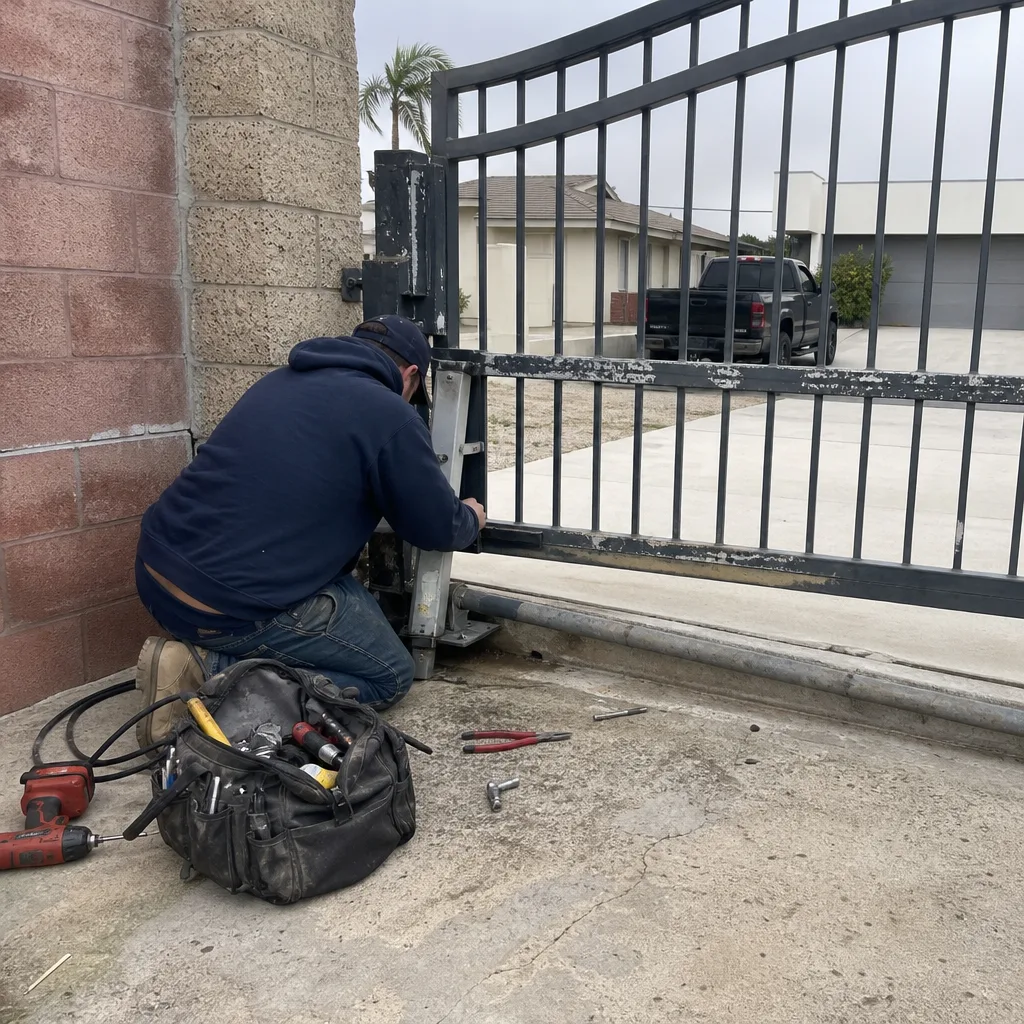 Before
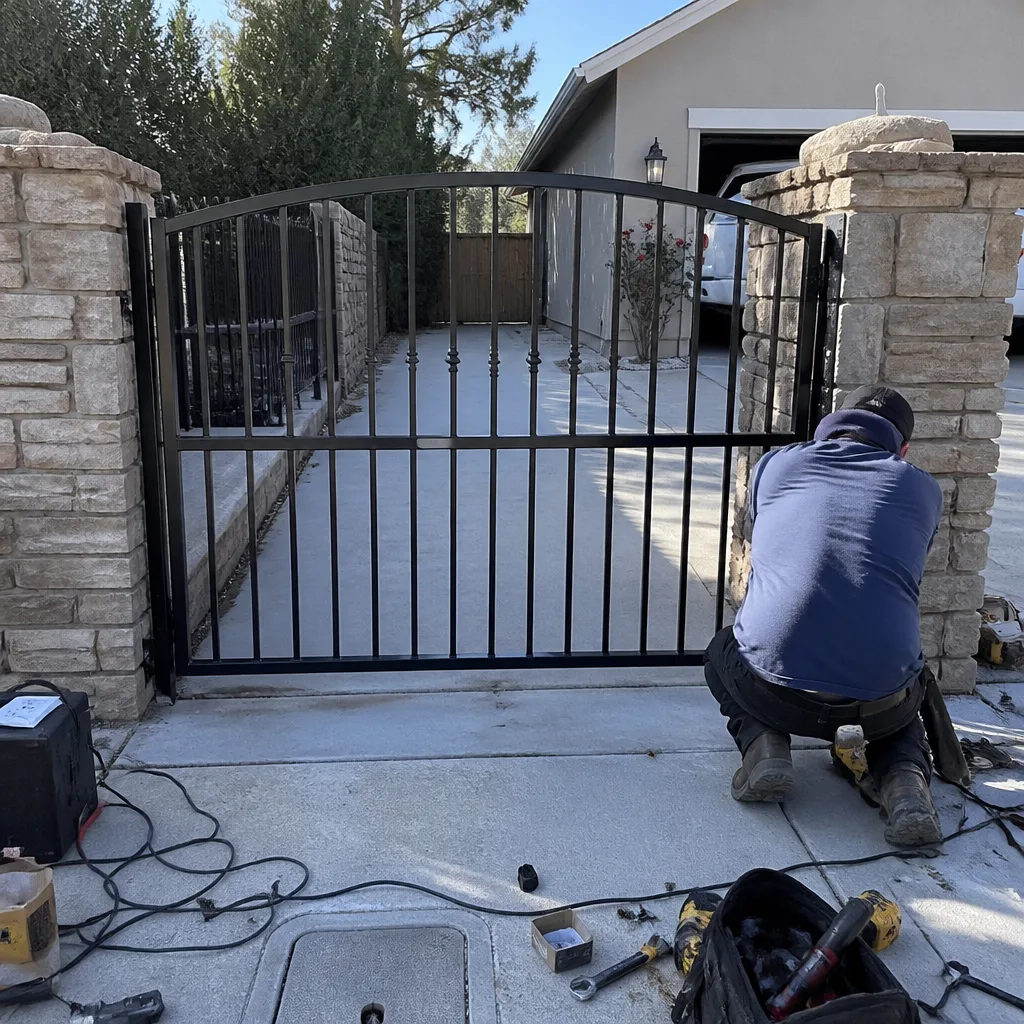 After
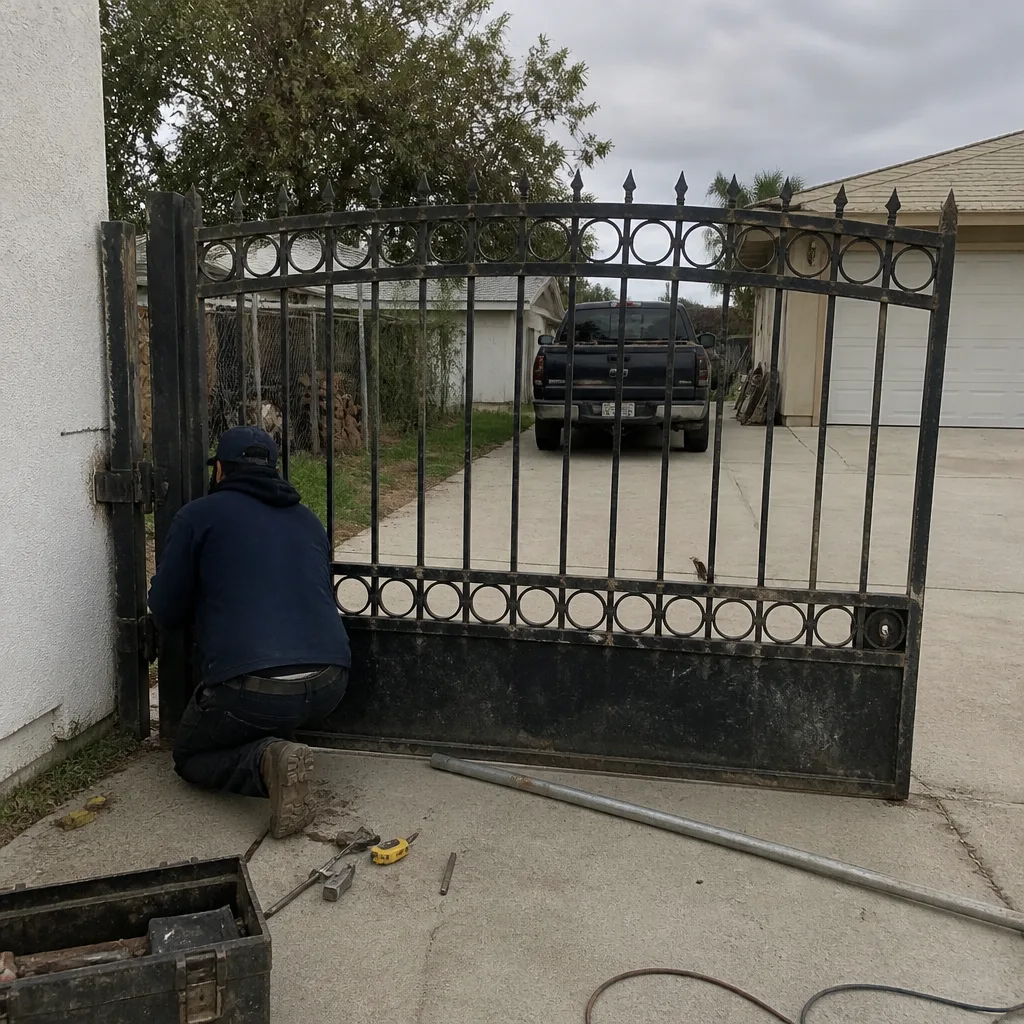 Before
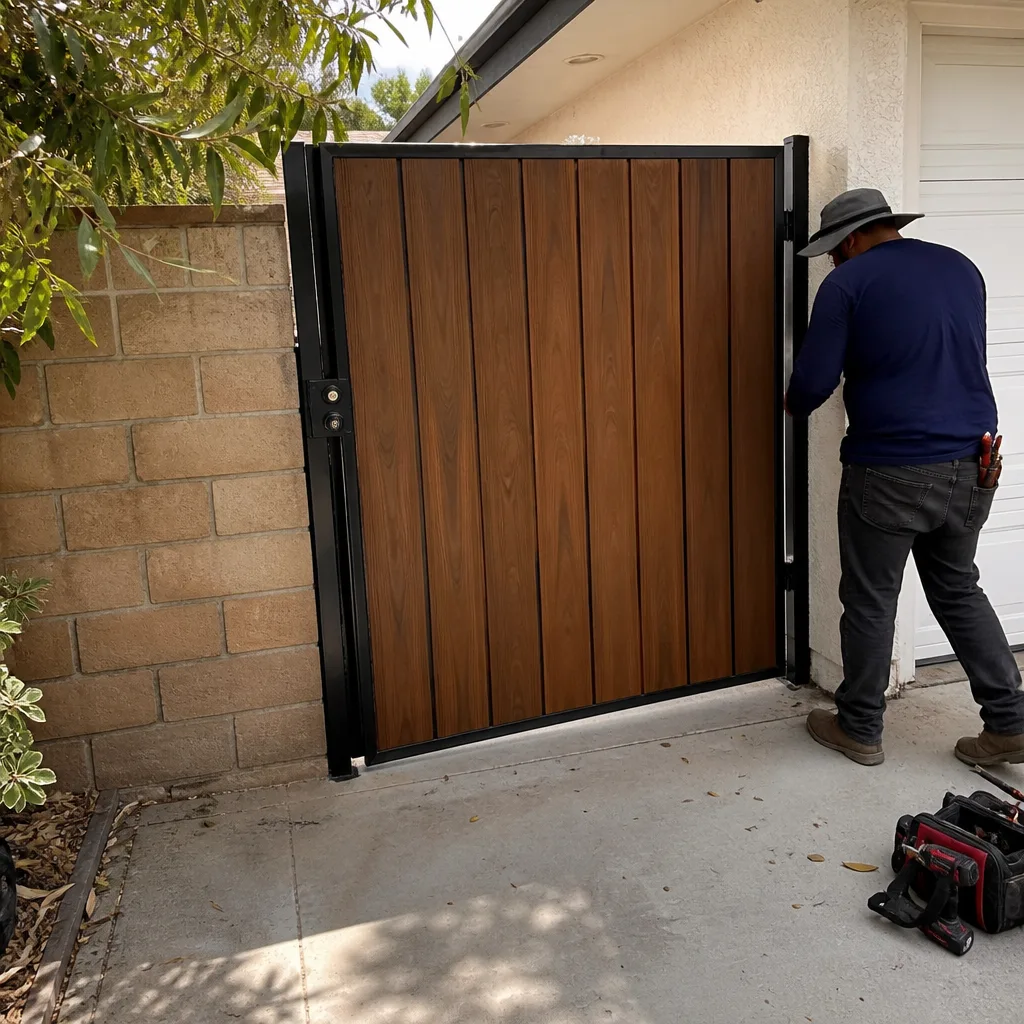 After
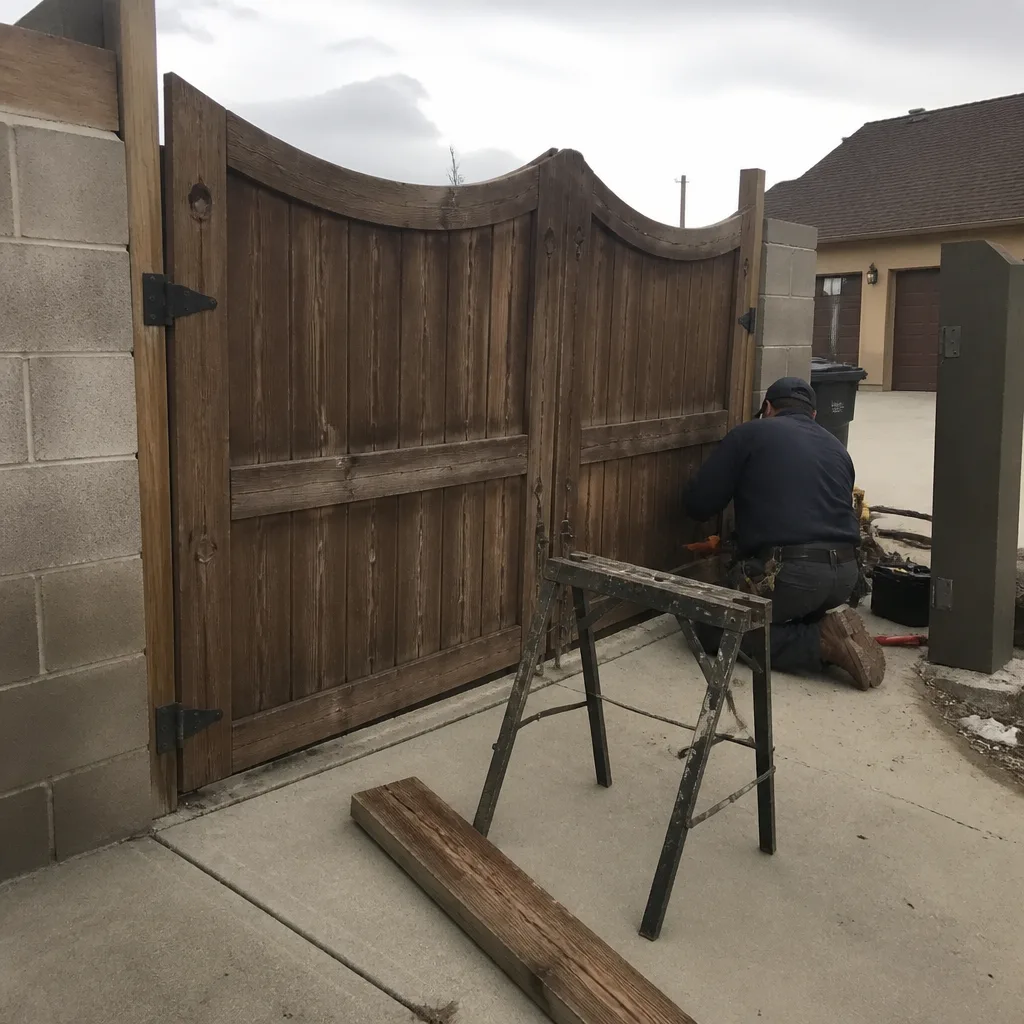 Before
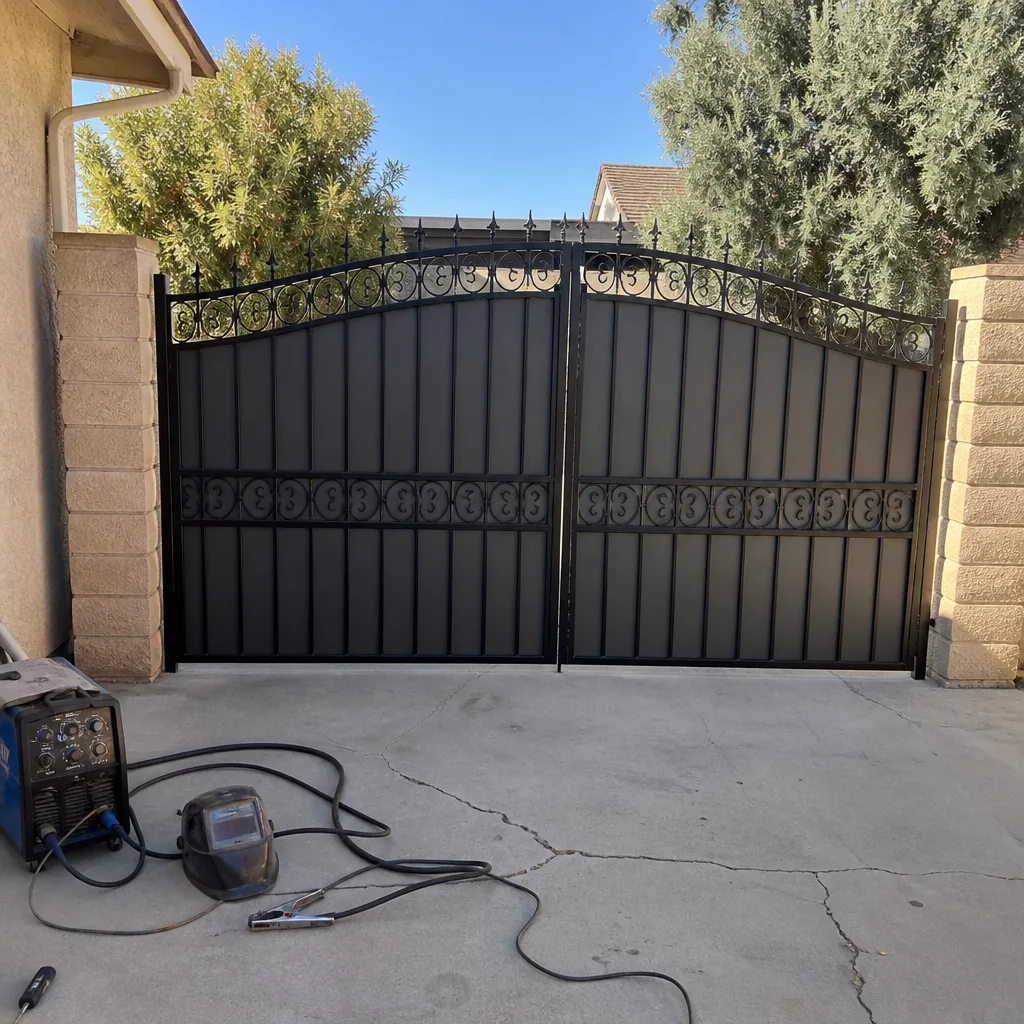 After