
Last updated November 3, 2026
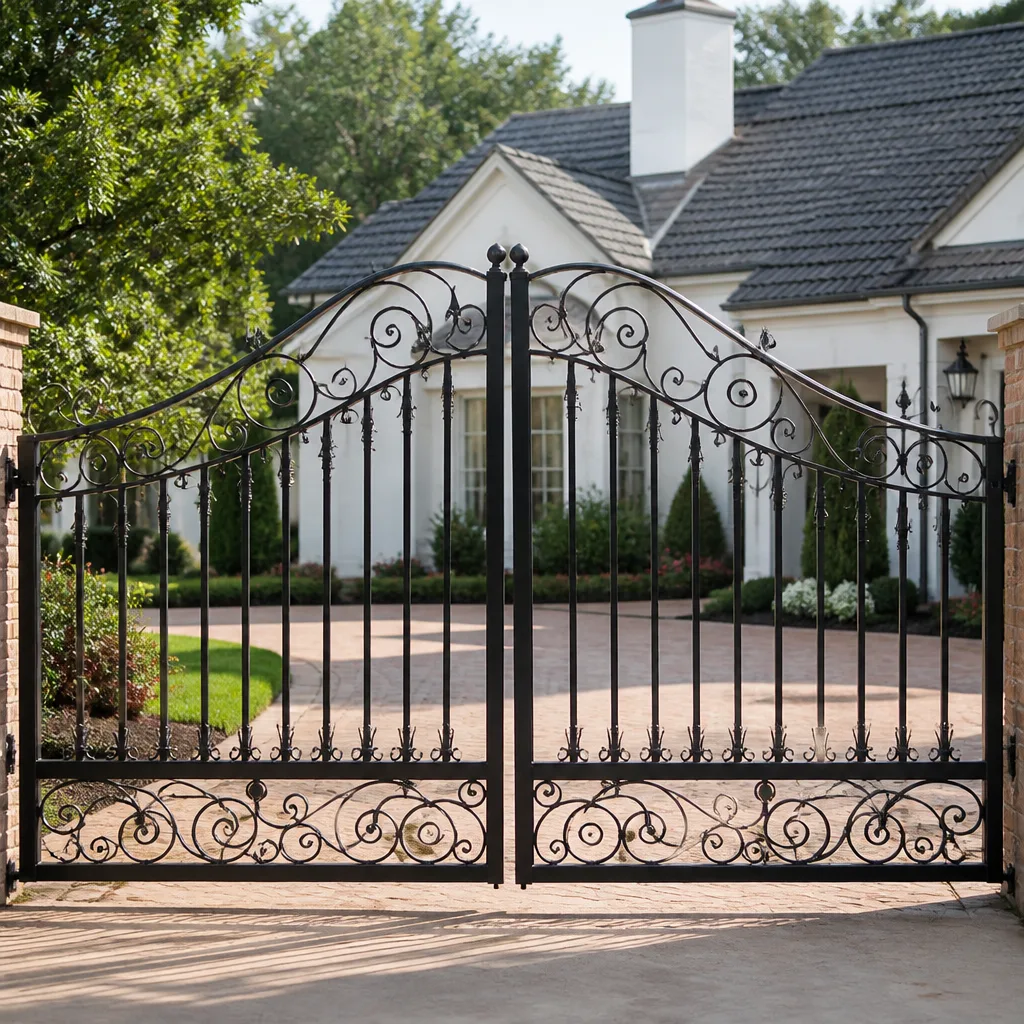 Wrought iron
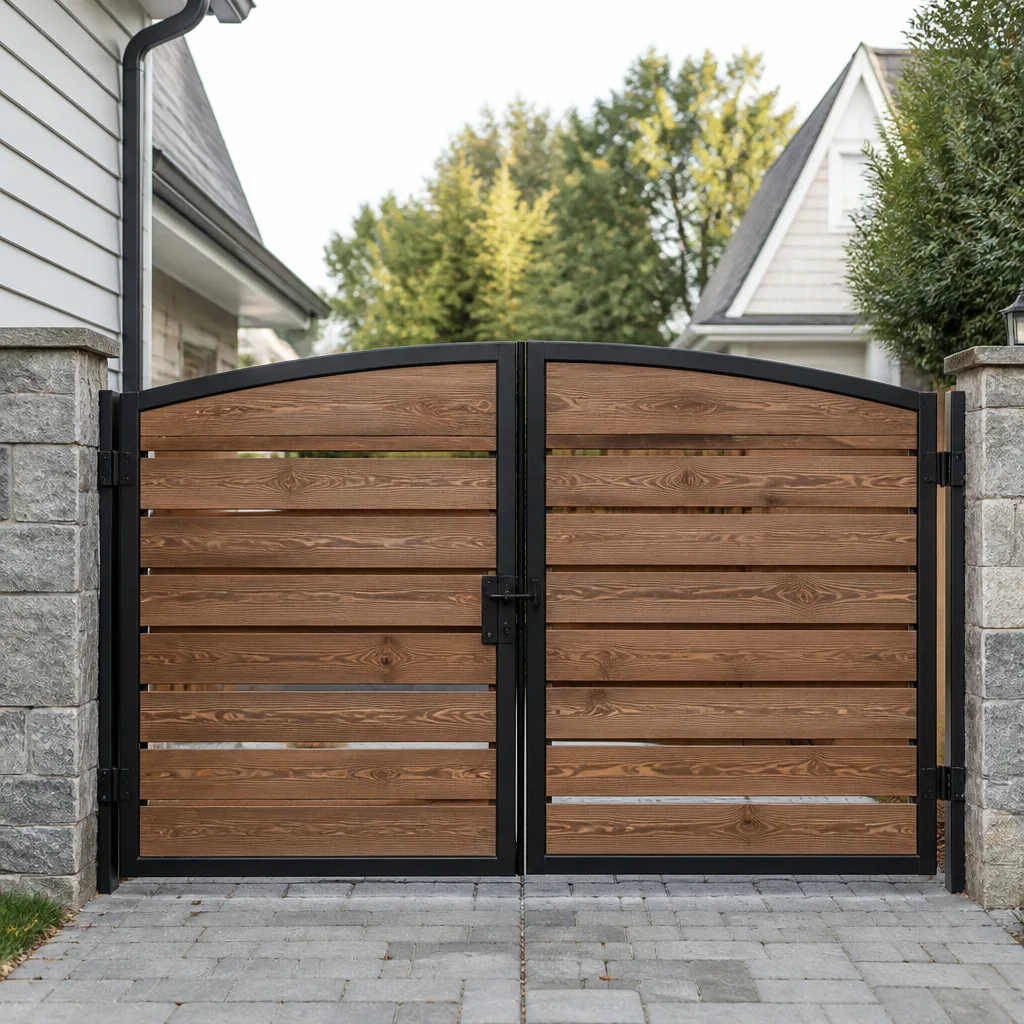 Wood & steel frame
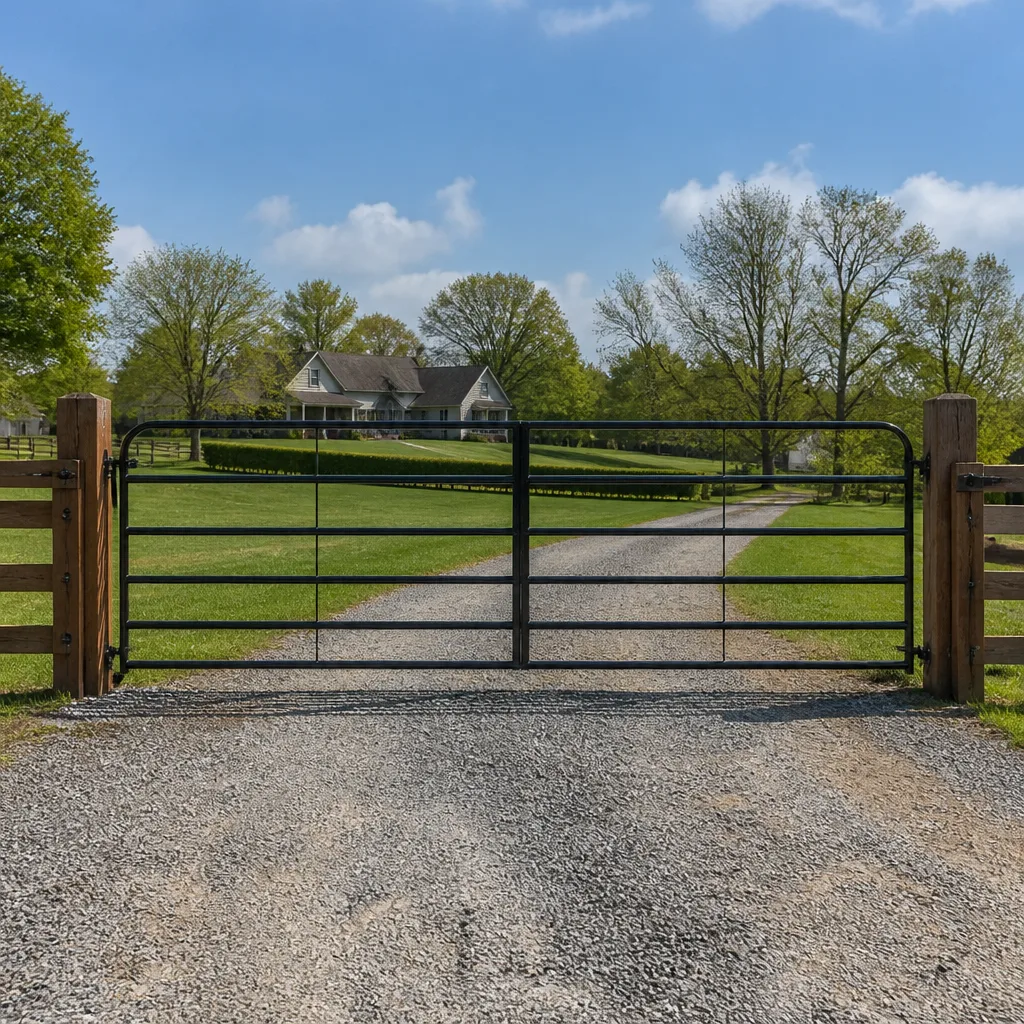 Farm & ranch
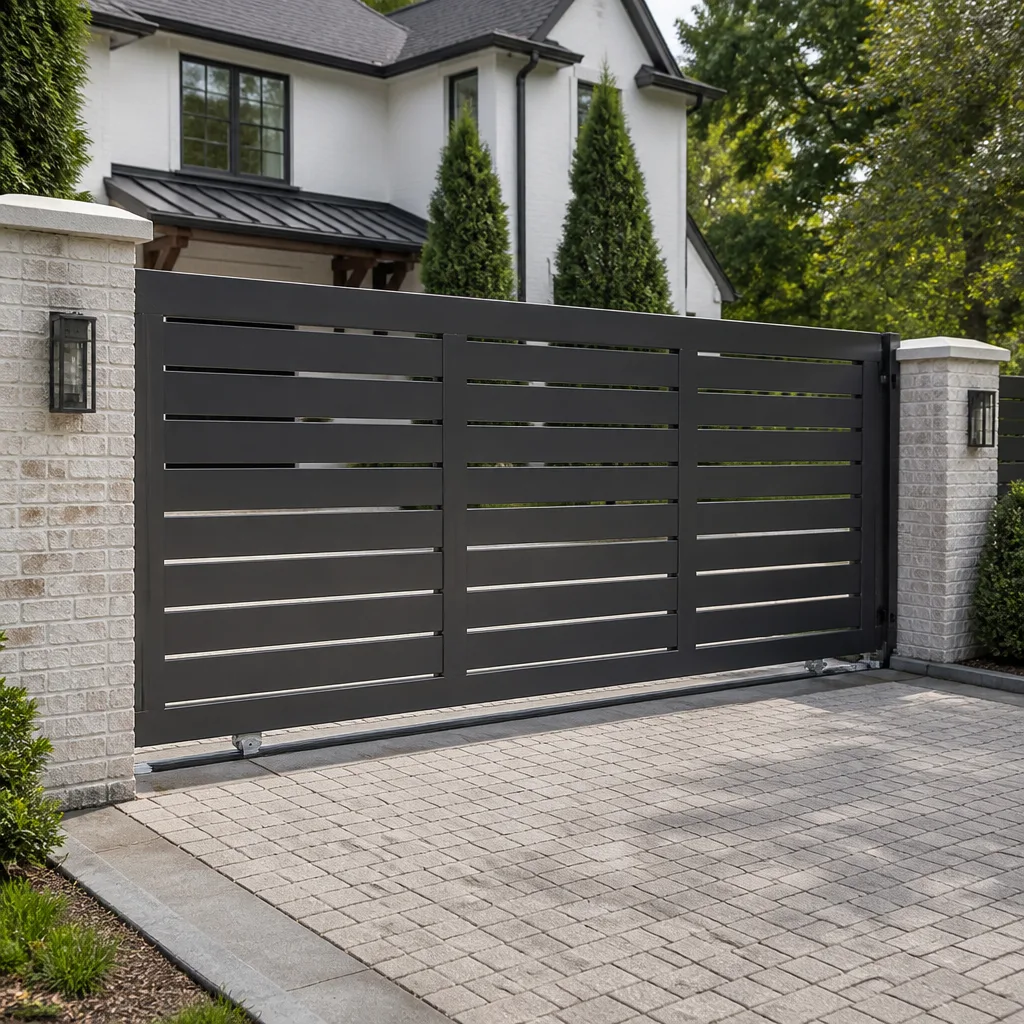 Sliding driveway gates
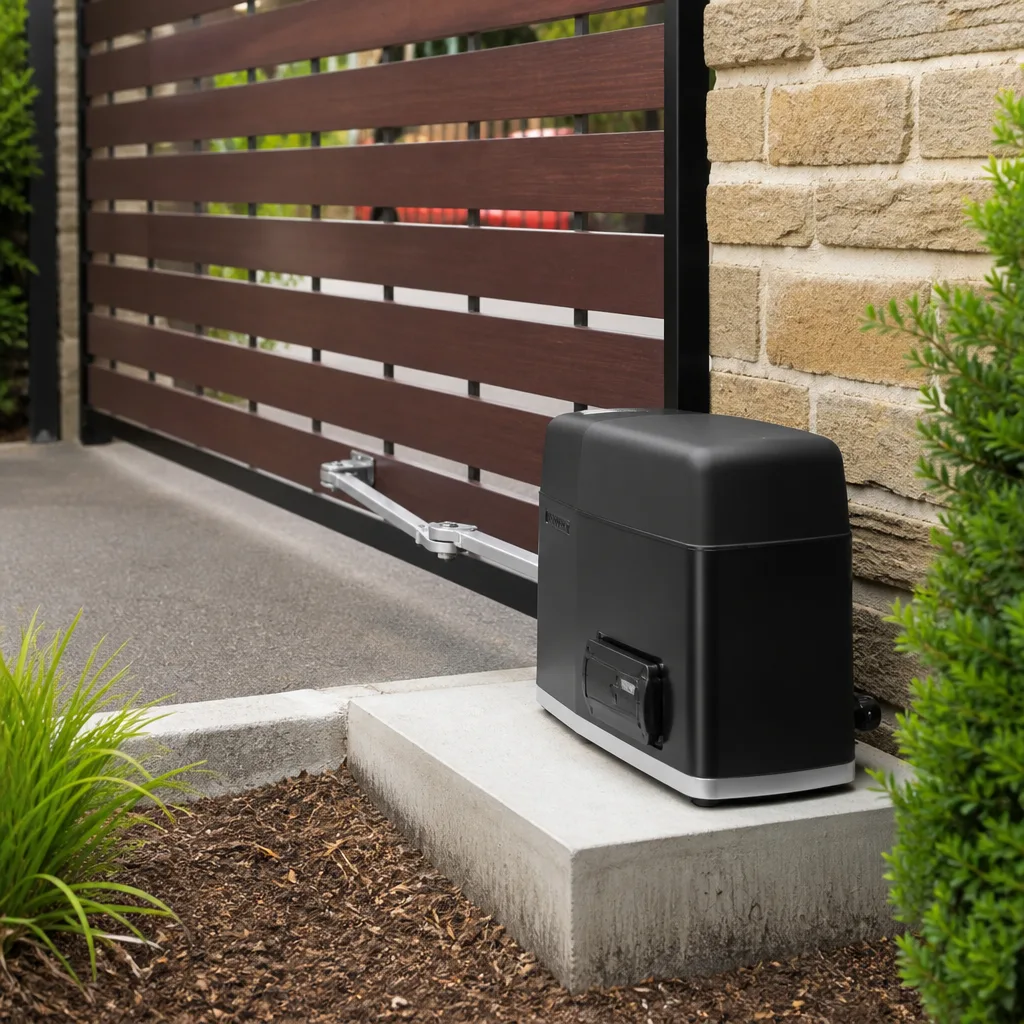 LiftMaster operators
Free on-site gate assessment - hinges, posts, and your LiftMaster or Nice gate operator checked before anything is quoted
The assessment is free and the quote is the invoice.
Get your free estimateChoosing the Right Gate Repair Brand: A Buyer’s Guide for Hemet
Here’s a counterintuitive fact about gate operators: the “best” brand on paper is often the worst choice for a Hemet property. Why? Because a gate opener is only as good as the service network behind it. Several premium European brands sold through national suppliers have almost no certified technicians in the Inland Empire. That means a homeowner who buys on spec is one control-board failure away from a three-week parts-and-labor wait while their gate sits wide open. This guide – along with The Complete Gate Repair Guide for Hemet Homeowners – explains how to choose a gate brand based on what actually matters here: parts availability, local technician familiarity, climate performance, and total cost of ownership. We’ll cover brand-specific differences most buyers never hear about until it’s too late.
Quick Answer
The best gate repair brand for a Hemet property is the one with local parts stock and technicians who diagnose it daily, which is why many homeowners also rely on our Gate Repair services for ongoing support. In this market, that narrows the field to roughly nine brands we service regularly: LiftMaster, FAAC, BFT, Linear, Viking, Ghost Controls, DoorKing, Elite, and Mighty Mule. For most Hemet homeowners, LiftMaster and Linear offer the strongest combination of local parts availability and technician familiarity, while FAAC and BFT make sense for heavier commercial-grade slide gates.
Styles & brands we work with
- Wrought iron
- Wood & steel frame
- Farm & ranch
- Sliding driveway gates
- LiftMaster operators
Table of Contents
- Parts Availability: The Real Decision Maker
- Matching Operator Class to Your Gate: Weight and Cycle Math
- Hemet Climate Performance: Heat, Dust, and Control Boards
- Total Cost of Ownership: A 10-Year View
- Why Residential Reputation Doesn’t Transfer to Commercial Slide Operators
- Brand Profiles: What Each Manufacturer Gets Right (and Wrong)
- When Repair No Longer Makes Sense: Upgrade Considerations
- Common Mistakes to Avoid
Parts Availability: The Real Decision Maker
In Hemet, the single most important factor in choosing a gate operator brand is whether a replacement control board, limit switch, or safety sensor can be sourced within days, not weeks. We’ve seen this play out repeatedly: a homeowner installs a well-reviewed but locally unsupported operator, the main board fails during a summer heat spike, and the replacement part sits in a warehouse in Chicago or Italy for ten days while the gate becomes either a manual lift-out job or a security gap.
Here’s how the parts landscape breaks down for the nine brands we work on in Hemet:
Brands With Local or Regional Distributor Stock
- LiftMaster: The strongest parts pipeline in the Inland Empire. Control boards, gear kits, remotes, and safety eyes are typically available through regional distributors with same-week pickup. This is a major reason LiftMaster dominates Hemet residential installations.
- Linear: Solid distributor network. Replacement boards and remotes are generally in stock at Inland Empire supply houses. Parts are cross-compatible across many Linear models, which simplifies repairs.
- Ghost Controls: Growing availability through national channels, but regional stock is thinner than LiftMaster or Linear. Most parts ship within 3-5 business days.
- Mighty Mule: Widely sold through retail channels, which means common parts like control boards are easy to source. However, the quality of Mighty Mule’s light-duty components means they’re replaced more often than higher-tier brands.
Brands That Frequently Require Factory or Specialty Ordering
- FAAC: Excellent engineering, but FAAC-specific parts often require ordering through authorized distributors with limited Inland Empire presence. Expect 5-10 business days for non-stock items.
- BFT: Similar to FAAC. The control boards and hydraulic components are robust, but when they do fail, parts typically come from national warehouses rather than local shelves.
- Viking: Commercial-grade operators with a narrower support footprint in Riverside County. Parts are available but usually ship from the manufacturer or a specialty supplier.
- DoorKing and Elite: Both have decent national networks, but Hemet-specific stock varies. DoorKing parts are often available within a week. Elite access-control components can take longer depending on the specific board revision.
Our guidance for Hemet buyers is simple: before you commit to a brand, ask yourself, “If the control board dies on a Friday in August, how long am I willing to wait?” If the answer is more than 3 days, choose a brand with proven local parts access. Our Gate Repair in Hemet service works across all nine brands, but we’re direct with customers about which ones create unnecessary downtime.
Matching Operator Class to Your Gate: Weight and Cycle Math
The most common cause of premature gate operator failure we see in Hemet is a mismatch between the operator’s duty rating and the actual work the gate demands. An operator that’s undersized for the gate weight or the number of daily cycles will burn through gears, motors, and boards years before its expected lifespan. This is a math problem first, and a brand problem second.
Here’s how to match operator class to your gate:
- Calculate your gate’s actual weight. A 12-foot steel tube gate with a wood infill panel can weigh 400-600 pounds. Solid ornamental iron gates often weigh more. Don’t guess. If you’re replacing an operator and the old one struggled, write down what was installed so the next one is sized correctly.
- Determine your cycle frequency. How many times does the gate open and close per day? A single-family home with two cars might see 8-12 cycles daily. A rental property with four units could see 40-plus. A commercial lot in Hemet with tenant access could see 100-plus. Cycle count changes everything.
- Match the duty class. Residential light-duty operators like Mighty Mule’s MM series are designed for gates under 300 pounds and fewer than 10 cycles per day. Residential heavy-duty units from LiftMaster or Linear handle 500-800 pounds and 20-40 cycles. Commercial-grade operators from FAAC, BFT, Viking, or DoorKing are engineered for continuous or high-cycle duty.
- Factor in wind load. Hemet’s Santa Ana wind events, especially in fall, push against a closed gate like a sail. A solid-panel gate in the foothills east of Hemet experiences wind loads that a light-duty opener was never designed to resist. Undersized operators fail at the gear train first, and the repair is rarely economical.
- Look at duty cycle ratings, not horsepower. A 1/2-horsepower operator from one brand may be rated for 10 cycles per day. A 1/2-horsepower operator from another brand may be rated for continuous duty. Horsepower sells; duty cycle is what fails.
When a Hemet customer asks us whether to repair or replace an operator, the first thing we check is whether the current unit was ever appropriate for the gate it’s driving. If the operator was undersized from day one, no repair will last. A Gate Installation in Hemet with a properly matched operator is the only fix that holds up.
Hemet Climate Performance: Heat, Dust, and Control Boards
Hemet summers are brutal on electronics. Air temperatures above 100°F are common from June through September, and surface temperatures on a dark metal operator housing can exceed 140°F. That heat does two things to gate operators: it accelerates capacitor aging on control boards, and it degrades plastic gear components faster than manufacturers’ test cycles predict.
In our experience repairing operators across Hemet, Hemet’s San Jacinto Valley heat reveals brand-specific weak points that coastal customers never experience:
- Control board heat tolerance varies by brand. Operator housings with poor ventilation trap heat against the board. We see more board failures in August and September than during the rest of the year combined. Brands that use conformal-coated boards and vented metal housings hold up measurably better. LiftMaster and Linear boards tend to tolerate the heat well. Some imported boards with uncoated components develop solder joint cracks after two or three Hemet summers.
- Dust ingress is a secondary failure mode. Hemet’s dry, dusty conditions, especially along the foothills where gravel roads are common, work dust into limit switches and gear housings. Operators with sealed gear boxes and booted limit switches survive longer. Ghost Controls and Viking both do a reasonable job sealing their residential units.
- Battery backup systems degrade faster in heat. If your operator has a battery backup, plan to replace the battery every 2-3 years in Hemet, not the 3-5 years manufacturers advertise for moderate climates. Heat accelerates lead-acid and lithium battery aging. We replace more backup batteries in August than any other month.
- Plastic gear trains are a heat liability. Brands that use plastic primary gears, common in entry-level Mighty Mule and some Ghost Controls models, can strip under sustained heat plus heavy gate loads. Metal gear trains cost more up front but outlast plastic by a factor of two to three in Hemet’s climate.
When a customer asks us about operating an electric gate in Hemet’s climate, our answer is consistent: choose an operator with a vented metal housing, conformal-coated boards, and metal primary gears. The up-front cost difference is usually a few hundred dollars. The avoided mid-summer breakdown is worth far more.
Total Cost of Ownership: A 10-Year View
Gate operators are not a purchase; they’re a decade-long commitment. The sticker price tells you almost nothing about what the operator will cost over its service life. A $300 budget opener that requires a $180 board replacement every two years plus a $150 gear kit every three years adds up to well over $1,000 in parts alone over ten years, not counting labor. A $900 operator with a metal gear train and a 10-year board life may need only two $30 limit switches and one $60 remote replacement in the same period.
Here’s a realistic 10-year total cost of ownership comparison for three common Hemet scenarios:
- Light-duty residential (Mighty Mule or entry-level Ghost Controls): Purchase $300-$500. Likely repairs over 10 years: 2-3 control boards ($150-$200 each), 1-2 gear kits ($100-$150 each), 2 remotes ($40 each). Total parts cost: $500-$1,000. Labor at Hemet rates for 4-6 service calls: $400-$900. Ten-year total: $1,200-$2,400.
- Heavy-duty residential (LiftMaster or Linear): Purchase $800-$1,500. Likely repairs over 10 years: 1 limit switch ($30), 1-2 remotes ($40 each), possibly 1 battery replacement ($60). Total parts cost: $100-$200. Labor for 2-3 service calls: $200-$450. Ten-year total: $1,100-$2,150.
- Commercial slide (FAAC, BFT, or Viking): Purchase $2,500-$5,000. Likely repairs over 10 years: 1 battery replacement ($80-$150), 1 loop detector ($150-$250), 1 set of safety edges ($100-$200), maybe 1 motor brush replacement ($150-$300). Total parts cost: $500-$900. Labor for 3-5 service calls: $450-$1,000. Ten-year total: $3,450-$6,900.
These numbers are estimates based on patterns we see across Hemet service calls, and individual results vary by gate weight, cycle count, and exposure. The point isn’t precision; it’s the pattern: entry-level operators cost less to buy and more to own. Mid-tier residential brands with local parts support almost always deliver the lowest ten-year cost for Hemet homeowners; for deeper reading, see The Complete Gate Repair Guide for Hemet Homeowners.
For a specific quote on your gate configuration, our team provides free estimates. Call (866) 321-6910 and we’ll assess your gate weight, cycle count, and current operator condition before recommending a brand.
Why Residential Reputation Doesn’t Transfer to Commercial Slide Operators
A common mistake we see from Hemet property managers is assuming that because a brand makes excellent residential swing gate openers, its commercial slide operators are equally reliable. That assumption costs money. Residential and commercial product lines are engineered by different teams with different design philosophies, and a brand’s strengths in one category often don’t carry over.
Here’s what the distinction looks like in practice:
- FAAC: FAAC’s commercial slide operators are genuinely excellent. Their hydraulic operators run quietly and handle high cycle counts with minimal maintenance. But FAAC’s residential swing operators, while well-built, are less common in Hemet and parts take longer to source. A FAAC residential customer may wait a week for a board. A FAAC commercial customer with a 740 operator typically gets parts within days because the commercial support network is separate and better stocked.
- LiftMaster: The reverse pattern. LiftMaster’s residential lineup is the best-supported in Hemet, with parts available locally and technicians who see these units daily. But LiftMaster’s commercial slide operators, while serviceable, don’t have the same depth of local support as their residential line. We service them, but a DoorKing or FAAC commercial slide operator often has better third-party parts availability.
- BFT: BFT’s commercial operators are overbuilt and durable, with excellent thermal management. Their residential line is competent but not notably better than cheaper alternatives. If you’re running a commercial property with high cycle counts, BFT earns its price. If you’re automating a 200-pound driveway gate, BFT is more operator than you need.
- Viking: Almost entirely a commercial brand. Their slide operators are built for heavy gates and continuous duty. Expect industrial build quality and a price to match. Residential customers rarely need Viking, and we don’t recommend paying for commercial engineering on a light residential gate.
The takeaway for Hemet buyers: match the brand to the application, not to the logo. A brand that excels in one operator class may be mediocre in another. For electric gate repair in Hemet across both residential and commercial systems, we assess the specific operator model and its failure history rather than relying on the manufacturer’s overall reputation. See our Electric Gate Repair in Hemet page for more detail on how we approach diagnostics.
Brand Profiles: What Each Manufacturer Gets Right (and Wrong)
Here’s a straightforward assessment of the nine brands we service in Hemet, based on hundreds of service calls across the San Jacinto Valley. We’re direct about weaknesses because a buyer who knows a brand’s failure modes before buying can plan around them.
LiftMaster
Strengths: Best local parts availability. Broad model range from entry-level to premium residential. Excellent remote and keypad ecosystem. Boards handle Hemet heat well. Metal gear trains on mid-tier and above models.
Weaknesses: Premium pricing on higher-end models. Some proprietary components lock out third-party repair. Commercial line is less supported locally than residential.
FAAC
Strengths: Outstanding commercial slide operators. Hydraulic models run quietly with minimal wear. Excellent thermal management on commercial units. Long service intervals.
Weaknesses: Residential parts require specialty ordering. Controls use some proprietary communication protocols. Higher labor costs due to less technician familiarity.
BFT
Strengths: Heavy-duty commercial build quality. Excellent gear trains. Control boards are well-sealed against dust and heat. Long service life when properly sized.
Weaknesses: Parts ship from national warehouses, adding days to repairs. Residential models are overpriced for what they deliver. Fewer Hemet technicians are factory-familiar with BFT’s full line.
Linear
Strengths: Solid parts availability through Inland Empire distributors. Cross-compatibility across many models simplifies repairs. Good value in the heavy-duty residential segment. Reliable boards.
Weaknesses: Less refined fit and finish than premium brands. Some models use plastic gear components that struggle with Hemet heat and heavy gates. Remote styling feels dated.
Viking
Strengths: Commercial-grade build quality. Designed for continuous duty. Excellent for heavy slide gates and high-traffic properties. Minimal electronic complexity, which means fewer board failures.
Weaknesses: Expensive for residential use. Limited local parts stock. Overkill for most Hemet homes.
Ghost Controls
Strengths: Good value in the mid-tier residential segment. Sealed limit switches handle dust well. App connectivity is reliable. Growing parts availability.
Weaknesses: Plastic gears on entry models are a heat liability. Board replacement can require factory-shipped parts. Less aftermarket support than LiftMaster or Linear.
DoorKing
Strengths: Long-standing commercial reputation. Mechanical simplicity reduces failure points. Wide dealer network. Good for commercial swing and slide applications.
Weaknesses: Aging product line with limited connectivity features. Parts for specific board revisions can take a week. Residential models are not competitively priced.
Elite
Strengths: Solid commercial access control integration. Good for gated communities and multi-tenant properties. Durable slide operators.
Weaknesses: Specialized parts and programming requirements. Limited local stock in Hemet. Higher service costs due to access-control complexity.
Mighty Mule
Strengths: Inexpensive entry point. Widely available at retail. Easy for DIY installation. Good for light gates with low cycle counts.
Weaknesses: Plastic gear trains fail under heat and heavy loads. Control boards have a shorter service life than any other brand we service. Battery backups degrade quickly. Highest repair frequency of the nine brands.
When Repair No Longer Makes Sense: Upgrade Considerations
At a certain point, repairing an aging operator is just deferred spending. Here’s how to recognize when an upgrade makes more financial sense than another repair on your Hemet property:
- The operator is over 12 years old. Even well-maintained operators have a finite service life. When an operator passes the decade mark, every repair is a gamble on what fails next. A $300 board replacement this year might be followed by a $200 gear kit next year and a $150 motor the year after.
- Parts are no longer manufactured. Some older boards and gear kits are discontinued. If we have to source a refurbished part or hunt through surplus stock, the labor hours often exceed the value of the operator.
- The gate itself has changed. If you’ve added weight to the gate, such as a privacy screen or a welded infill panel, the operator that worked for years may now be undersized. Upgrading to a properly matched operator prevents the cascade of failures an undersized unit causes.
- Your cycle count has increased. A property that started as a single-family home and became a rental, or a shop that added deliveries, may now exceed the operator’s duty rating. No repair fixes a duty-cycle mismatch.
- You want modern connectivity. If you’re still using a 390 MHz remote system and want smartphone control, camera integration, or visitor access codes, an upgrade delivers features that retrofitting can’t achieve at reasonable cost.
When an upgrade is the right call, we handle the full transition from assessment to removal to new operator installation through our Gate Installation in Hemet service. One call covers the repair-versus-replace evaluation, the operator selection, and the install.
Common Mistakes to Avoid
- Buying on brand reputation alone. A brand’s national advertising budget doesn’t reflect its parts support in Hemet. Always verify local serviceability before purchasing.
- Assuming horsepower equals capability. A high-horsepower operator can still be rated for light duty cycles. Check the duty cycle spec, not the motor label.
- Ignoring wind load on solid-panel gates. In Hemet’s fall wind season, a solid gate acts like a sail. Undersized operators strip gears under wind stress. Size for wind, not just weight.
- Choosing the cheapest quote without comparing parts quality. A $300 operator with plastic gears costs more over five years than a $700 operator with metal gears. Cheapest is rarely cheapest.
- Skipping the battery backup. Hemet’s summer grid strain means power outages during peak heat. A gate without battery backup becomes a manual wrestling match exactly when you don’t want one.
- Deferring limit switch and safety sensor replacement. These are wear items, not lifetime components. Replacing them on a schedule prevents the bigger failures they cause when they stick or fail.
- Using a general handyman for electric gate diagnostics. Gate operator control boards are brand-specific. A generalist who works on gates twice a month is guessing, and guessing means callbacks. Our Gate Repair Hemet home page explains why brand-specific knowledge matters more than general repair experience.
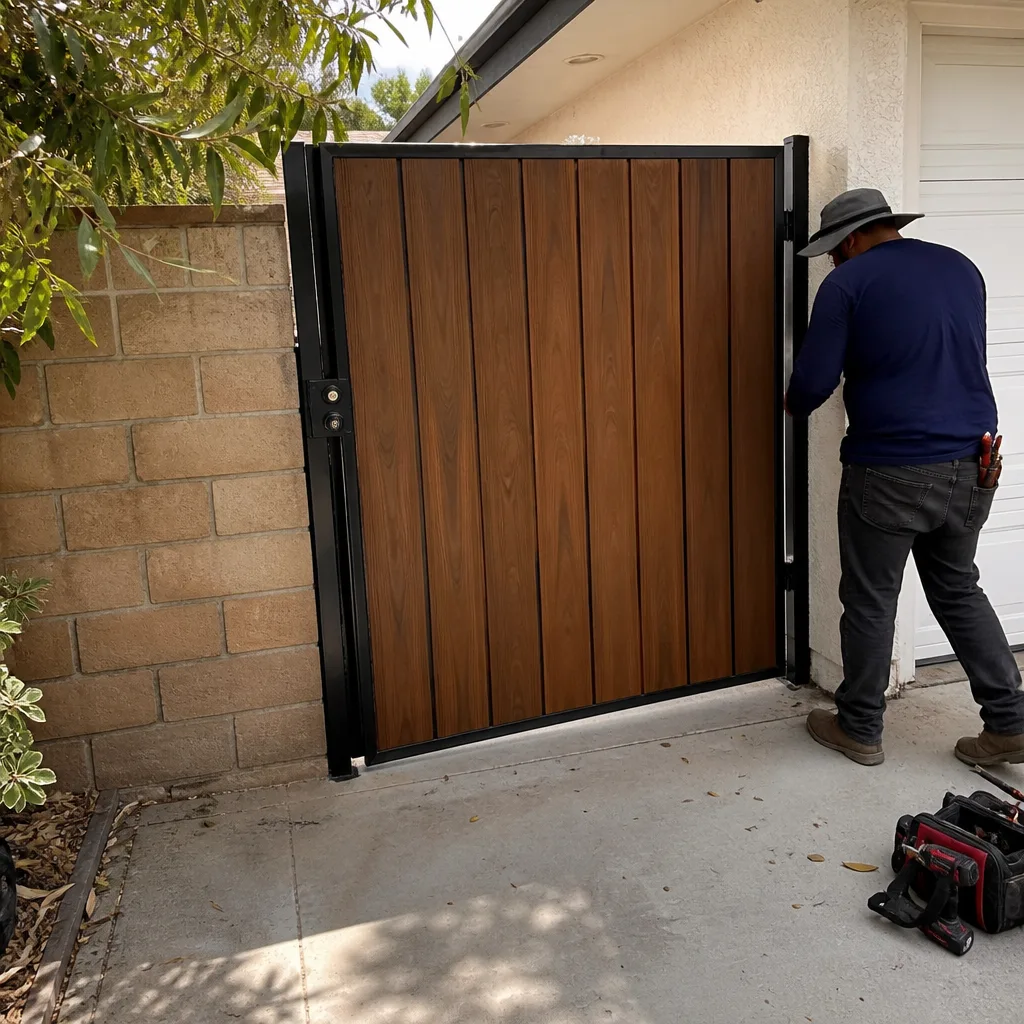
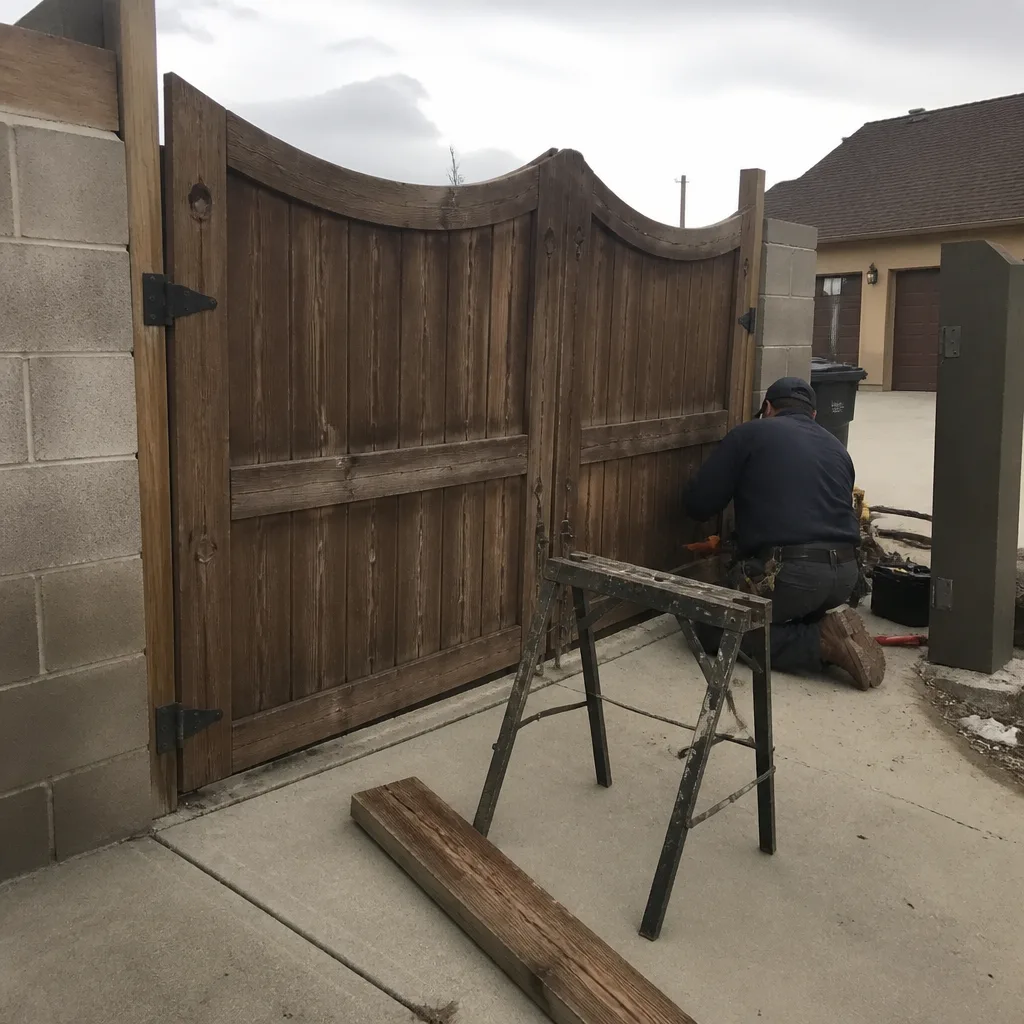
See the difference
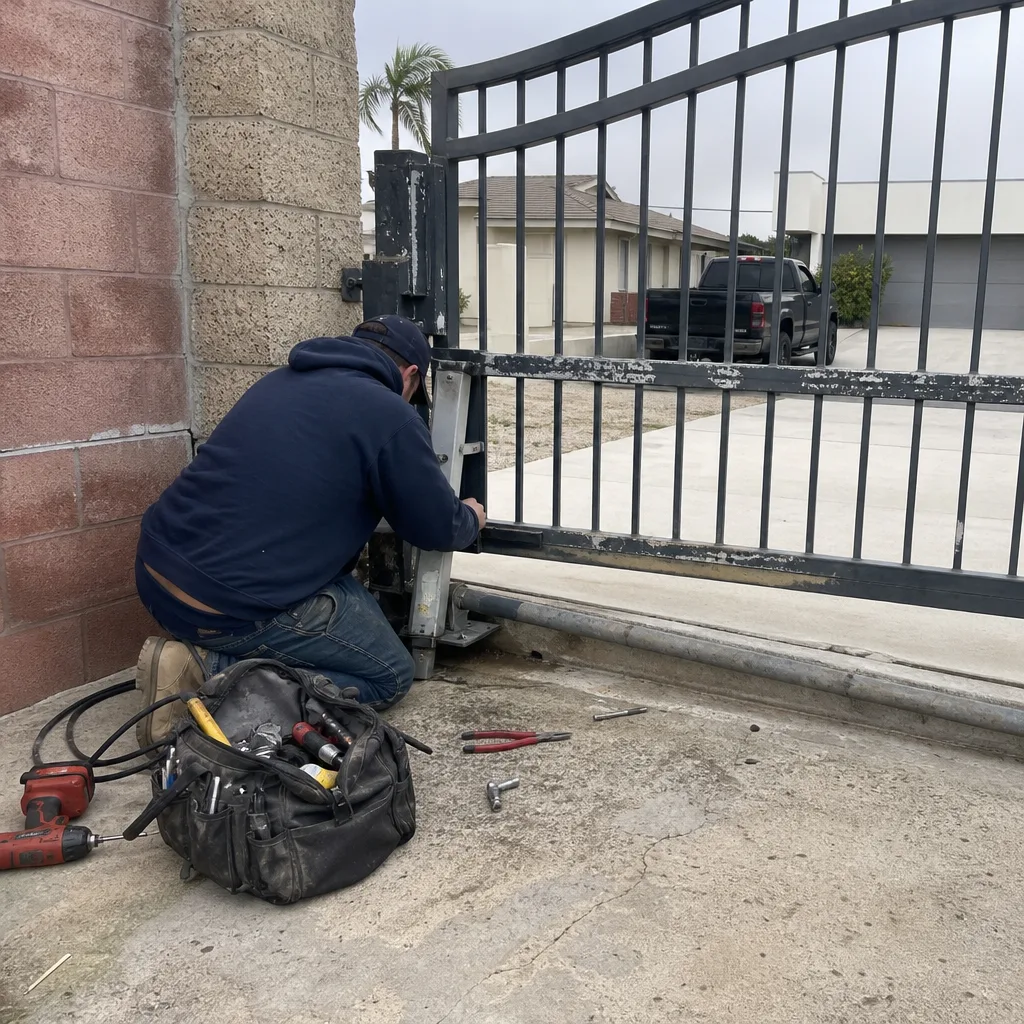 Before
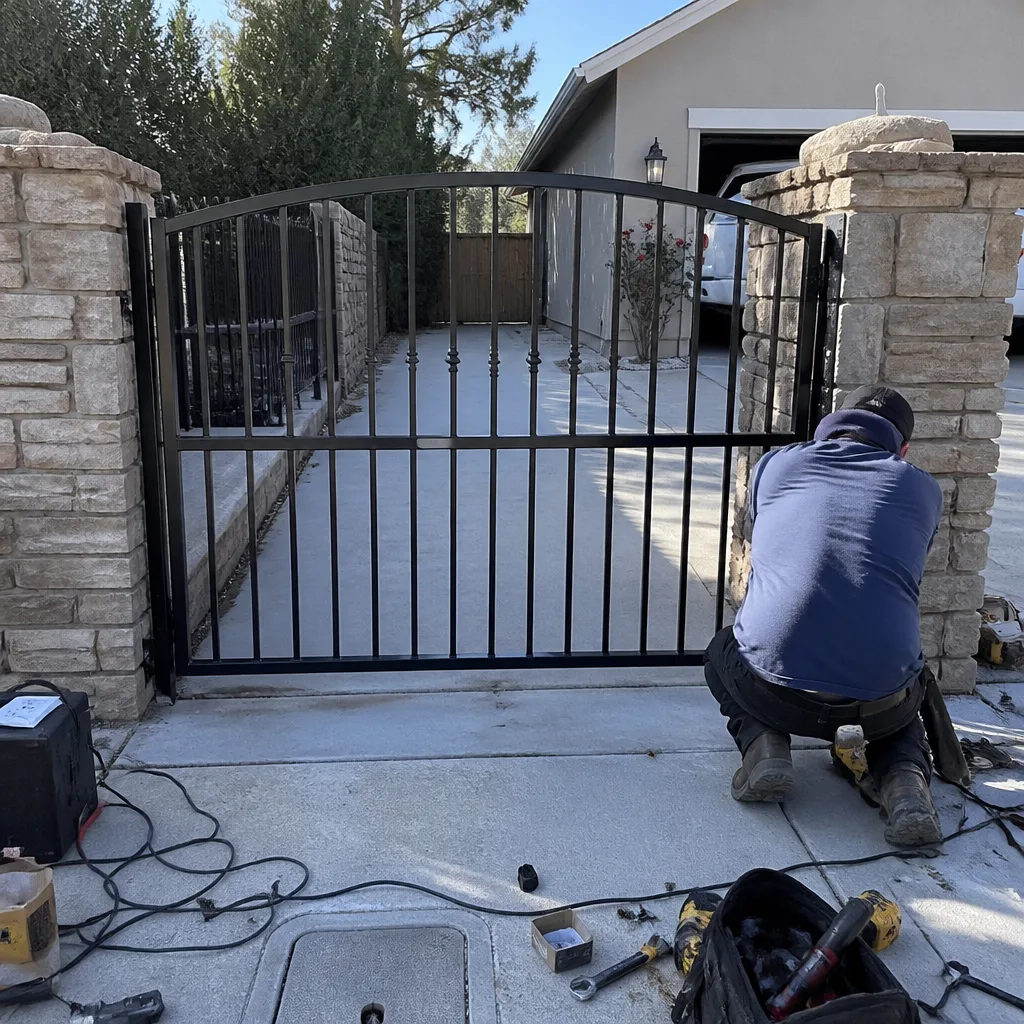 After
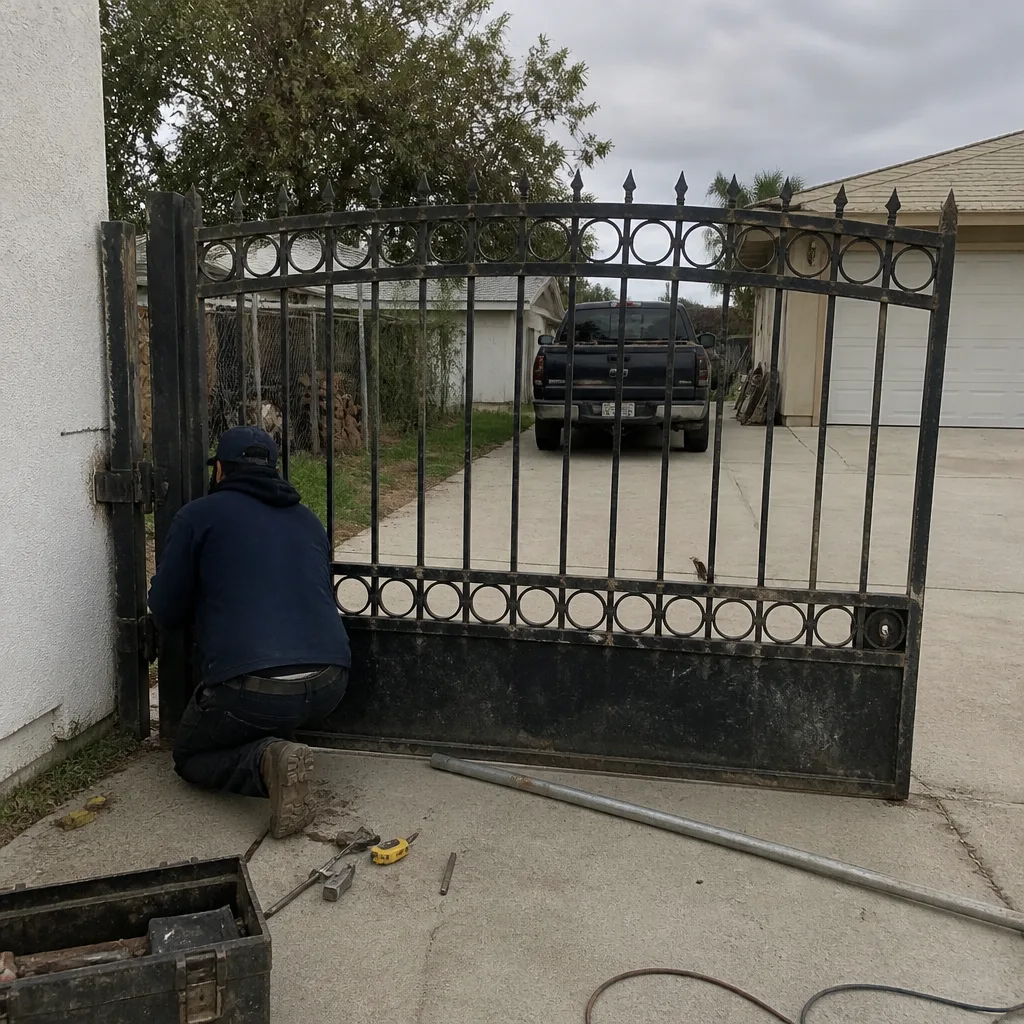 Before
 After
 Before
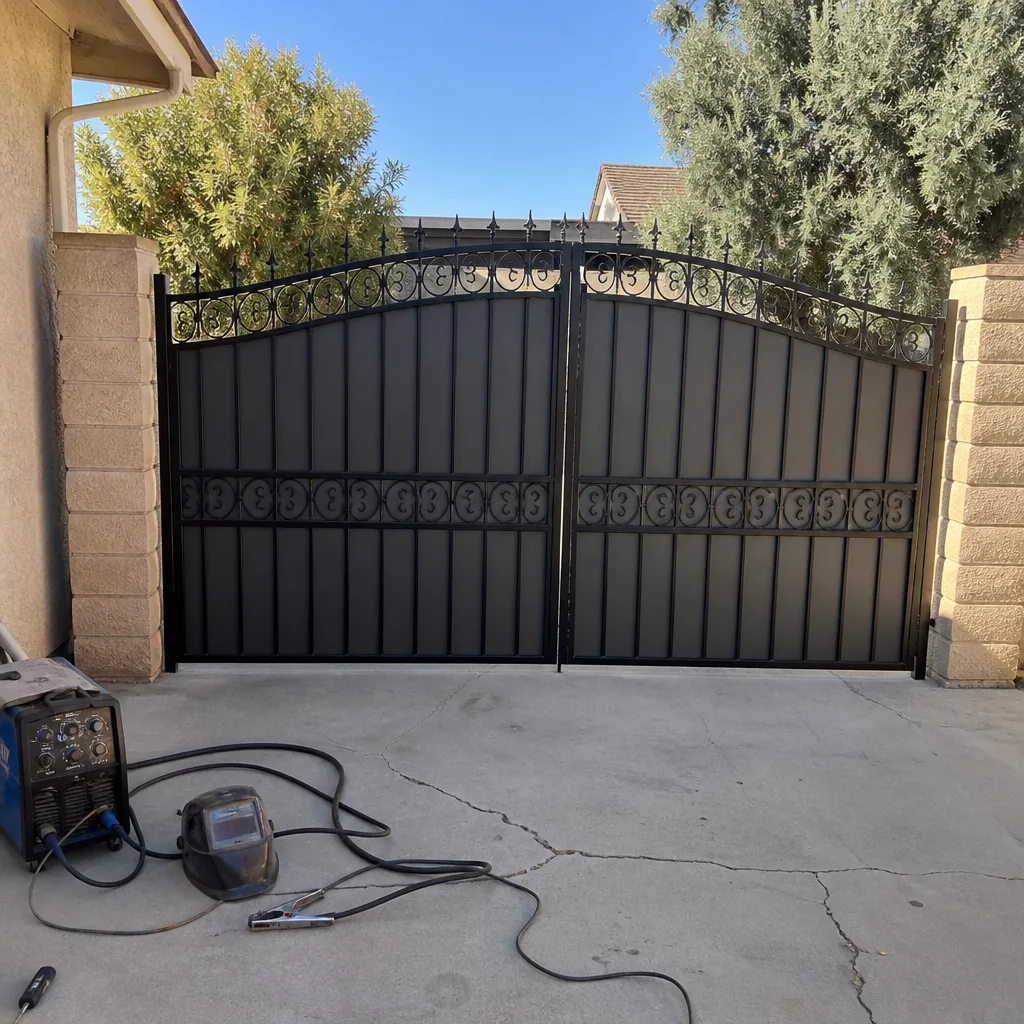 After
When to Call a Professional
Call a gate specialist when the operator stops responding, makes grinding noises, reverses direction unexpectedly, or trips a breaker repeatedly. These symptoms indicate gear train, motor, or board failures that get worse with continued use. If the gate goes off its track, if the safety sensors stop reversing on obstruction, or if the operator runs in only one direction, stop using the gate entirely. A gate under power can cause serious injury when components fail. Gate Repair Hemet offers free estimates in Hemet and the surrounding San Jacinto Valley. Call (866) 321-6910 and we’ll diagnose the operator, identify the correct parts, and give you a written repair or replacement quote before any work begins.
Frequently Asked Questions
LiftMaster and Linear are the most reliable choices for Hemet homeowners, primarily because their parts are available through local Inland Empire distributors and their control boards handle sustained heat exposure well. Both brands use metal gear trains on their mid-tier and higher models, which is what prevents the stripped-gear failures we see on plastic-gear budget units. For a specific recommendation based on your gate weight and cycle count, call (866) 321-6910 and we’ll walk you through the options.
Most gate repairs in Hemet fall between $150 and $500 depending on the failed component. A limit switch replacement is typically $100-$200, a control board replacement runs $250-$500 including parts and labor, and a gear train rebuild on a heavy operator can reach $600. We always quote the full price before starting work, so there are no surprises on the invoice. Call for an exact quote on your specific operator.
Yes, we work on FAAC and BFT operators specifically. Both brands appear commonly in Hemet on commercial slide gates and higher-end residential properties. The difference is parts lead time: FAAC and BFT parts often ship from national warehouses, so repairs on these brands may take 5-10 business days if a non-stock board or component is required. We’ll tell you the parts timeline up front so you can plan for gate access during the wait.
For commercial slide gates in Hemet, FAAC, BFT, and Viking are the brands we recommend most often. FAAC’s hydraulic slide operators handle high cycle counts with minimal maintenance. BFT builds excellent gear trains that tolerate continuous duty. Viking offers industrial build quality for heavy gates. The right choice depends on gate weight, cycle frequency, and whether you need access-control integration. Call (866) 321-6910 for a commercial gate assessment and we’ll give you a written recommendation.
Heat-related gate failures in Hemet are usually control board capacitor failure or thermal shutdown triggered by an overheating transformer. When the air temperature climbs past 100°F, the surface temperature inside the operator housing rises high enough to degrade aging capacitors and cause intermittent board faults. If your gate fails on the hottest day of the year and works again after sunset, that’s the classic thermal failure signature. The fix is typically a board replacement, and it’s one we handle frequently during Hemet summers.
At 15 years old, replacement is almost always the better financial decision in Hemet. A 15-year-old operator has already exceeded its expected service life, the remaining components are aged, and newer replacement parts may be discontinued. The repair that seems like a $300 fix often becomes a $500 fix when the next component fails six months later. We’ll give you an honest repair-versus-replace assessment when we inspect the unit, including the 10-year cost comparison for both paths.
The Bottom Line
Choosing a gate repair brand in Hemet comes down to three questions: How long will I wait for parts when this thing fails in August? Is the operator sized correctly for my gate’s weight and cycle count? Will the control board and gears survive five Hemet summers? Answer those questions honestly, and the brand decision makes itself. LiftMaster and Linear lead the pack for Hemet residential use because of local parts access and heat-tolerant boards. FAAC and BFT earn their price on commercial slide gates where their duty ratings and build quality matter most. Avoid the bait of cheap entry-level operators with plastic gear trains; the ten-year math never works in their favor. If you’re deciding between repair and replacement on an existing operator, get a professional assessment before committing. Call (866) 321-6910 for a free estimate and a straight answer on what your gate actually needs.
Written by the team at Gate Repair Hemet, serving Hemet since 2012. Explore more guides & resources from our team.