
Last updated November 2, 2026
 Wrought iron
 Wood & steel frame
 Farm & ranch
 Sliding driveway gates
 LiftMaster operators
Free on-site gate assessment - hinges, posts, and your LiftMaster or Nice gate operator checked before anything is quoted
The assessment is free and the quote is the invoice.
Get your free estimateGate Repair Permits, Codes & Inspections in CA: What You Need to Know
Most California homeowners assume any gate work requires a permit. That assumption costs them time and money they didn’t need to spend. But the reverse mistake, skipping a permit on work that genuinely requires one, is far more expensive. If your gate was damaged in a vehicle strike and you replace the post without a permit, your homeowner’s insurance can legally deny the subsequent claim. Not because you did the work wrong, but because an unpermitted alteration voided the covered structure. This guide walks through exactly which gate projects in Hemet trigger permit requirements, which don’t, what UL 325 means for your automated system, how HOA rules layer on top of city code, and how to handle inspections without getting burned.
Styles & brands we work with
- Wrought iron
- Wood & steel frame
- Farm & ranch
- Sliding driveway gates
- LiftMaster operators
Quick Answer
In Hemet, most our Gate Repair services, including motor replacement, hinge welding, sensor swaps, and control board work, do not require a city permit. Permits are triggered when you alter the structural footprint: replacing a gate post set in concrete, widening a driveway opening, or installing a new automated operator on a gate that previously had none. Riverside County generally treats projects under $500 in value as repairs, not improvements, but that threshold is less important than structural scope. If you’re replacing a post or adding automation, pull the permit; if you’re fixing what’s already there, you usually don’t need one.
Table of Contents
- Repair vs. Improvement: The Riverside County Threshold
- UL 325 Compliance: What Hemet Homeowners Must Know
- HOA Approval in Hemet’s Master-Planned Communities
- ADA Clearance and Exit Loops for Hemet Commercial Properties
- How to Pull a Permit in Hemet Yourself vs. Contractor-Pulled
- What the Inspection Process Actually Looks Like
- Common Mistakes to Avoid
- When to Call a Professional
- Frequently Asked Questions
- The Bottom Line
Repair vs. Improvement: The Riverside County Threshold
Riverside County uses a project value threshold to separate repairs from improvements, but the dollar amount is only half the test. The other half is structural scope. A $3,000 motor replacement on an existing automated gate is a repair because it doesn’t alter the gate’s footprint, height, or anchorage. A $400 post replacement is an improvement because the post is embedded in concrete and carries the gate’s weight. The county treats the second one as new construction, not maintenance.
Here’s how the distinction plays out in practice:
- No permit required: Replacing an operator motor, control board, remote receiver, keypad, loop detector, safety sensor, hinge, latch, wheel, or track component. Welding a cracked frame member. Adjusting gate travel limits. Replacing a bent hinge plate on an otherwise sound post.
- Permit required: Setting a new gate post in concrete. Replacing an existing post that has failed at the base. Widening or moving the gate opening. Adding a second gate leaf. Installing an automated operator on a gate that was previously manual. Changing a swing gate to a slide gate or vice versa.
- Gray zone: Replacing the entire gate leaf on existing posts. Some inspectors treat this as a repair because the structural supports are unchanged. Others want a permit because the leaf weight or wind load may have changed. Call the Hemet building department and describe the project honestly. They’ll tell you which side you’re on.
In our experience, the single most common permit mistake in Hemet is the post replacement after a vehicle strike; learn the warning signs in our Gate Repair Warning Signs: A Hemet Homeowner’s Reference Guide. Someone backs into a gate, the post shears at the base, and the homeowner has a welder set a new post the same day. It’s fast, it’s cheap, and it’s unpermitted. Six months later the gate sags because the post wasn’t set to the right depth or the concrete wasn’t cured properly. The homeowner files an insurance claim and the adjuster asks for the permit record. There isn’t one. The claim is denied, and the repair cost is now entirely out of pocket.
UL 325 Compliance: What Hemet Homeowners Must Know
UL 325 is the national safety standard for automated gate operators. It governs entrapment protection, force sensitivity, and warning signage. If your automated gate was installed before 2016, there’s a strong chance it does not meet current UL 325 requirements. That’s not a permit issue per se, but it becomes one the moment you replace any major component on the operator.
Here’s what UL 325 requires on every automated gate in California:
- Two independent entrapment protection devices. On a swing gate, that’s typically a secondary entrapment device like contact edges or photoelectric eyes paired with an inherent force-sensing system built into the operator. On a slide gate, it’s usually a contact edge on the leading and trailing edges plus the operator’s internal obstruction detection.
- Audible alarm or visual alert. The operator must sound an alarm or flash a light when the gate reverses after encountering an obstruction at least twice in a row.
- Warning signage. Every automated gate requires permanent warning signs installed on both sides of the gate, visible from both approach directions, stating the entrapment hazard.
- Gate travel stops. Physical stops must be installed at both ends of travel so the gate cannot overrun its track or swing past its designed arc.
Homeowners in Hemet can verify compliance by looking for the UL 325 label on the operator unit itself, checking for the required warning signs on the gate, and testing the gate’s reverse function; see our Gate Repair Troubleshooting: Common Problems and How to Fix Them for additional diagnostics. Place a rigid object in the gate’s path and close it. The gate should reverse on contact without applying enough force to damage the object. If it doesn’t, the operator needs adjustment or replacement.
One brand-specific note: older Mighty Mule operators, which are common on Hemet ranches and larger residential lots, often ship with a basic force-sensing system but lack a secondary entrapment device. If you have a Mighty Mule unit installed before 2016, it almost certainly needs a contact edge or photoelectric eye retrofitted to meet current UL 325 standards. Newer Ghost Controls units, on the other hand, include dual entrapment protection out of the box on most models. We work on both systems specifically, and the compliance gap between older and newer units is the single biggest safety issue we see in Hemet.
HOA Approval in Hemet’s Master-Planned Communities
Hemet has several master-planned communities and gated neighborhoods where the HOA’s architectural review process is stricter than city code. In communities like Willowalk, McSweeny Farms, and Four Seasons Hemet, the HOA covenants often require approval before any gate modification, even when the city doesn’t require a permit.
The layering works like this:
- HOA approval comes first. Submit your proposed gate change to the architectural review committee. Include drawings, material specifications, and a color sample if the gate finish is changing. Most Hemet HOAs respond within 30 days, but check your CC&Rs for the specific timeline.
- City permit comes second. If the HOA approves a change that also triggers a city permit, you submit the permit application to the Hemet building department with the HOA approval letter attached as supporting documentation.
- Inspection comes last. The city inspects for code compliance. The HOA may also send a spot-check inspector to verify the installed gate matches what was approved. In some Hemet HOAs, the HOA inspection is more detailed than the city’s.
The mistake we see repeatedly is a homeowner who checks the city requirements, sees no permit is needed, and proceeds without HOA approval. The city won’t stop them. The HOA will, and it has remedies the city doesn’t. HOAs in Hemet can fine, place a lien, or require removal of an unapproved gate at the homeowner’s expense. We’ve been called to remove brand-new gate installations in Hemet because the homeowner skipped HOA approval. In one case, a gate installed on a McSweeny Farms property had to be removed and reinstalled with a different post cap because the original cap didn’t match the HOA’s approved design. The rework cost more than the original installation.
ADA Clearance and Exit Loops for Hemet Commercial Properties
Commercial gate systems in Hemet trigger a set of requirements that residential gates don’t. The Americans with Disabilities Act (ADA) sets minimum clearance widths for pedestrian paths adjacent to or through gate systems, and California’s Title 24 adds stricter requirements on top of the federal standard.
For commercial gates in Hemet, here’s what’s commonly overlooked:
- Pedestrian gate separation. If a vehicle gate serves a driveway that pedestrians also use, ADA requires a separate pedestrian gate with a minimum 32-inch clear opening. The pedestrian gate cannot be the vehicle gate itself, even if the vehicle gate is closed.
- Exit loop placement. Free-exit loops that open the gate automatically must be positioned so a vehicle can trigger them without stopping in the public right-of-way. On Hemet commercial lots where the gate sits close to the street, the loop often needs to be set back further than the contractor initially places it. The city inspector catches this on every commercial gate replacement.
- Accessibility hardware. Keypads and card readers must be mounted between 34 and 48 inches above finished grade, positioned so a person in a wheelchair can approach on a level surface. This is the most common ADA violation on older Hemet commercial gates.
- Gate speed and force. ADA-compliant automatic gates must open and close at speeds that don’t create a hazard for pedestrians. The operator’s force settings must be within UL 325 limits, and the gate must not exceed 1 foot per second on a pedestrian-adjacent path.
Commercial property managers in Hemet often learn about these requirements at the permit inspection, after the gate is installed. That’s the expensive way to learn. A gate installation in Hemet on a commercial property should include an ADA review before any concrete is poured or post set. Retroactively moving a loop detector or rewiring a keypad costs more than doing it right the first time.
How to Pull a Permit in Hemet Yourself vs. Contractor-Pulled
In Hemet, homeowners can pull their own permits for gate work. The question is whether you should. The answer depends on how comfortable you are with the process and how much liability you want to carry.
Pulling it yourself:
- Visit the Hemet building department at City Hall or start the application on the city’s online permitting portal.
- Describe the project in plain language. For a post replacement, you’ll need the post dimensions, depth of embedment, and the gate’s weight and dimensions.
- Pay the permit fee. For a simple post replacement, expect a fee in the low hundreds. For a full gate installation with automation, it will be higher.
- Schedule the inspection once the work is complete. The inspector will check embedment depth, concrete coverage, gate operation, and UL 325 compliance if the gate is automated.
Having your contractor pull it:
- The contractor submits the permit application on your behalf using their license information.
- The permit is issued in the contractor’s name, which means the contractor carries liability for code compliance.
- If the inspection fails, the contractor is responsible for correcting the deficiency and scheduling the re-inspection. This is the single biggest advantage of a contractor-pulled permit.
- The homeowner’s role is limited to paying the permit fee and being present for the inspection if required.
Here’s the thing most guides don’t tell you: a homeowner-pulled permit puts the liability for code violations on the homeowner. If the gate fails, causes injury, or gets flagged by an insurance adjuster, the homeowner who pulled the permit is the named party on the permit record. When we handle a gate repair in Hemet that requires a permit, we pull it in our name and carry that liability. If you’re doing the work yourself and pulling your own permit, you carry it. That’s fine for a minor repair. It’s a real consideration for a full structural replacement.
What the Inspection Process Actually Looks Like
Once a permit is issued, the city schedules an inspection. For Hemet gate work, here’s what to expect:
- Scheduling window. Hemet building inspections are typically scheduled within a few business days of the request. The city gives a window rather than an exact time.
- What the inspector checks. For a post replacement: concrete embedment depth (typically 36 inches minimum in Hemet for a gate post carrying a leaf over 6 feet), post plumb, gate swing clearance, and hinge weld quality. For automation: UL 325 label on the operator, entrapment protection devices, warning signage, gate force settings, and travel stops.
- Correction notices. If something fails, the inspector leaves a written correction notice listing what needs to be fixed. You fix it and schedule a re-inspection. There’s usually a re-inspection fee.
- Final sign-off. The inspector signs the permit card, and the project is closed. Keep that record. Insurance claims and future home sales may both require it.
One Hemet-specific observation: our summers hit 110 degrees, and gate operators behave differently at that temperature. Force settings calibrated in mild weather can change when the metal expands and the operator runs hot. If you’re getting an automated gate inspected in July or August, test the gate’s reverse function before the inspector arrives. A gate that reverses fine at 8 a.m. may not at 3 p.m. We’ve seen inspections fail in Hemet because nobody tested the gate in the afternoon heat.
Common Mistakes to Avoid
- Replacing a post without a permit after a vehicle strike. This is the most expensive mistake in Hemet. The insurance claim denial is the reason, and it happens more often than homeowners realize. A vehicle that damages a gate post usually damages the gate leaf too. The combined repair cost without insurance coverage can hit $2,500 or more.
- Skipping HOA approval because the city doesn’t require a permit. Hemet’s HOAs have enforcement powers the city doesn’t. A gate installed without HOA approval in Willowalk or Four Seasons can be ordered removed at the homeowner’s expense, regardless of city permit status.
- Assuming any new operator meets UL 325 because it’s new. New operators from reputable brands like DoorKing and Elite meet UL 325 out of the box. The installation has to meet it too. Missing contact edges, absent warning signs, or uninstalled travel stops will fail inspection even with a compliant operator.
- Not checking the permit history on a property you’re buying. If the previous owner replaced a gate post or added automation without a permit, that liability transfers to you when you close. A title search won’t reveal it. A quick call to the Hemet building department with the property address will.
- Paying a contractor to pull a permit and not verifying it was actually pulled. Some contractors take the permit fee and do the work without filing the application. Ask to see the permit number before work starts. If they won’t provide it, find someone who will.
- Ignoring ADA requirements on a commercial gate replacement. Hemet building inspectors check ADA compliance on every commercial gate project. A gate that fails inspection for pedestrian separation or keypad mounting height means rework, which means downtime, which means lost revenue for the business.
When to Call a Professional
A handyman can replace a hinge or adjust a latch. A gate that involves concrete, automation, or code compliance needs someone who works on these systems every day. Call a specialist if your gate post is cracked at the base, if your operator is more than eight years old and non-compliant with UL 325, if your gate reverses inconsistently in hot weather, or if you’re dealing with an HOA that’s asking for drawings and specifications. If you’re installing automation on a manual gate for the first time, that’s a permit-triggering job with electrical work, entrapment protection, and inspection requirements. Don’t learn the code book on your own gate. Electric gate repair in Hemet and automation retrofits are exactly the work we do, and we know which Hemet inspectors look for what. Gate Repair Hemet offers free estimates in Hemet. Call (866) 321-6910.
Frequently Asked Questions
No, replacing a gate motor, control board, remote receiver, or other operator component on an existing automated gate does not require a permit in Hemet. The gate’s structural footprint is unchanged. You may need HOA approval depending on your community’s covenants, but the city does not require a permit for component-level replacement. Call (866) 321-6910 for a free estimate on motor replacement.
Gate permit fees in Hemet vary by project scope. A simple post replacement typically falls in the low hundreds of dollars. A full gate installation with automation runs higher because the permit valuation includes electrical work. The building department sets fees based on the project’s declared valuation, so the final number depends on what you’re installing. Call (866) 321-6910 and we can give you a realistic expectation before you file.
If the city discovers unpermitted gate work, you’ll be ordered to obtain an after-the-fact permit, pay penalty fees that typically triple the original permit cost, and schedule an inspection. If the work doesn’t meet code, you’ll be required to bring it into compliance or remove it. If the unpermitted work is discovered during an insurance claim, the claim can be denied entirely. The risk isn’t a slap on the wrist; it’s financial exposure.
Yes, California and Hemet permit homeowner-installed automated gates, but the electrical work and UL 325 compliance are the responsibility of the person named on the permit. If a homeowner-pulled permit installation fails an inspection or causes an injury, the homeowner carries the liability. Most homeowners we talk to in Hemet would rather have a contractor carry that liability, which is why we pull permits in our name on every project that requires one.
In most Hemet HOAs, repairs that restore the gate to its original condition do not require architectural review. Changes to the gate’s appearance, material, color, height, or automation status do. Read your CC&Rs or call your HOA management office before starting any gate project. The cost of a five-minute phone call is a lot lower than the cost of removing a non-approved installation.
The inspection itself typically takes 15 to 30 minutes on site. The scheduling wait is usually a few business days from the time you call to request the inspection. If the gate fails inspection, the correction and re-inspection timeline depends on how quickly the issues are fixed. Plan for a week from inspection request to final sign-off on a straightforward project.
The Bottom Line
California’s permit requirements for gate work are narrower than most homeowners fear. Component repairs, motor replacements, and routine maintenance don’t need city permits. Structural work like post replacement, opening modification, and new automation installations do. HOA rules in Hemet’s master-planned communities layer on top of city requirements, and commercial properties carry ADA obligations that residential gates don’t. The expensive mistakes happen when homeowners skip permits on structural work or ignore HOA review on changes the city doesn’t regulate. Know which category your project falls into, pull the permit when it’s required, and keep the inspection record. Browse more guides & resources on gate compliance and maintenance. For structural gate work in Hemet, call Gate Repair Hemet at (866) 321-6910 for a free estimate. We pull the permit, manage the inspection, and carry the liability so you don’t have to.
Written by the team at Gate Repair Hemet, serving Hemet since 2012.
See the difference
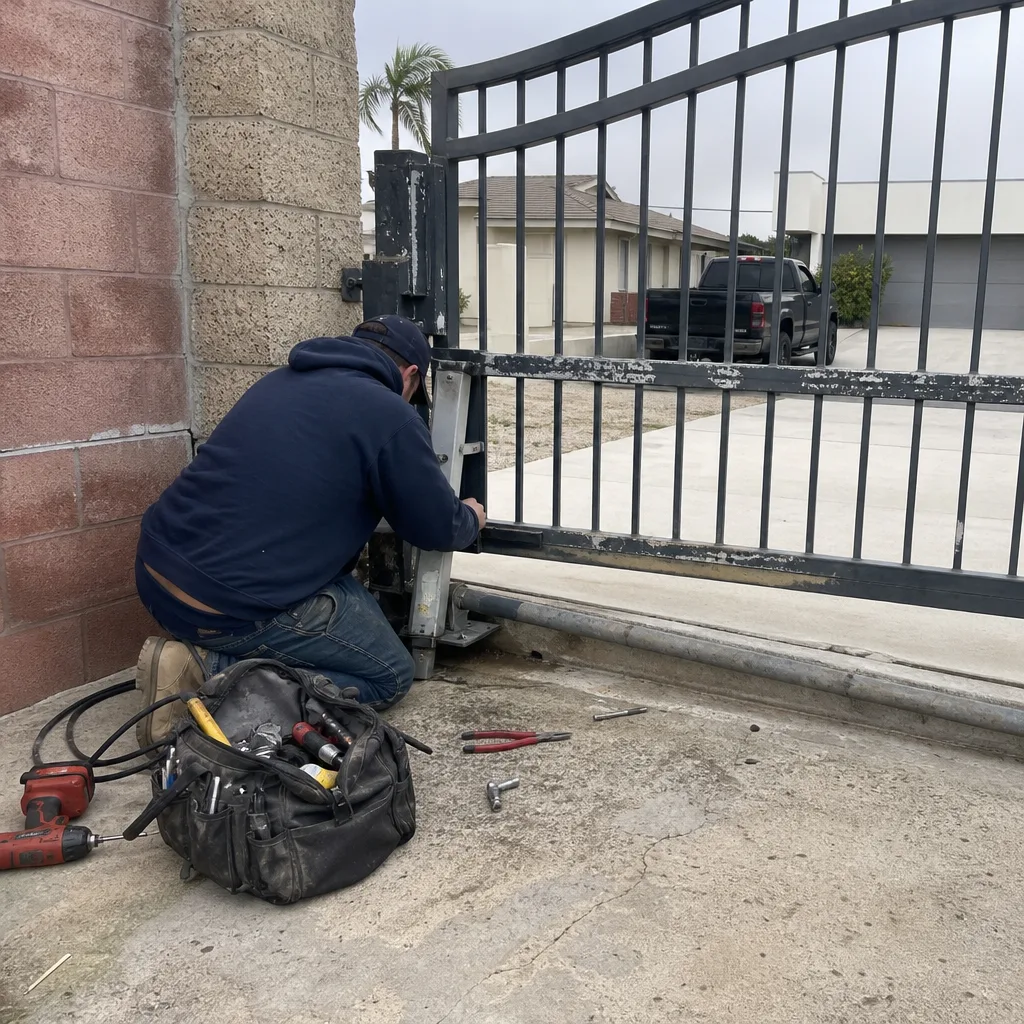 Before
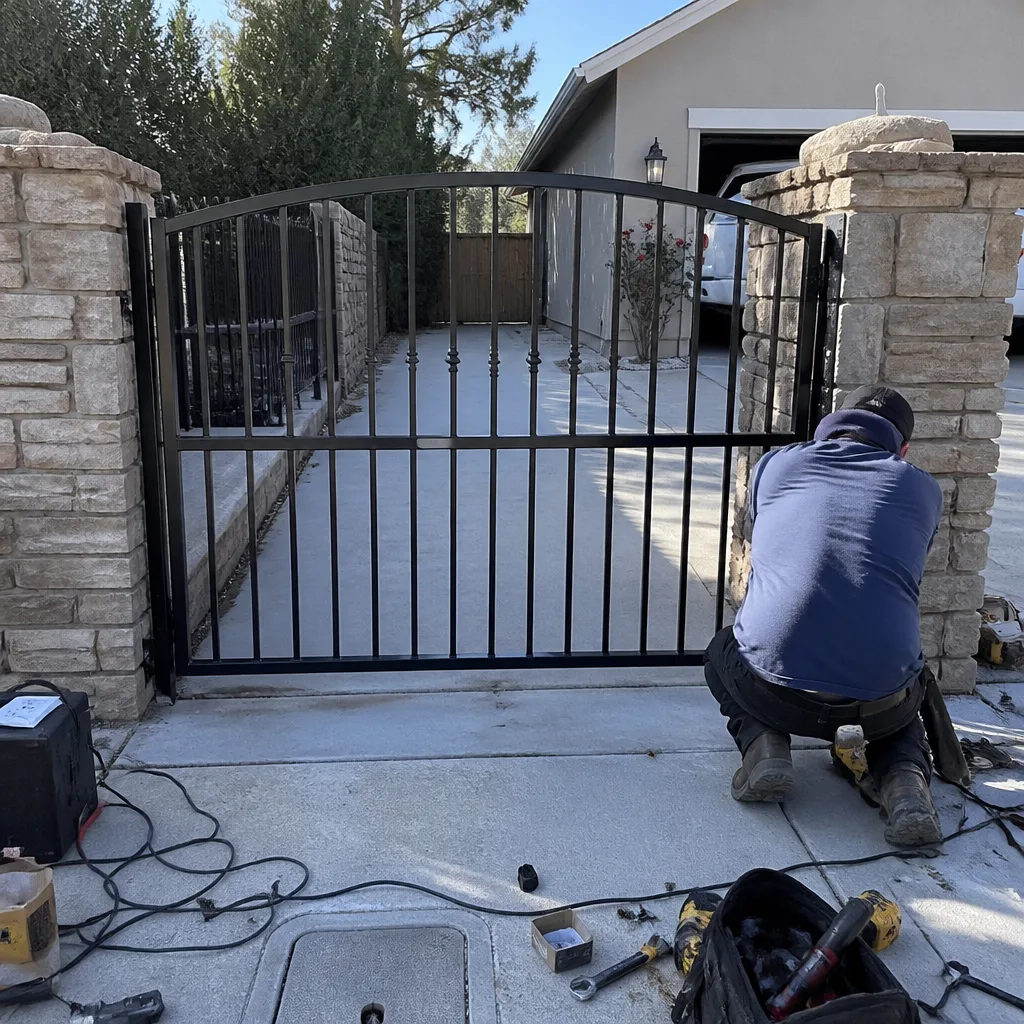 After
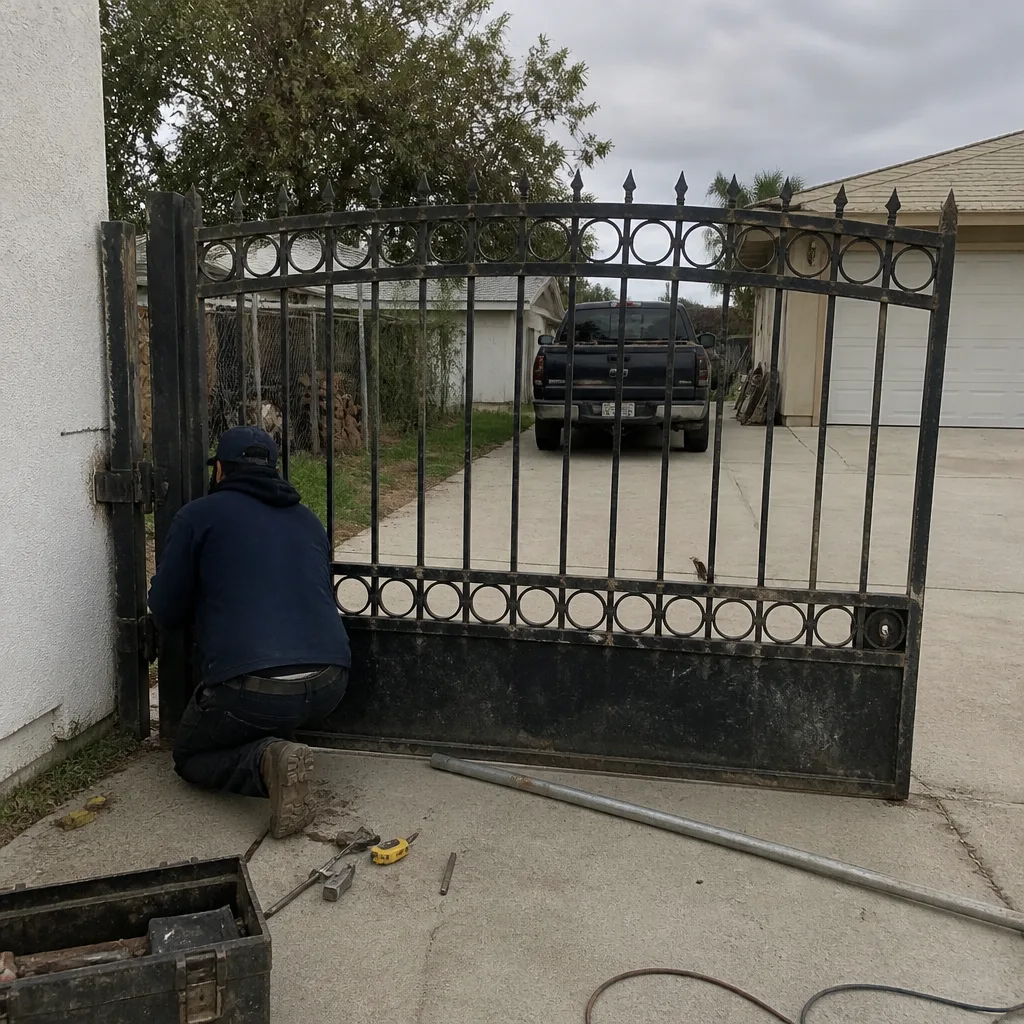 Before
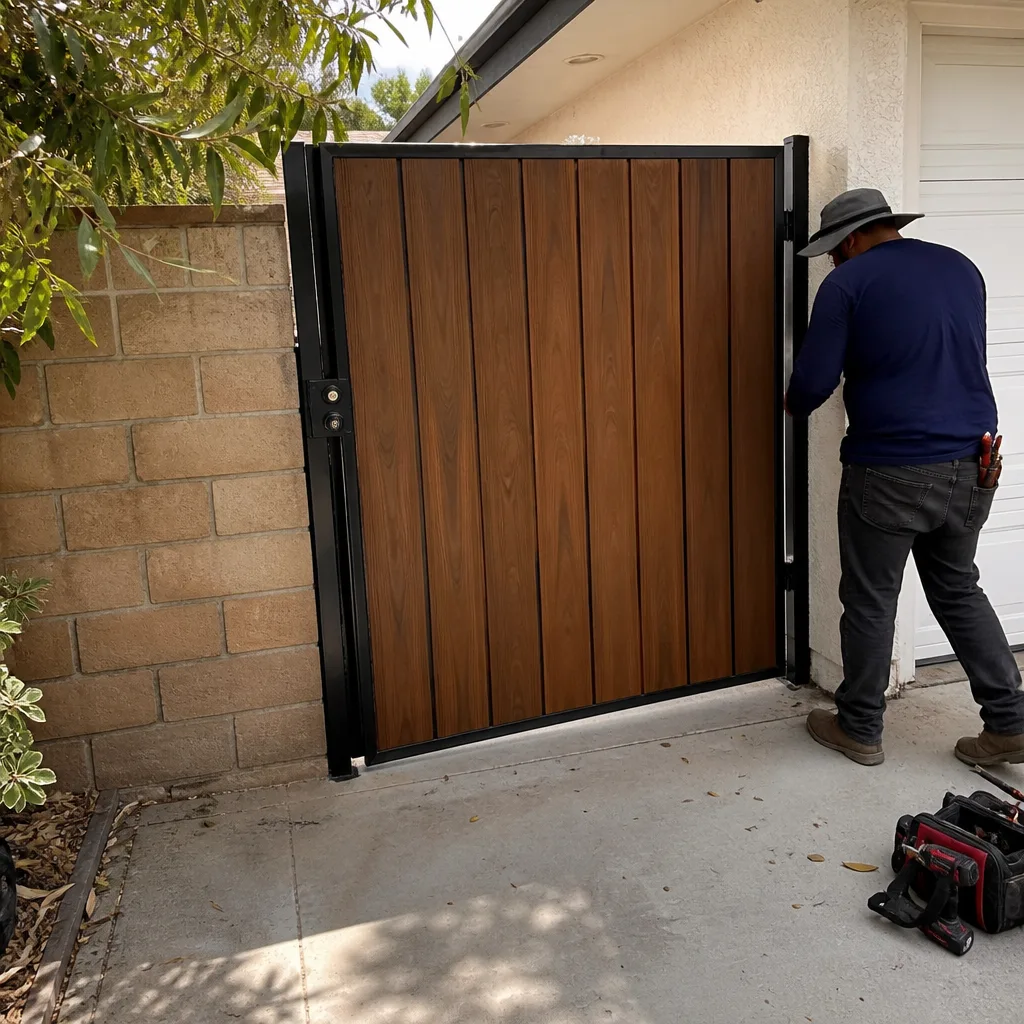 After
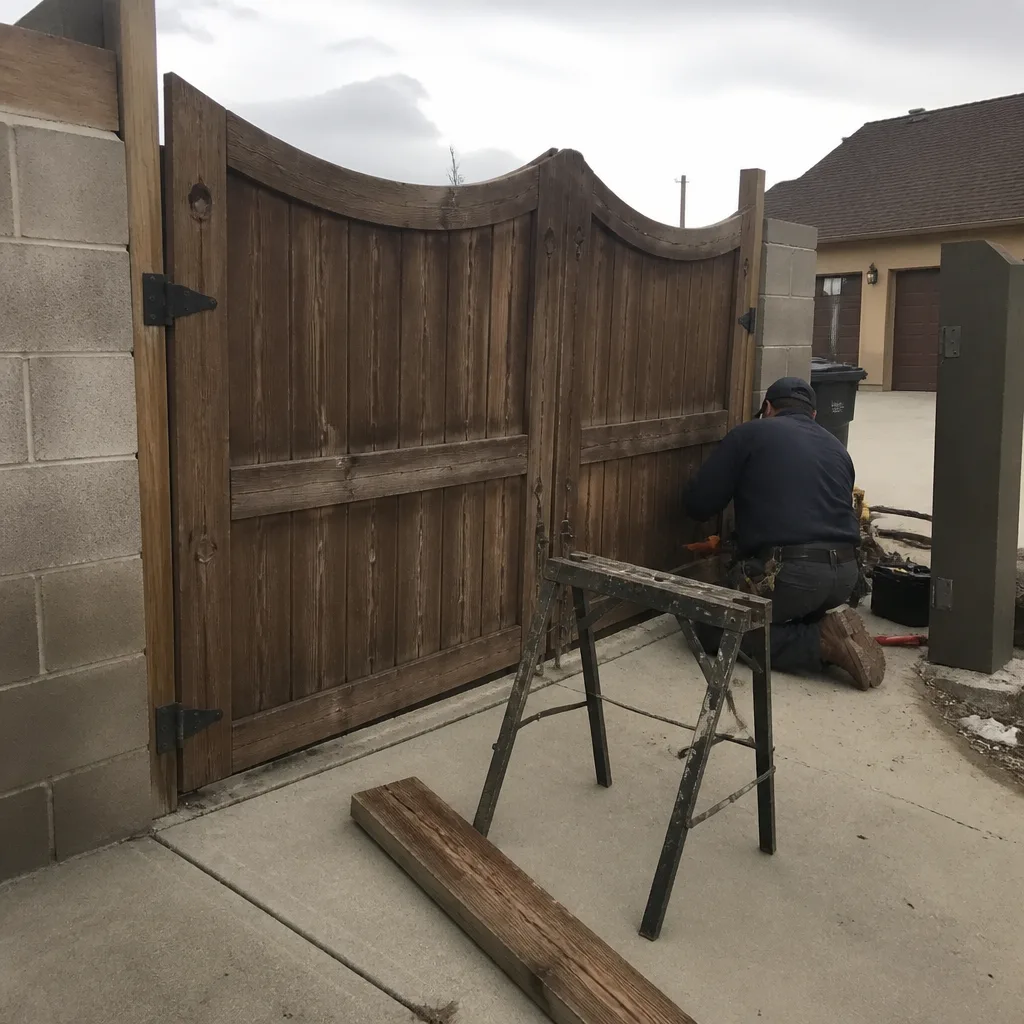 Before
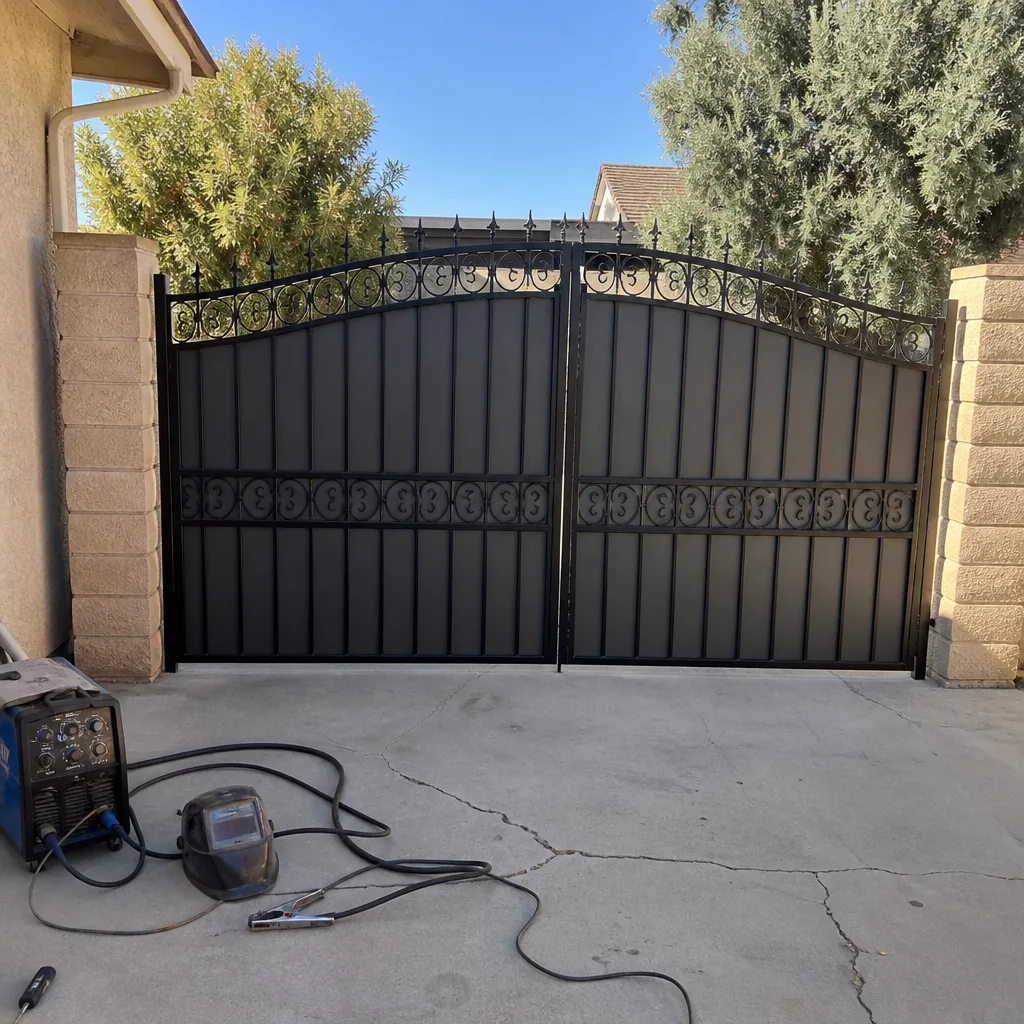 After