
Last updated November 2, 2026
 Wrought iron
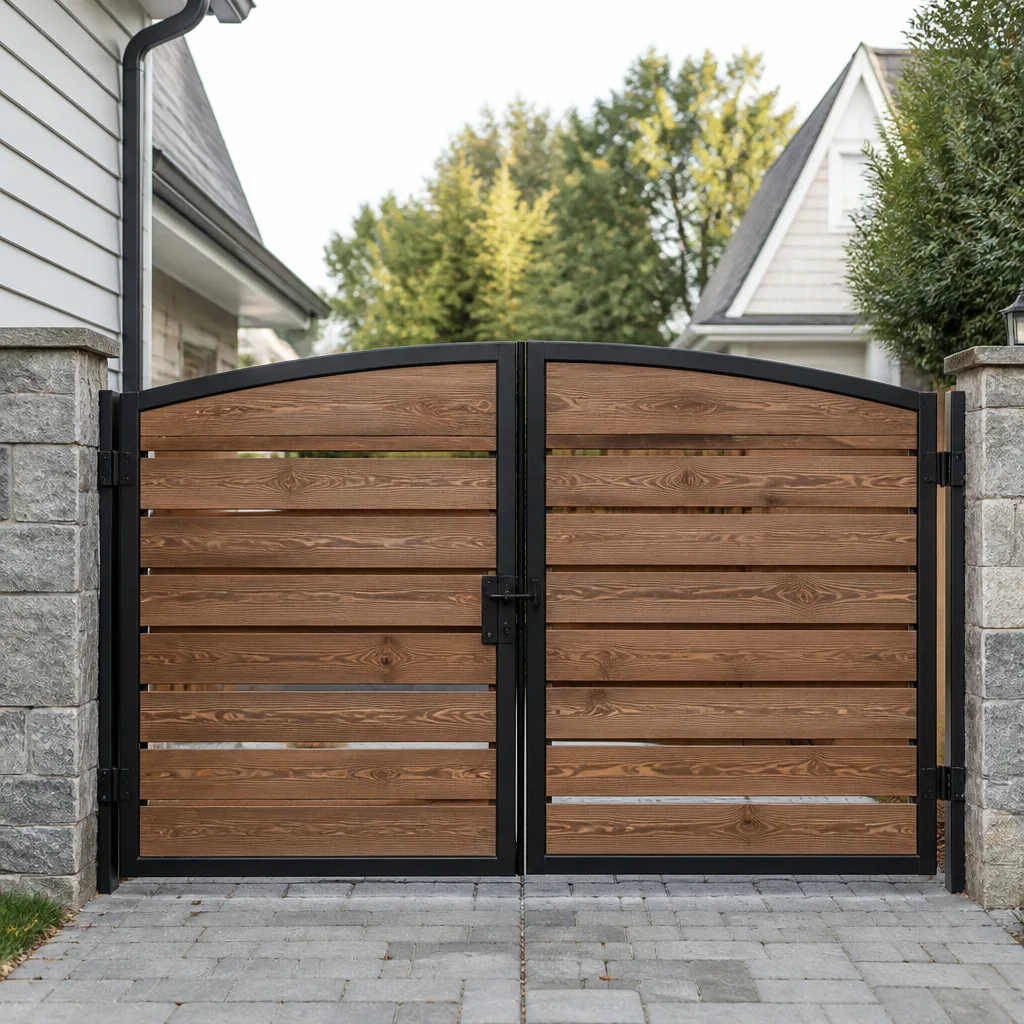 Wood & steel frame
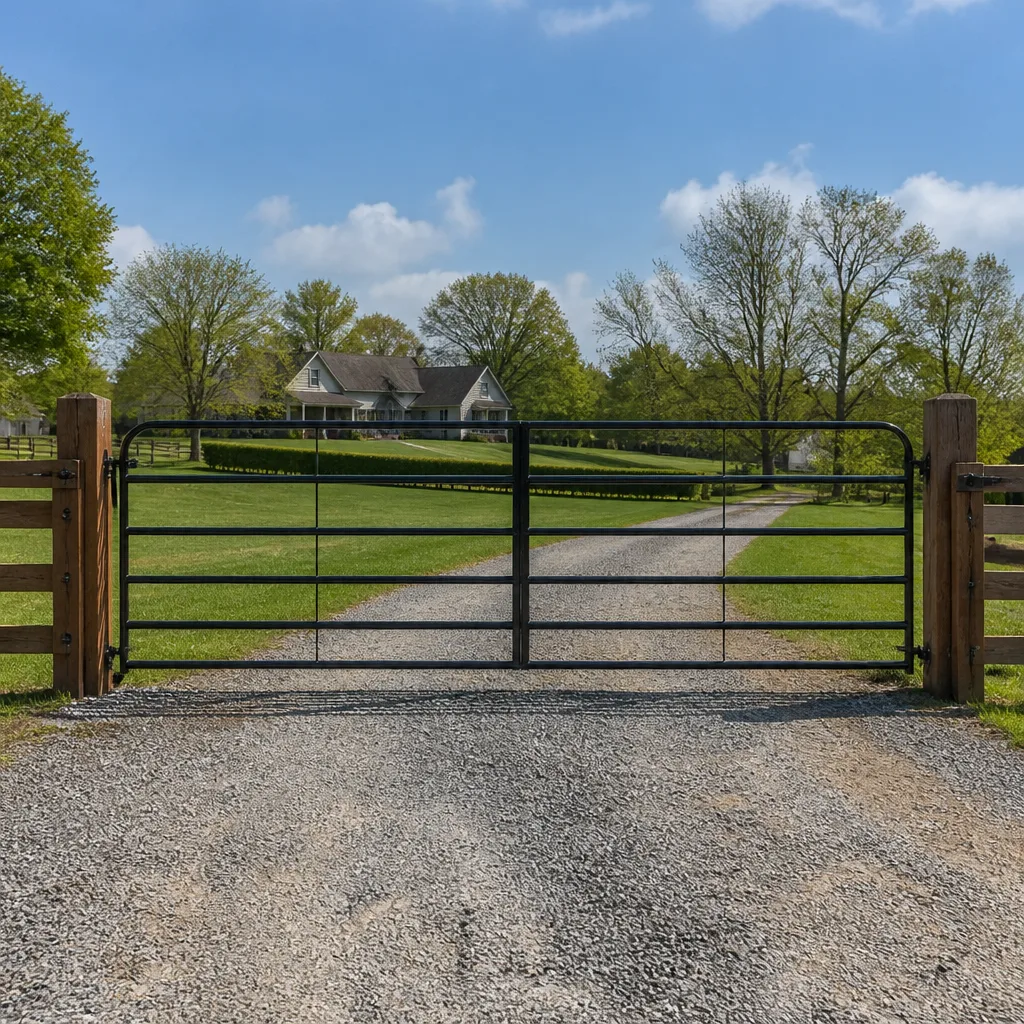 Farm & ranch
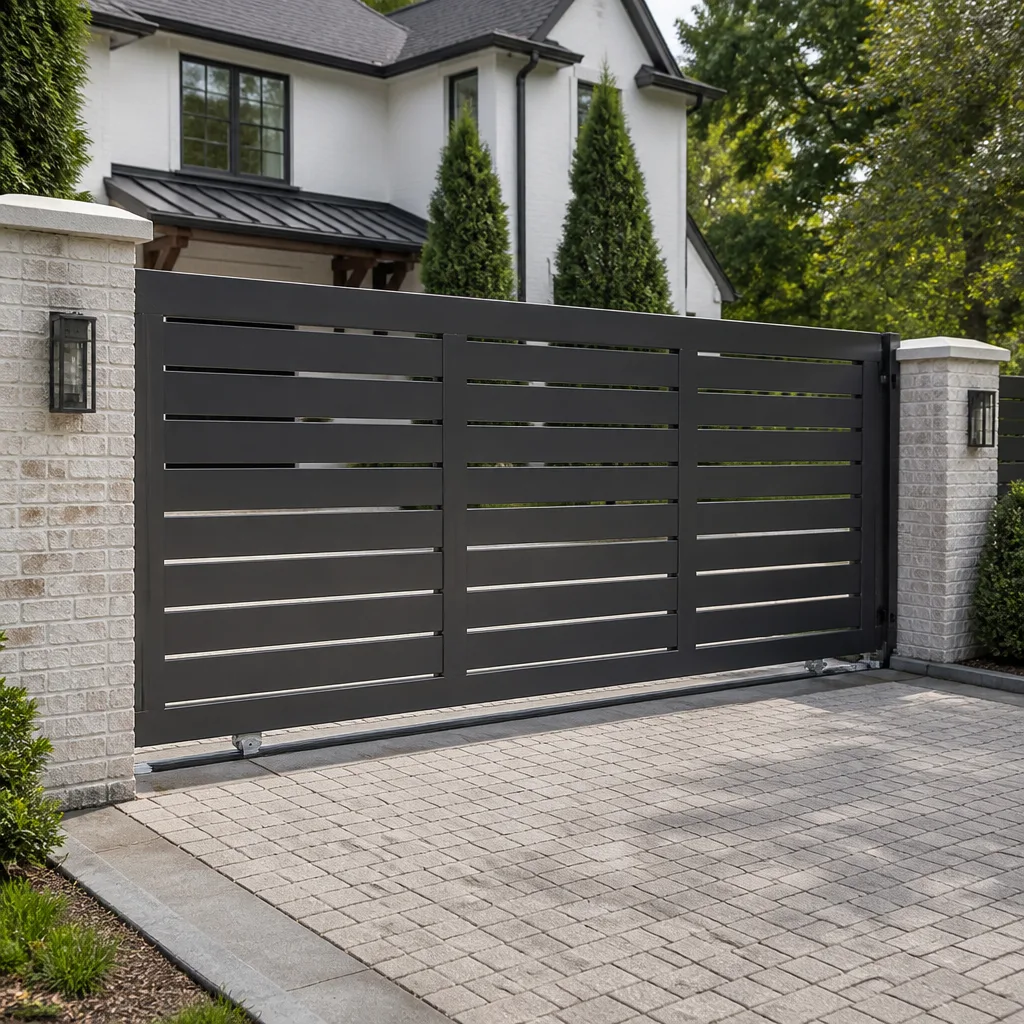 Sliding driveway gates
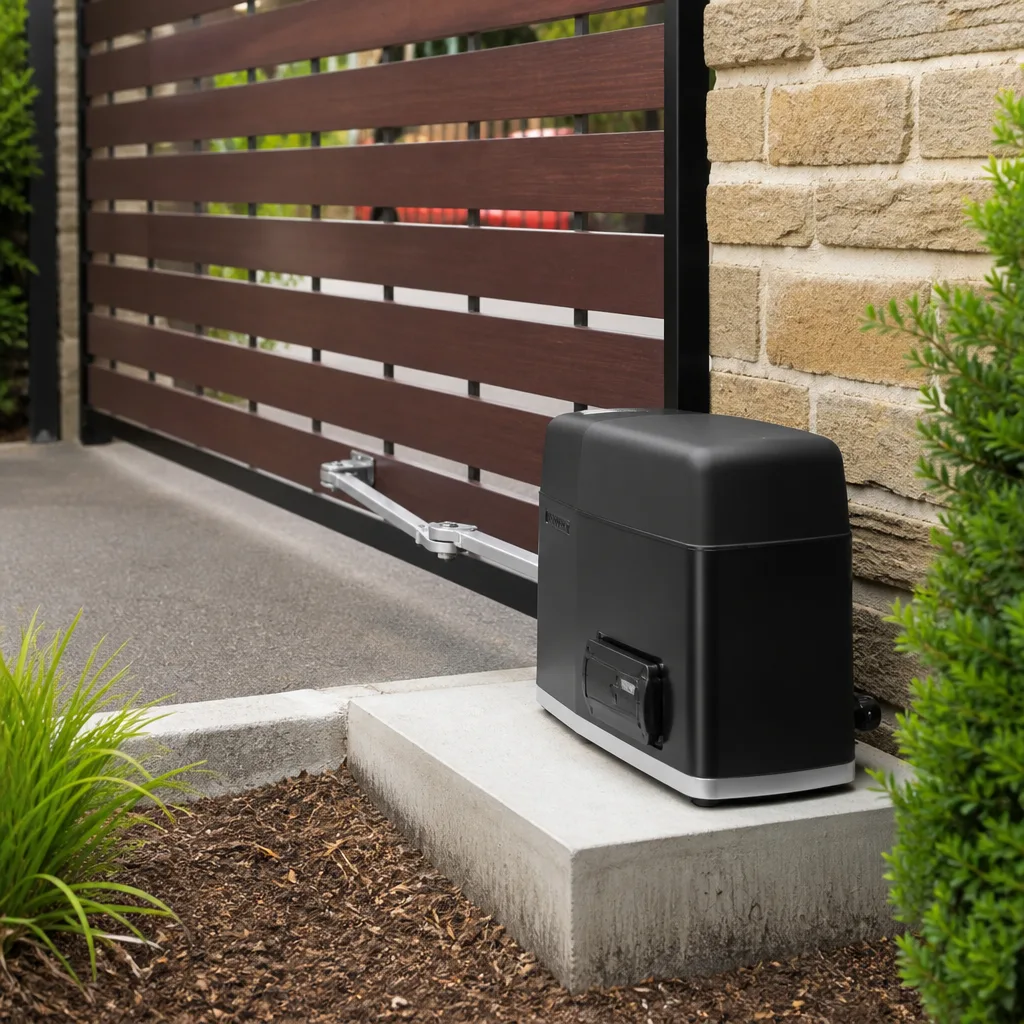 LiftMaster operators
Free on-site gate assessment - hinges, posts, and your LiftMaster or Nice gate operator checked before anything is quoted
The assessment is free and the quote is the invoice.
Get your free estimateGate Repair Emergency Preparedness Guide for Hemet Homes
Most automated gates in Hemet have a manual release mechanism that has never been tested by the homeowner. When the operator fails at 11pm with your car stuck inside the driveway, that’s a rough time to discover the release is corroded shut or you can’t remember where it is. This guide will walk you through the two distinct emergencies a Hemet homeowner faces: a gate stuck open and a gate stuck closed. You’ll learn how to locate the manual release on the most common operator brands installed across Hemet, how to secure an open gate temporarily, what to expect during a power outage, and exactly what information to have ready before you call for repair so you’re not paying for a technician’s guessing time.
Quick Answer
Gate emergencies in Hemet come in two forms that require opposite responses: a gate stuck open is a security emergency that needs immediate temporary physical securing, and a gate stuck closed is an access emergency that usually requires operating the manual release. Every automated gate has a manual release lever or key, and knowing its location and condition before a failure occurs turns a multi-hour crisis into a ten-minute resolution. For fast professional help, call Gate Repair Hemet at (866) 321-6910 – we work on Viking, Ghost Controls, DoorKing, and Elite systems specifically, and we know their release mechanisms from the motor to the latch.
Styles & brands we work with
- Wrought iron
- Wood & steel frame
- Farm & ranch
- Sliding driveway gates
- LiftMaster operators
Table of Contents
- The Two Gate Emergencies: Stuck Open vs. Stuck Closed in Hemet
- How to Locate the Manual Release on the Gate Operator Brands Installed in Hemet
- Stuck Open Emergency Protocol: Securing Your Hemet Property
- Stuck Closed Emergency Protocol: Getting Vehicles In and Out
- Power Outage Gate Behavior: What to Expect in Hemet
- What Information to Have Ready Before Calling for Emergency Gate Repair
- Safety Hazard vs. Inconvenience: When to Shut the Gate Down Immediately
- How to Identify Dangerous Gate Conditions: Entrapment and Collision Risks
The Two Gate Emergencies: Stuck Open vs. Stuck Closed in Hemet
A gate stuck open is a security emergency. Your yard, garage, or driveway now provides unrestricted access to anyone walking by, and in Hemet neighborhoods with significant foot traffic, that’s a real exposure. A gate left open overnight is an invitation, and the longer it sits that way, the more likely something walks off or someone wanders in. Your response is to secure the opening physically first, then worry about the operator second.
A gate stuck closed is an access emergency. Your car is trapped in the driveway or stuck outside. You can’t get to work, can’t get kids to school, can’t get a vehicle out in a medical situation. The fix isn’t always immediate full repair, but the response starts with the manual release, which restores function without a technician.
These two failures demand opposite protocols. If you respond to a stuck-open gate by trying to force the operator closed, you may damage the motor or the gear train and turn a simple release issue into an expensive operator replacement. If you respond to a stuck-closed gate by trying to force the gate open manually without disengaging the operator, you’re applying pressure against a locked gearbox and will likely strip gears or bend a rack. Knowing which emergency you’re in, and the right first move for each, is what this guide is built on.
In our experience working on electric gate repair in Hemet, most emergency calls involve one of three underlying causes: a failed control board, a worn operator motor, or a physical obstruction. Rarely does the gate itself need replacement. The operator is almost always the failure point, which is why we service the operator brands specifically rather than treating all gates as the same box with a motor.
How to Locate the Manual Release on the Gate Operator Brands Installed in Hemet
Every automated gate operator has a manual release that disconnects the gate from the motor, allowing the gate to swing or slide freely. The release is a mechanical override, not an electrical one – it works even with no power. The problem is that the release location, style, and operation vary by brand, and a release on a Viking operator looks nothing like a release on a Ghost Controls unit.
Here are the key differences for four operator brands frequently installed in Hemet homes:
Viking Operators
Viking swing and slide operators typically have a release lever located on the side of the operator housing, near the bottom. It’s a pull-handle or a keyed release depending on the model. On Viking slide operators, the release disengages the drive chain or belt from the gate. The release handle may require a firm pull – don’t be gentle – and if it hasn’t been exercised in years, it may take some effort. Viking releases sometimes require a padlock removal first, since many Hemet installs add a padlock to prevent tampering.
Ghost Controls Operators
Ghost Controls units use a crank or lever at the base of the motor housing. The company added a keyed release to many models after reports of manual release handles being accessible to passersby. If your Ghost Controls unit has a keyed release, the key should be on the operator itself or in the original installation packet. If it’s not, you need a service call – do not attempt to force the release open with pliers. The Ghost Controls release works by disengaging the internal drive gear, so the gate swings freely once the release is actuated.
DoorKing Operators
DoorKing slide and swing operators use a clearly marked manual release lever, usually on the front or side of the unit. DoorKing releases on slide operators disconnect the drive idler, allowing the gate to be pushed along the track. On DoorKing swing operators, the release is a pull-chain or a lever that disconnects the crank arm. DoorKing releases are among the easier ones to identify because the operator housing is usually labeled with a “Manual Release” sticker. If the sticker is gone after years of Hemet sun, look for the largest lever on the unit, not a knob or a wire.
Elite Operators
Elite slide and swing operators use a front-facing release handle or a keyed cylinder that disengages the drive mechanism. Some Elite models require a quarter-turn of the key cylinder followed by pulling the main lever. The sequence matters. If you only pull the lever without the key turn, nothing releases, which leads many homeowners to think the unit is broken when it’s simply a two-step release.
There is a general pattern to manual releases: the gate arm or chain must be free to move after you pull the release. If the gate doesn’t move freely after releasing, don’t force it. There may be a secondary latch or the gate may be physically obstructed, and forcing it can bend track or hinge hardware. That’s when you call us.
Every manual release should be tested once a quarter. Open the release, swing or slide the gate a foot by hand, and re-engage. This keeps the mechanism limber and confirms the release works before you actually need it. Hemet dust and heat can seize a release that’s never used, especially on operators installed near unpaved driveways or fields where fine dust collects on moving parts.
We handle gate repair in Hemet across all these operator brands, and the release location and condition is one of the first things we check on any service call. A seized release is a fixable problem, but it has to be caught before the emergency.
Stuck Open Emergency Protocol: Securing Your Hemet Property
When your gate fails in the open position, your immediate job is security, not diagnosis. Here’s the sequence we recommend Hemet homeowners follow:
- Secure the opening physically. If you have a secondary locking point – a chain with a padlock, a gate drop-bar, or manual slide bolts – lock the gate closed now. These hardware options exist on many Hemet residential gates and serve exactly this purpose.
- If the gate can’t be secured with existing hardware, add a temporary solution. A heavy-duty cable lock through the gate frame and the post works. A chain and padlock is better than nothing. If you need to leave the property and the gate must stay open, close it manually and secure it. Don’t leave it open while you’re gone.
- Assess whether the operator is fighting you. If you move the gate manually and the operator resists, disengage the manual release first. You don’t want to fight the motor or gearbox.
- Place a visible notice or cones if you’re securing the gate in a way that blocks delivery access. A signed note on the gate can prevent a delivery driver from forcing the gate and causing further damage.
- Call for repair. The operator itself is the problem, not the gate. A technician who knows the brand will diagnose it faster.
The security concern is real for Hemet homes. A gate stuck open all night turns a protected driveway into street access. If you can’t secure the opening, and the gate must remain open, move valuables out of any accessible yard area and lock vehicles. But your goal is to never leave it that way. A cable lock costs fifteen dollars at any Hemet hardware store and secures the gate closed until a technician can diagnose the operator.
When we service stuck-open gates in Hemet, we often find the operator’s control board received a surge or the safety sensor tripped and locked the gate open. The fix is usually the same day once we’re on site. We don’t have to order a gate – we’re working on the operator, and we keep brand-specific control components for the systems installed in this area.
Stuck Closed Emergency Protocol: Getting Vehicles In and Out
A gate stuck closed blocks your car. The operator is locked, the gate won’t move, and you need to leave. Here’s the sequence:
- Identify your operator brand and locate the manual release. The location and style vary by brand. Refer to the section above for Viking, Ghost Controls, DoorKing, and Elite. The release works without power.
- Actuate the release fully. Don’t pull halfway. A partially disengaged release can still bind the drive train and make the gate seem stuck.
- Manually move the gate open or closed. On a swing gate, push from the free edge, not the hinge side. On a slide gate, push along the track direction. The gate should move freely once disengaged. If it doesn’t move freely, stop – there’s a mechanical problem separate from the operator.
- Lock the gate if you’re leaving the property. Use whatever secondary lock you have, because the gate is now disengaged from the motor and a wind gust, or a person, can move it.
- Re-engage the release when you return, or leave it disengaged and call for repair. Don’t run the operator with a partially engaged release – it can strip the release mechanism and turn a simple repair into an operator rebuild.
The key insight here is that the manual release is not a repair. It’s a bypass. It restores your ability to move the gate by hand, which solves the immediate access problem, but the operator itself still needs service. We see Hemet homeowners run their gates on manual release for weeks because “it works fine by hand,” and then the wind gusts, the unsecured gate slams, and the frame or hinges get damaged. That’s a more expensive repair than the original operator fix would have been.
For reliable operator repairs on the brands installed in Hemet, our Gate Repair in Hemet service handles the diagnosis and fix the same visit in most cases.
Power Outage Gate Behavior: What to Expect in Hemet
Hemet’s summer heat drives heavy air conditioning use, and brownouts and rolling outages happen. When the power goes out, gate operators respond differently depending on their power architecture. Some swing gates and slide gates have battery backup built in, some have an optional add-on battery, and many have no battery at all.
Operators with battery backup will continue to operate normally for a limited number of cycles. Viking and Elite offer battery backup as an option on many models. Ghost Controls has battery backup on some of their higher-end systems. DoorKing offers it as a factory option on certain slide and swing operators. The number of backup cycles varies, but in Hemet’s heat, a battery that’s a few years old delivers fewer cycles than the spec sheet claims. Heat degrades lead-acid and gel batteries faster than moderate climates do.
A fully charged backup battery in good condition usually provides somewhere between ten and twenty open-close cycles before it needs utility power to recharge. An older battery, especially one that’s been through two or three Hemet summers, may give you two cycles. If your gate has battery backup and you know an outage is likely, open the gate and leave it open if that serves you better than a non-operating closed gate. Otherwise, use the manual release when the battery is exhausted.
Operators without battery backup simply don’t work when the power is out. The gate stays in whatever position it was in when power dropped. If it was closed, you use the manual release. If it was open, you secure it manually. The manual release is your primary tool in a no-battery outage, which circles back to the importance of knowing where it is and testing it quarterly.
When power returns, most operators resume normal operation. A small number of units, particularly older control boards, will sit in an alarm state and require a reset. That reset is usually straightforward: find the reset button or power-cycle the operator’s incoming breaker. If the operator blinks and won’t respond after a power cycle, the board may have failed during the surge. That’s the kind of failure we diagnose and repair on an electric gate repair in Hemet call.
What Information to Have Ready Before Calling for Emergency Gate Repair
The faster a repair service can identify your operator and understand the failure, the faster they can diagnose and fix it. There’s a set of information that cuts response time meaningfully:
- Operator brand and model. The brand name is usually printed on the operator housing. The model number is on a sticker or metal plate on the unit. Having both matters. A Viking operator is wired differently than a DoorKing. Our technicians know which brand they’re walking up to before they arrive, and that saves the entire diagnostic phase.
- Serial number. On the same plate as the model number. It helps us pull the correct wiring diagram and know the production era, which matters for control board compatibility.
- What the gate is doing exactly. Is it stuck open, stuck closed, mid-travel, making noise, responding intermittently? The more precise the description, the better.
- What happened right before. Power outage, rain, someone manually forced the gate, a car hit it, a new remote was added. The event preceding the failure is often the cause.
- Whether you’ve already tried the manual release. If you have, and the gate won’t move freely, we know the problem is mechanical, not operator-based. If you haven’t tried it, that’s fine.
- Photos. A photo of the operator and the gate position helps us arrive with the right parts. Text them to us when you call.
Having this information ready before you call saves time, and time is money on an emergency service call. It also means less guessing and more diagnosing. We work on gate systems from the brand level down, so knowing the brand and the behavior narrows the problem to a specific circuit, gear, sensor, or motor. No guesswork on site.
Safety Hazard vs. Inconvenience: When to Shut the Gate Down Immediately
Not every gate failure is an emergency. A gate that beeps but doesn’t move is an inconvenience. A gate that reverses onto a car, or moves without a signal, is a safety hazard. Knowing the difference matters because it changes both your response and the urgency of the service call.
Immediate hazard conditions: the gate reverses direction while opening or closing, the gate moves without a command from a remote or keypad, the gate closes on a vehicle or person and doesn’t rebound, the gate makes grinding or crunching sounds while continuing to move, or the gate is visibly off its track or hinge but the operator still runs. Any of these means a risk of entrapment or collision. The response is to shut the operator off at the power source or breaker, disengage the manual release if needed, and leave the gate unpowered until a technician arrives.
Delayable conditions: the gate moves slowly but reliably, a remote stopped working but the keypad works, the gate makes a light squeak, the auto-close timer isn’t working. These are repairs that can be scheduled for regular hours without creating a safety risk.
Entrapment risk is the serious one. UL 325 compliant operators have obstruction sensors designed to reverse a closing gate, but if those sensors are faulty or the reversing circuit has failed, the gate can and will close on a vehicle or a person. Gates are heavy, and a swing gate moving with full motor torque can cause serious injury. When entrapment is a possibility, the gate should be shut down until it’s serviced. We’ve seen Hemet gates where a failed safety sensor was the only thing standing between normal operation and a collision.
If you’re not sure whether your gate’s behavior is a hazard or a nuisance, a phone call is free. Call (866) 321-6910, describe what the gate is doing, and we’ll tell you whether it’s safe to keep running or should be shut down.
How to Identify Dangerous Gate Conditions: Entrapment and Collision Risks
Most dangerous gate failures involve either entrapment, where the gate closes on something, or collision, where the gate hits something it shouldn’t. Both have identifiable warning signs, and both generally trace to specific component failures:
Entrapment Risk Indicators
- The gate doesn’t reverse when it hits an object. Every UL 325 compliant operator must have a reversing mechanism. If yours doesn’t reverse, the primary safety circuit has failed, and the gate should be shut down.
- The obstruction sensors are misaligned or dirty. Photo eyes can drift out of alignment over time, especially on gates mounted on shifting ground or posts. When misaligned, the system may treat the beam as broken and refuse to close, or treat it as continuous and close regardless of obstruction.
- The gate closes faster than it used to. A deteriorating speed control or a failing hydraulic check can change closing speed. A gate that closes fast is more dangerous than one that closes slowly.
- The gate ignores the remote stop command. If the gate doesn’t stop when you press the remote mid-cycle, the control board may be failing. That’s an immediate shutdown.
Collision Risk Indicators
- The gate travels past its normal open or close limits. Limit switches fail, and a gate that over-travels can hit a post, a car, or a person standing near the travel path.
- The gate is off its track or the hinges are loose but the operator still runs. If the gate’s physical mounting is compromised, the gate can bind, skew, or detach while moving.
- You hear grinding from the gear train during travel. Gear teeth are shearing, and the gate may lurch or drop when the final teeth fail.
The response to any of these indicators is the same: shut the gate off at the breaker or the operator power switch, leave it off, and call for service. On a Viking, Ghost Controls, DoorKing, or Elite operator, the failure is almost always repairable with the correct component replacement. We keep brand-specific parts for these systems in stock because they’re the brands Hemet builders and gate contractors have been installing for years. If you’re seeing any of these warning signs, call (866) 321-6910 and we’ll come diagnose it. A gate that behaves dangerously isn’t a wait-and-see problem.
Common Mistakes to Avoid
- Not testing the manual release before an emergency. The release is a mechanical part exposed to Hemet dust and heat, and an untested release seizes. Test it quarterly and keep it limber.
- Forcing a gate open or closed without disengaging the operator. This is how gears get stripped and racks get bent. The operator is designed to hold the gate, and fighting it costs you an operator in addition to whatever was already wrong.
- Leaving a gate stuck open overnight without securing it. Hemet properties with open gates attract attention. A cable lock is cheap, and the time to secure the gate is before you go to bed, not before you call us.
- Running the operator with a battery backup that’s clearly degraded. A dying battery stresses the transformer and the control board. Replace the battery before it takes the board with it.
- Ignoring misaligned obstruction sensors. A photo eye that’s drifted out of alignment is a low-cost fix, but if the system is left that way, the gate may close on something important.
- Using a universal-parts repair service that doesn’t know your brand. We’ve seen Hemet gates where a previous repair swapped in a universal control board that didn’t match the operator’s logic, causing phantom opens and unreliable safety behavior. Brand-specific diagnosis matters.
- Delaying repair after disengaging the manual release. A gate running on manual release is unsecured in wind, and the release mechanism itself can wear from repeated use. Fix the operator instead of running the gate by hand.
See the difference
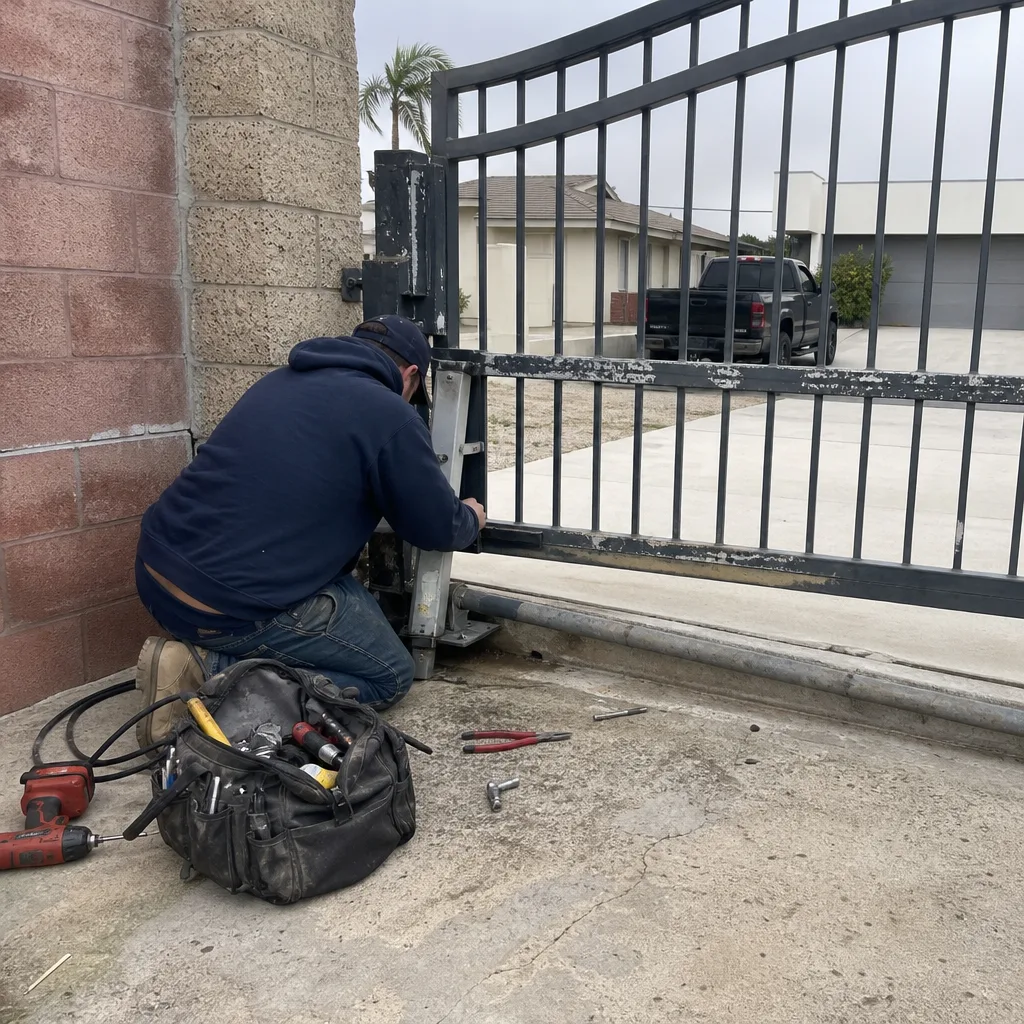 Before
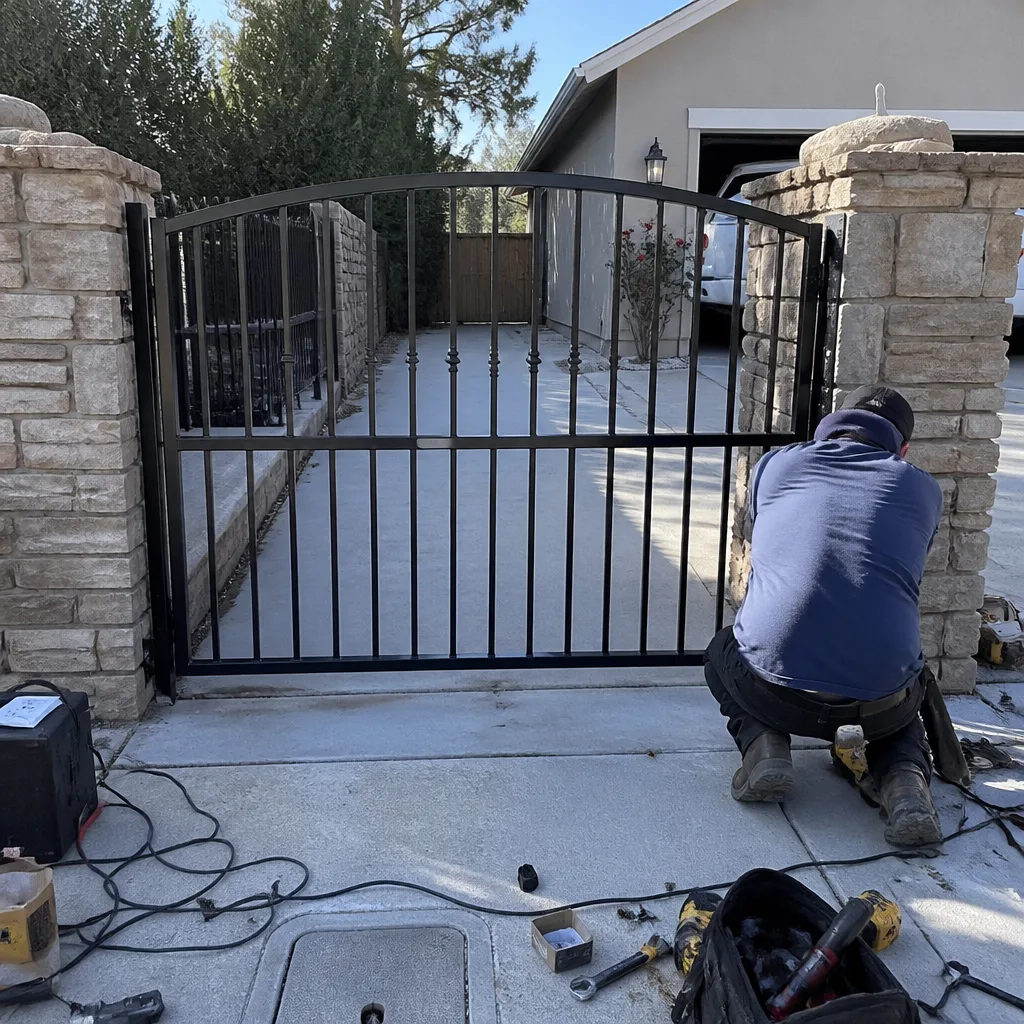 After
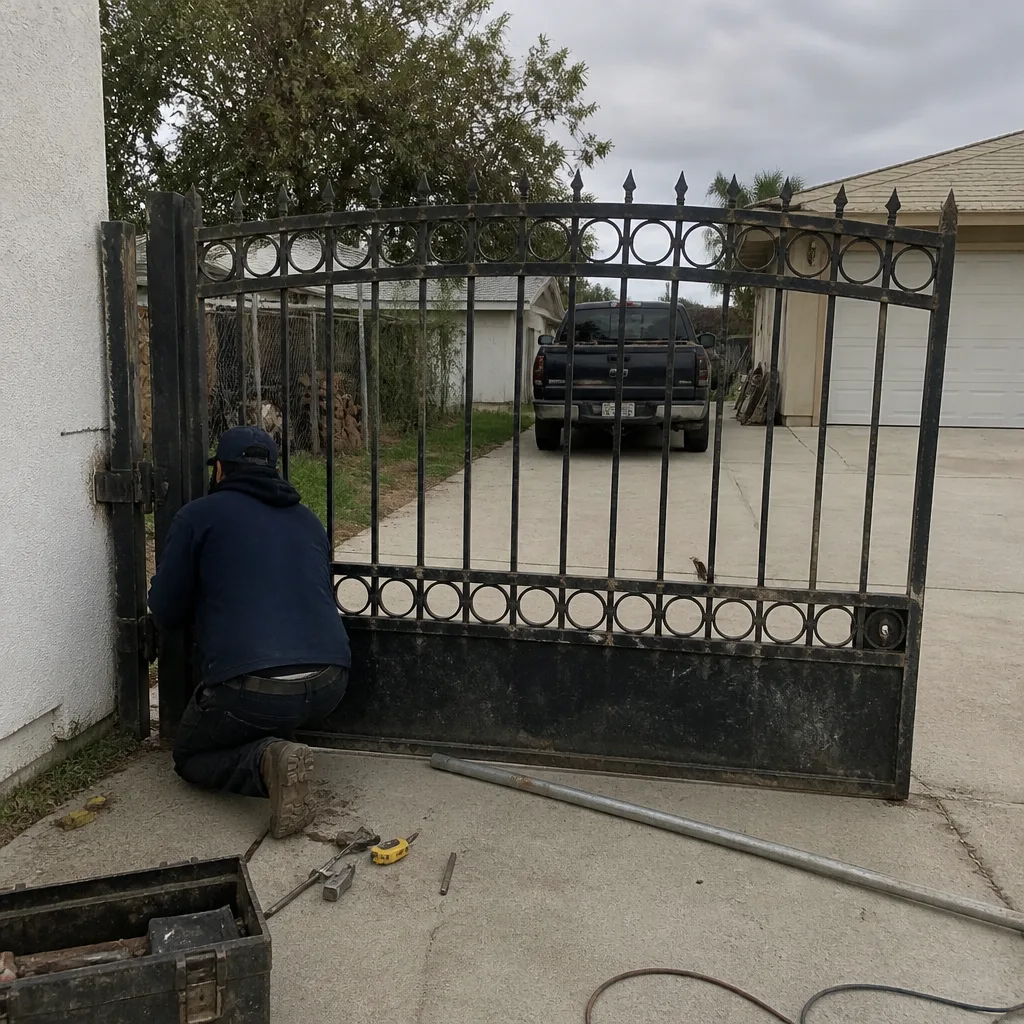 Before
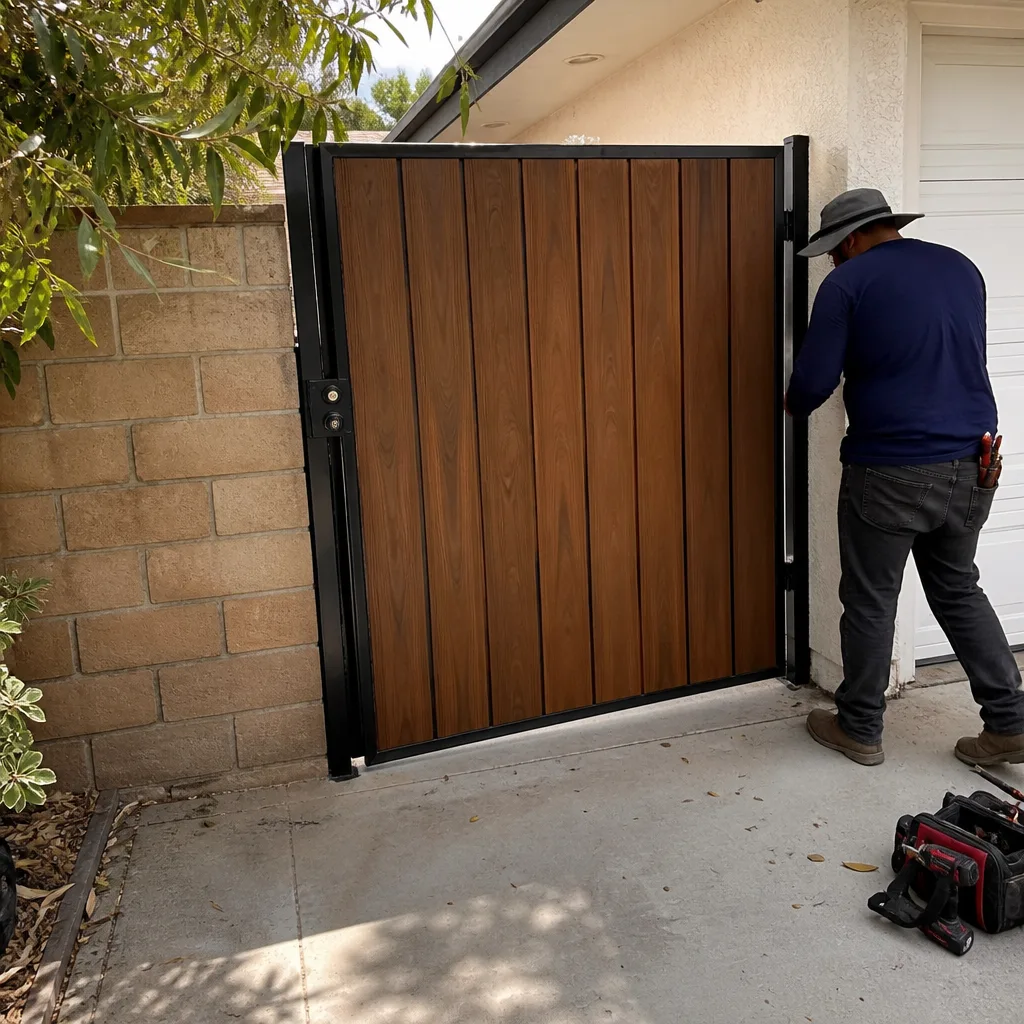 After
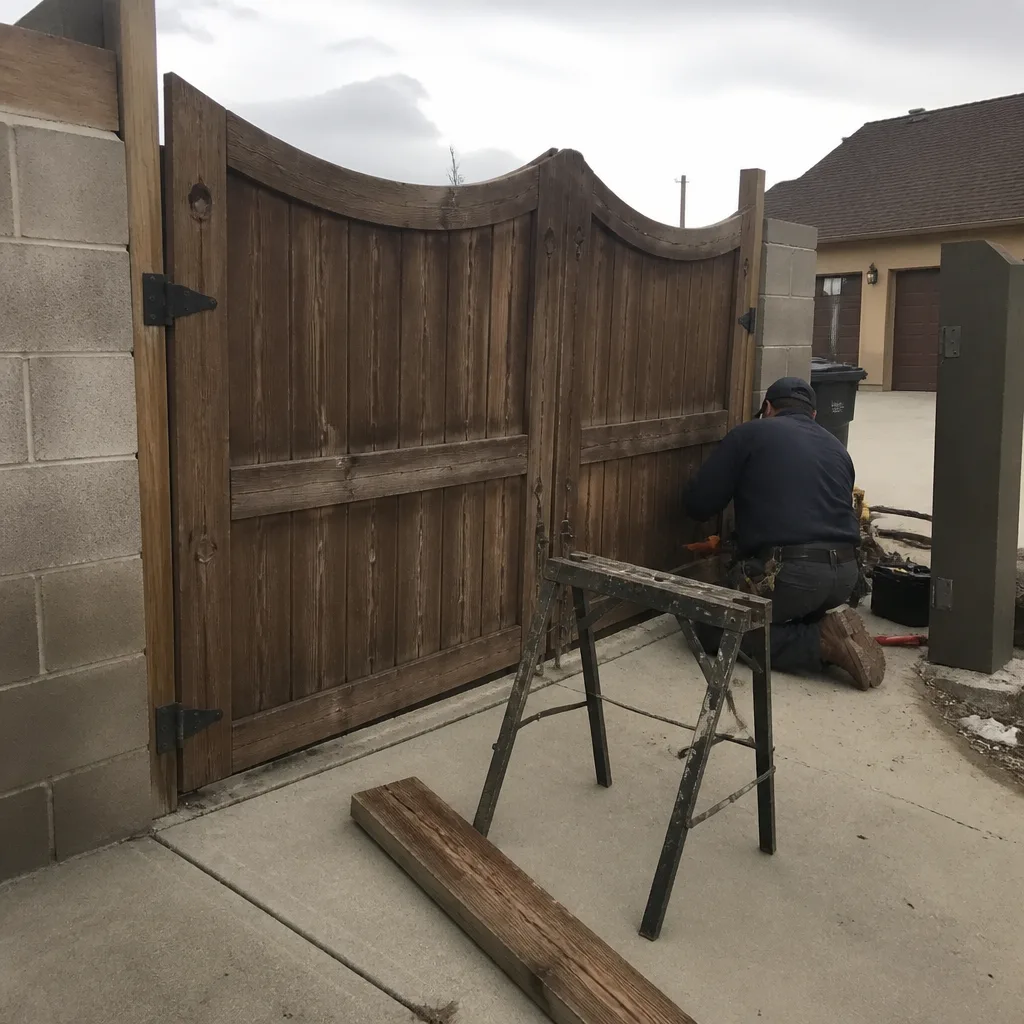 Before
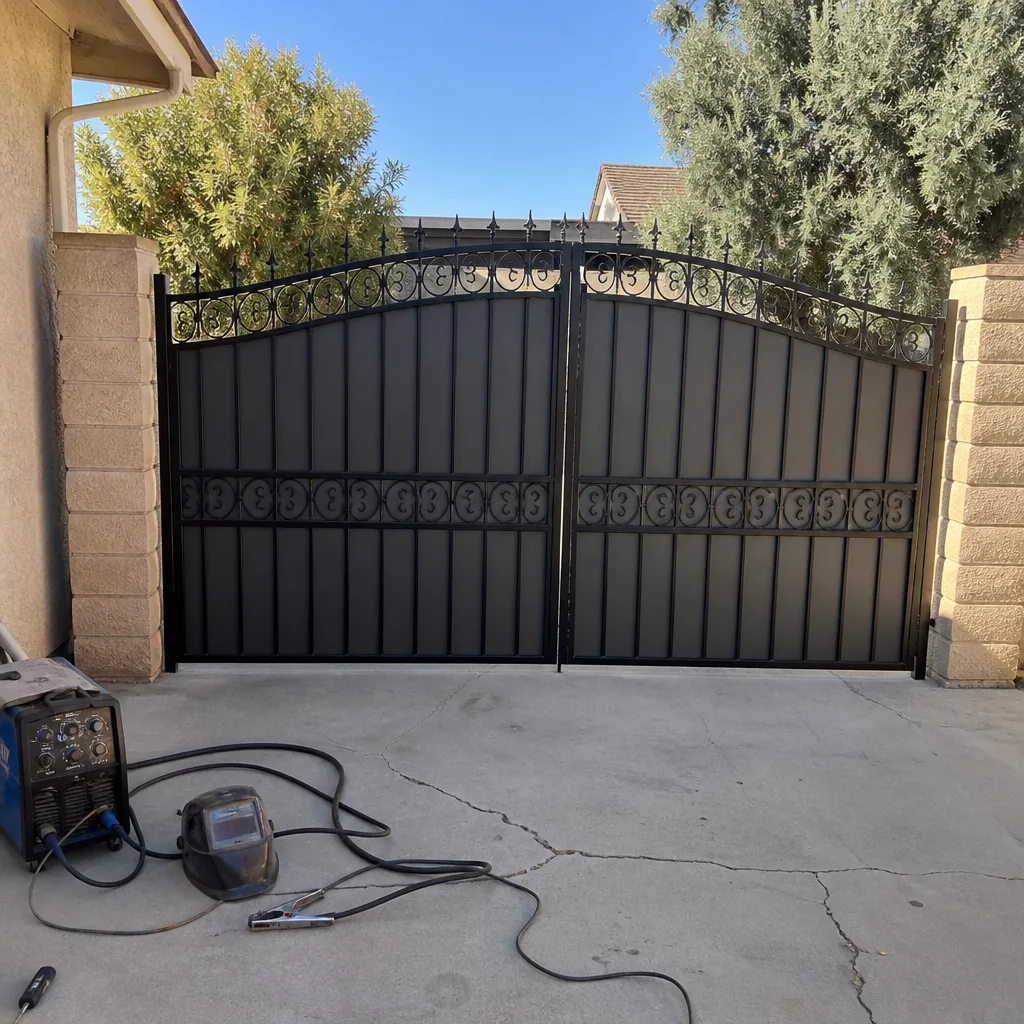 After
When to Call a Professional
When the manual release is seized and won’t budge, call. When the gate shows entrapment or collision risk indicators, call. When the operator runs but the gate doesn’t move, call. When the control board is flashing error codes, call. When the gate was hit by a vehicle and the hinges or track are compromised, call. When you’ve disengaged the release and the gate still won’t move freely, call – that’s a mechanical problem, not an operator problem. Gate Repair Hemet handles all of it: operator repair, control board replacement, sensor alignment, and full gate installation when the old gate is beyond saving. We work from the motor to the latch on the brands installed throughout Hemet, including Viking, Ghost Controls, DoorKing, and Elite. Call (866) 321-6910 for a free estimate – we diagnose first, then quote, and nothing gets done without your approval.
Frequently Asked Questions
Emergency gate repair in Hemet typically ranges from $150 to $450 depending on the component and brand. A simple sensor realignment or remote reprogramming lands on the low end, a control board replacement lands higher, and a motor replacement is more. The operator brand matters because parts costs for a DoorKing board differ from a Ghost Controls board. Call (866) 321-6910 with your operator brand and we’ll quote you over the phone before we arrive – no surprises.
In most cases, yes. A gate stuck closed or stuck open counts as a high-priority call, and we handle emergency dispatch across Hemet. Call (866) 321-6910, describe what the gate is doing, and have your operator brand ready so we arrive with the right parts. For less urgent issues, we schedule calls for the next available slot.
Yes, every gated operator has a manual release that disconnects the gate from the motor, allowing manual operation with no power. The exact location and operation depends on your operator brand – see the sections above for Viking, Ghost Controls, DoorKing, and Elite. If the release is seized or you can’t find it, call us and we’ll walk you through it on the phone, or come out to release it for you.
We service nine gate and operator brands, including Viking, Ghost Controls, DoorKing, Elite, LiftMaster, FAAC, BFT, Linear, and Mighty Mule. We’re factory-familiar with how each brand’s control board, sensors, and release mechanisms work, which means faster diagnosis and fewer callback visits. When you call, tell us the brand and have the model number ready.
A full gate installation includes the gate itself, the operator, the control board, safety sensors, remotes or keypads, and the physical mounting hardware. We handle the whole scope from assessment through completion, including upgrading a manual gate to electric. If you’re replacing a gate that was originally manual and adding an operator, that’s a project we can install in Hemet without handing you off to a different contractor mid-job.
Yes. A proper electric gate installation includes the low-voltage power run from the house or separate feed, plus the safety edges and photo eyes required for UL 325 compliance. Skipping the safety edges is not optional on an electric gate. If your existing electric gate is missing or has faulty safety edges, that’s an electric gate repair we can do – and it’s a safety issue that shouldn’t wait.
The Bottom Line
A gate emergency in Hemet is either a security emergency or an access emergency, and your first move should be predetermined, not improvised. Locate and test your manual release now, on the brand of operator you have. Know what to do when the gate is stuck open versus stuck closed. Understand what your operator does in a power outage, and whether you have battery backup. Have your operator brand, model, serial number, and failure description ready before you call. And when the failure is a safety hazard – entrapment risk, collision risk, or an operator that moves without command – shut the gate down and call Gate Repair Hemet at (866) 321-6910. We work on the brands installed in this city, we diagnose from the motor to the latch, and we don’t guess.
Written by the team at Gate Repair Hemet, serving Hemet since 2012.