
Last updated November 2, 2026
 Wrought iron
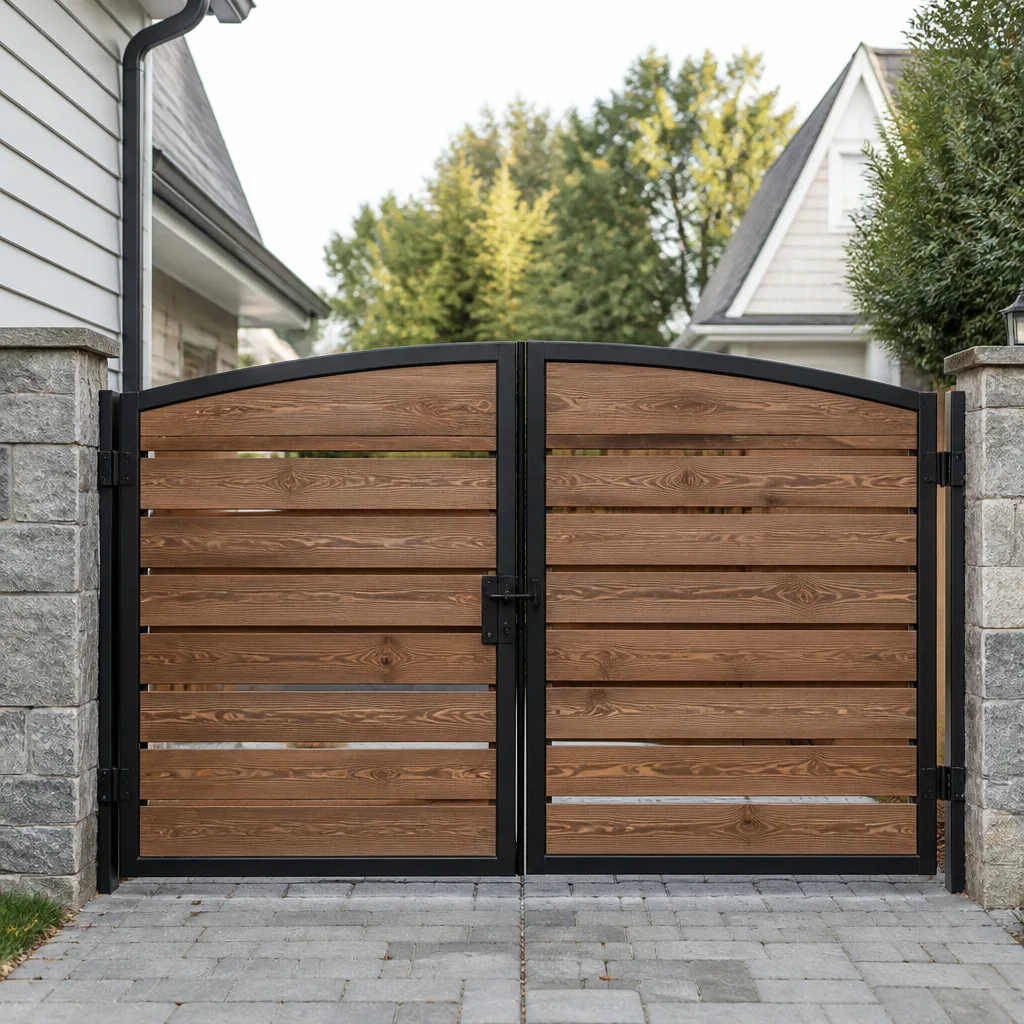 Wood & steel frame
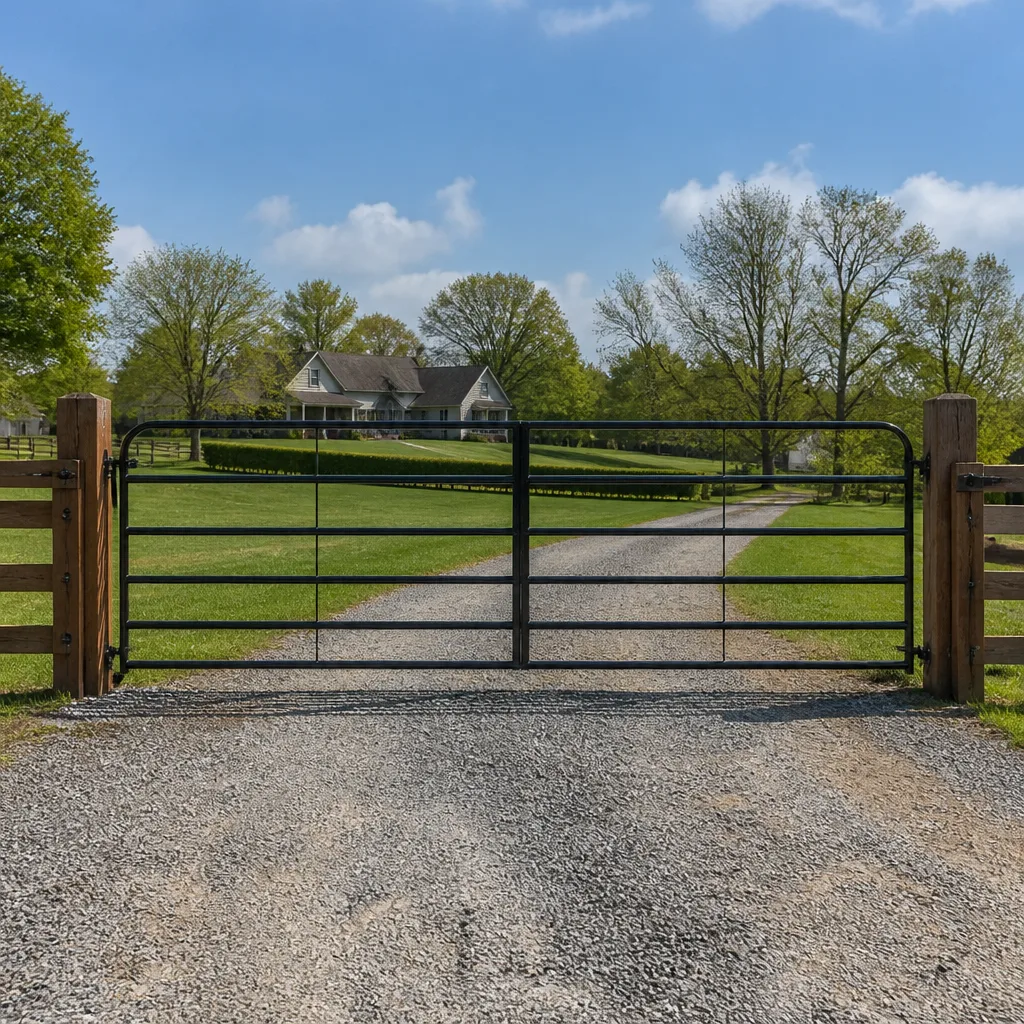 Farm & ranch
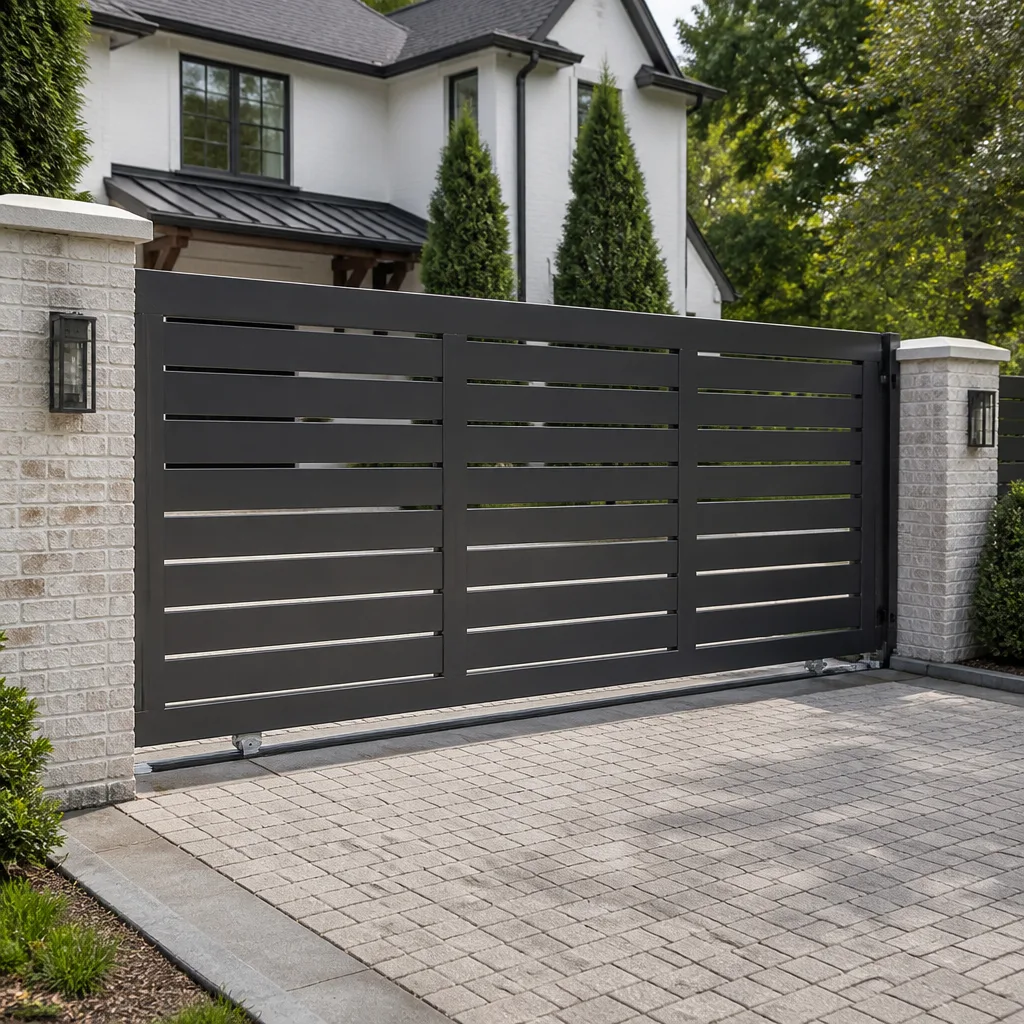 Sliding driveway gates
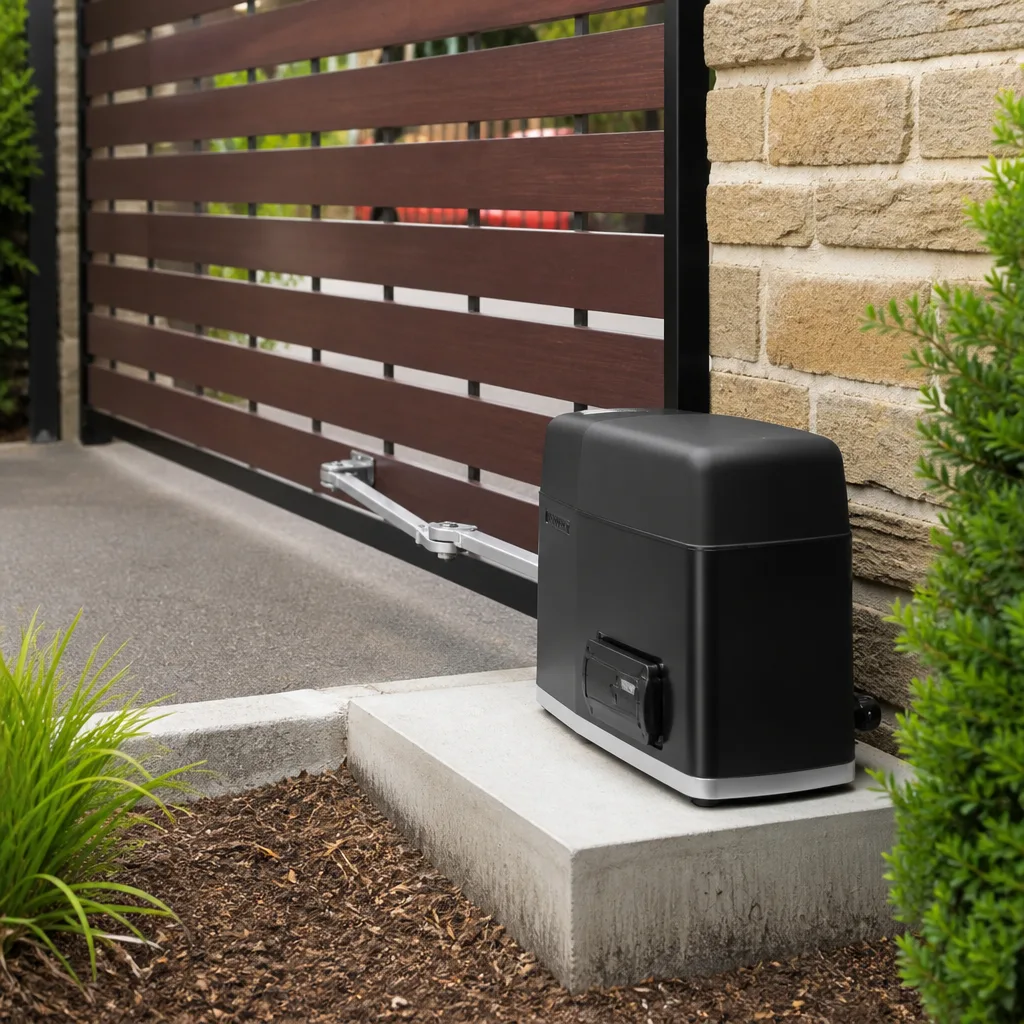 LiftMaster operators
Free on-site gate assessment - hinges, posts, and your LiftMaster or Nice gate operator checked before anything is quoted
The assessment is free and the quote is the invoice.
Get your free estimateGate Repair Maintenance Checklist for Hemet Homeowners
Hemet’s summer temperatures routinely exceed 105°F, and the gate lubricants sold at most hardware stores break down and turn to varnish above 90°F. That varnish doesn’t just stop protecting your gate’s moving parts. It glues them together, which is why so many gates in this valley seize up in August after being “maintained” in June. This checklist is built around what actually happens to gates in Hemet: extreme heat, dust from the San Jacinto Valley floor, and hard water mineral deposits that corrode electrical contacts. You’ll learn what to inspect, what to lubricate with, and when to stop poking at it and call our Gate Repair services.
Styles & brands we work with
- Wrought iron
- Wood & steel frame
- Farm & ranch
- Sliding driveway gates
- LiftMaster operators
Quick Answer
A Hemet gate maintenance routine centers on monthly dust and track clearing, quarterly heat-rated lubrication of hinges and rollers, and annual electrical contact cleaning for mineral scale. Most manual gate failures here trace to lubricant breakdown above 90°F or dust accumulation in slide tracks, while most electric gate failures trace to corroded battery terminals or solar panel contacts from hard water deposits. A thirty-minute monthly check prevents the majority of mid-summer breakdowns.
Table of Contents
- Why Standard Gate Lubricants Fail in Hemet Heat
- Monthly Gate Maintenance Checklist
- Quarterly Gate Maintenance Checklist
- Annual Gate Maintenance Checklist
- Hard Water and Your Gate’s Electrical System
- Dust Management for Slide Gates in Hemet
- Thermal Expansion and Swing Gate Hinges
- Common Mistakes to Avoid
- When to Call a Professional
- Frequently Asked Questions
- The Bottom Line
Why Standard Gate Lubricants Fail in Hemet Heat
Most gate lubricants are formulated for temperate climates. The white lithium grease and general-purpose spray lubes stocked at chain hardware stores have a working temperature ceiling around 90°F. On a 105°F Hemet afternoon, your gate’s dark metal surface can reach 140°F or higher. The lubricant thins, runs out of the hinge, and what’s left behind bakes into a sticky residue that attracts dust and hardens.
We see this failure pattern constantly on gates throughout Hemet. A homeowner lubricates their swing gate in May, and by July the hinges are stiff, the gate groans, and the opener motor is working against resistance it was never designed to handle. Then the motor burns out, and what started as a $12 maintenance task becomes a $400 operator replacement.
What to Use Instead
- Dry-film lubricants with PTFE or graphite rated for continuous temperatures above 120°F. These leave a solid lubricating film that doesn’t attract dust or run in heat.
- Silicone-based lubricants for hinge pins and roller bearings where you need some water resistance without a heavy grease.
- Marine-grade lithium grease only for sealed bearing systems, and only if the product label specifies a working range extending past 120°F.
- Dielectric grease for electrical connections, which protects contact points from both moisture and mineral deposits.
For LiftMaster, Mighty Mule, and DoorKing operator systems, follow the brand’s lubrication guidance for the specific component. The operator arm and release mechanism in a LiftMaster swing operator needs a different product than the chain drive of a slide gate, and using the wrong one can void the manufacturer’s coverage.
What to Avoid
- WD-40 as a hinge lubricant. It’s a water displacer and solvent, not a long-term lubricant, and it strips away whatever lubricant was there before.
- Generic white lithium grease from a spray can. It separates in heat and leaves the carrier oil to drip onto your pavers.
- Any product that doesn’t list a temperature range on the label. If the manufacturer won’t state the rating, assume it tops out at 90°F.
- Penetrating oils on gate hinges. They thin out existing lubricant and accelerate wear in high-heat environments.
Monthly Gate Maintenance Checklist
Monthly checks in Hemet catch problems before they become mid-summer emergencies. Dust blows through the San Jacinto Valley constantly, and a month of accumulation is enough to affect gate performance. Here’s the 15-minute routine we recommend to every homeowner in Hemet.
- Clear the slide track. Use a leaf blower or stiff brush to remove dirt, leaves, and debris from the full length of the track. Pay special attention to the sections where the gate wheels sit when open and closed, because that’s where debris gets packed into hard ridges.
- Sweep the gate path. A swing gate needs 18 to 24 inches of clear space on both sides. Remove accumulated dirt, plant growth, or anything that has shifted into the swing arc.
- Test the obstruction sensor. Place a cardboard box in the gate’s path and close it. The gate should reverse or stop without touching the box with enough force to knock it over. If it doesn’t, call a technician. This is the #1 safety feature on your electric gate.
- Check battery terminals on solar systems. Look for white or green crust on battery connections. This is mineral scale from Hemet’s hard water interacting with the battery, and it builds corrosion fast. Wipe with a dry cloth and apply dielectric grease to clean terminals.
- Listen while the gate operates. Grinding, squealing, or clicking that wasn’t there last month means a part is wearing. Note where the sound comes from: the hinge area, the motor, or the track.
- Check all bolts and screws. Vibration from daily operation loosens hardware, and thermal expansion in Hemet’s heat cycles accelerates the loosening. Snug anything that has backed out on the hinges, post brackets, and operator mount.
Quarterly Gate Maintenance Checklist
Quarterly maintenance aligns with Hemet’s seasonal shifts: pre-summer prep in spring, post-summer inspection in fall, and routine checks in winter and early spring. A quarterly pass takes about 45 minutes and goes deeper than the monthly routine.
- Lubricate all moving parts with heat-rated products. Hinge pins, roller bearings, and operator pivot points. Use only the products discussed above. For most gates, a PTFE-based dry lubricant is the safest choice in Hemet’s climate.
- Inspect solar panel surfaces. Dust and hard water spots combine to create a film that blocks up to 30% of the panel’s charging capacity. Clean with water and a soft cloth, then dry. Never use glass cleaner with ammonia, which etches the panel coating.
- Check the operator’s battery voltage. Solar gates rely on battery banks that degrade in heat. If your battery is more than two years old and the gate moves slower in the morning than in the afternoon, the battery is losing capacity and needs replacement before winter’s shorter charging days arrive.
- Test the manual release mechanism. Pull the release handle and verify you can move the gate by hand without excessive force. If the gate is hard to move manually, the operator is compensating for a mechanical problem that will eventually burn out the motor.
- Inspect wheels and rollers for wear. Slide gate wheels flatten and develop grooves over time. Rollers on swing gates with metal wheels wear unevenly. Flattened wheels put stress on the motor and cause jerky operation.
- Check weather stripping and seals. Dust intrusion through gaps in the operator housing is a leading cause of control board failure in Hemet. Seal any gaps with outdoor-rated silicone sealant.
Annual Gate Maintenance Checklist
The annual checklist addresses structural and electrical items that don’t change quickly but fail catastrophically when they’re neglected. Do this in early spring, before Hemet’s peak heat arrives, so your gate is solid for summer.
- Inspect all welds on the gate frame. Gate frames flex with every cycle, and weld points are where fatigue cracks appear. Look for hairline cracks in the steel at the gate corners and where the operator attaches to the gate.
- Check the post foundation. A leaning post shifts the entire gate geometry and forces the operator to work harder. Look for cracks in the concrete around the post, a visible lean, or gaps that have opened between the post and the concrete.
- Clean all control board terminals. Dust works its way into the control board housing through any gap, and dust plus humidity creates a conductive path that shorts circuits. Unplug the operator, open the housing, and use compressed air to clear dust. Re-torque all wire connections.
- Test the keypad and remote functions. Reprogramming or replacing a failing remote before it dies completely is cheaper than an emergency service call. Check every remote, every keypad, and the intercom if you have one.
- Inspect the safety sensor alignment. Photo eyes drift out of alignment over time, and a misaligned sensor is usually why gates reverse or refuse to close. Clean the lenses and verify the transmitter and receiver are pointing directly at each other.
- Apply dielectric grease to every electrical connection. Battery terminals, solar panel connectors, and any exposed wire junctions. This is the single best protection against Hemet’s hard water corrosion.
- Review your gate’s performance history. Note every malfunction that occurred in the past year. Recurring problems indicate a systemic issue that maintenance alone won’t fix, and that’s when a professional diagnostic saves money over repeated patching.
Hard Water and Your Gate’s Electrical System
Hemet’s water has some of the highest mineral content in Riverside County. That water ends up on your gate’s electrical components through condensation, irrigation overspray, and mineral-rich dust. The result is corrosion on battery terminals, solar panel contacts, and low-voltage wire connections, which is why so many electric gates in Hemet fail with “no power” issues even though the battery tests fine.
The Mineral Scale Problem
When water evaporates from a surface, the dissolved minerals remain behind. Repeat that cycle dozens of times and you get a white, chalky crust that looks harmless but conducts enough electricity to short low-voltage circuits. On battery terminals, this crust creates electrical resistance that prevents the battery from delivering full power to the operator motor. On solar panel contacts, the same scale blocks current from reaching the charge controller.
What to Inspect
- Battery terminals: Look for white, green, or blue crust on the metal terminals. Even a thin film reduces charging efficiency.
- Solar panel plug connectors: These sit outside and collect mineral dust constantly. Unplug, inspect, clean, and apply dielectric grease annually.
- Control board wire connections: Any exposed copper with a white or green surface layer has active corrosion. Trim the wire and re-strip for a clean connection.
- Operator housing seals: If the rubber gasket is cracked or misshapen, dust and moisture enter the housing and corrosion accelerates.
For Mighty Mule and Ghost Controls solar operators, which many Hemet homeowners use for driveway gates, the battery is the most commonly replaced component, and mineral corrosion is the most common reason it fails early. We see solar gate batteries in Hemet that are dead within eighteen months simply because the terminals were left exposed to mineral-laden dust.
Dust Management for Slide Gates in Hemet
Slide gates operate on a track system that is particularly vulnerable to the fine dust that blows through the San Jacinto Valley. Unlike swing gates, which sit above the ground, a slide gate’s wheels run directly through whatever accumulates on the track, and Hemet’s dust is fine enough to work its way into wheel bearings and the operator gearbox.
Why Dust Destroys Slide Gate Hardware
The wheels on a slide gate carry the full weight of the gate, which on a typical driveway gate is 300 to 800 pounds. When fine dust enters the wheel bearings, it mixes with whatever lubricant is present and forms an abrasive paste. Every opening cycle grinds that paste against the bearing surfaces. Over time, the bearings wear until the wheel wobbles, the gate starts bouncing on the track, and the operator motor strains to compensate.
Dust Ingress Points to Check
- Wheel bearing seals: Wipe the wheel hubs with a dry cloth and look for dust rings around the axle. Dust rings mean the seals are compromised.
- Track ends and stop blocks: Dust accumulates against the stop blocks at both ends of travel. Clear this monthly.
- Operator gearbox seal: If your operator leaks oil, dust sticks to the oil and works its way back into the gearbox. A dusty, oil-coated gearbox is a red flag.
- Control board ventilation openings: Many operators have cooling vents that admit dust. Check for dust buildup inside the housing every quarter.
The most effective dust management step is simple: keep the track clear and keep the wheel bearings sealed. If your slide gate bounces, grinds, or hesitates while moving, the problem is almost always in the track or wheel system, not the motor. Catching wheel wear before it forces the motor to compensate will extend the life of your entire gate system by years.
For a deeper look at slide gate diagnostics, see our guide on Gate Repair in Hemet.
Thermal Expansion and Swing Gate Hinges
A steel swing gate in Hemet experiences daily temperature swings of 40 to 50 degrees. The metal expands during the day and contracts at night, and the hinge hardware absorbs that movement. Over hundreds of cycles, hinge bolts stretch, hinge pins wear into oval slots, and the gate’s alignment shifts. Gates that were perfectly balanced at installation gradually sag.
What Thermal Cycling Does to Your Gate
- Hinge pin wear: The pin rubs against the hinge barrel with every thermal expansion cycle, creating a wear pattern that increases friction.
- Bolt stretching: The bolts that hold the gate to the post expand and contract at a different rate than the steel gate, which slowly elongates the bolt holes.
- Post movement: The concrete around the post expands and contracts, loosening the post over time. A loose post changes the gate’s entire geometry.
- Operator arm strain: As the gate sags, the operator arm works at an angle it wasn’t designed for, which accelerates internal wear.
How Often to Check Torque and Tension
In our experience servicing gates in Hemet, hinge hardware needs torque verification at least every six months. Gates that see heavy daily use, like those on rental properties or homes with multiple vehicles, should be checked quarterly. If you can lift the gate slightly and feel movement at the hinge, the bolts are loose. If the gate scrapes the ground on the latch side, it has sagged enough to require hinge adjustment or replacement.
For homeowners experiencing recurring alignment problems, the fix is often upgrading to heavier-duty hinges designed for the weight and thermal range of Hemet’s climate. Standard residential hinges from a fencing supplier are typically rated for lighter gates and more moderate temperatures than a solid steel swing gate in Hemet demands.
If your gate swings poorly or sags, a specialist can assess whether the problem is hinge hardware or post foundation. See our Gate Installation in Hemet page for details on when repair stops making sense and replacement becomes the smarter investment.
Common Mistakes to Avoid
- Using the wrong lubricant because it’s what’s on the shelf. Standard hardware store grease fails above 90°F and leaves the hinge with less protection than it had before. In Hemet, every lubricant choice must be heat-rated.
- Ignoring a gate that “still opens fine” but makes noise. Squeaking and grinding are the earliest warnings of mechanical wear. By the time the gate stops moving, the repair cost has tripled.
- Cleaning solar panels with glass cleaner. Ammonia-based cleaners etch the panel coating, reducing charging capacity permanently. Water and a soft cloth are all you need.
- Deferring battery replacement on solar gates. A failing battery puts extra load on the solar panel and charge controller, which shortens the life of every other electrical component in the system.
- Adjusting safety sensors without testing them afterward. A misaligned sensor that passes a quick visual check but fails a real obstruction test leaves the gate as a safety hazard.
- Forcing a stuck gate open or closed. If the gate won’t move under its own power, the operator is likely fighting a mechanical problem. Forcing it damages the motor, the chain or arm, and potentially the gate frame itself.
- Treating every gate brand as identical. A DoorKing slide operator has different failure points than a LiftMaster swing operator. Generic maintenance advice that doesn’t account for the specific system in your driveway leads to missed problems.
When to Call a Professional
Maintenance prevents most failures, but some problems need a trained eye and specialized diagnostic equipment. Call a gate technician if you notice your gate reversing for no reason, moving slower than normal, or making grinding sounds that persist after cleaning the track; see Gate Repair Troubleshooting: Common Problems and How to Fix Them for guidance on diagnosing symptoms. If your operator makes a humming sound but the gate doesn’t move, the capacitor, motor, or control board has failed and continuing to press the button just makes the repair more expensive.
Electric gate systems carry enough voltage to cause serious injury, and the springs, chains, and moving sections under tension can hurt you if they release unexpectedly. We always recommend leaving electrical diagnosis and tension adjustments to a professional rather than opening the operator housing yourself. Gate Repair Hemet offers free estimates in Hemet. Call (866) 321-6910 and we’ll tell you what’s wrong and what it costs to fix before any work begins.
Our Electric Gate Repair in Hemet page covers operator diagnostics, control board replacement, and sensor issues in more detail.
Frequently Asked Questions
Lubricate your gate’s hinges, rollers, and operator pivot points every three months using a heat-rated dry-film lubricant with a working temperature above 120°F. Hemet’s summer heat degrades standard lubricants quickly, so quarterly application with the right product matters more than frequent application with the wrong one.
Most summer gate failures in Hemet trace to either lubricant breakdown that jams moving parts or battery failure in solar-powered operators, since batteries lose capacity faster in sustained high temperatures. If your gate fails on a hot afternoon, check the manual release to rule out a mechanical bind before calling for service.
No. WD-40 is a solvent and water displacer that strips away existing lubricant and leaves the hinge dry within days. Use a PTFE-based dry lubricant formulated for continuous temperatures above 120°F instead.
Disconnect the battery, then clean the terminals with a wire brush and a paste of baking soda and water. Rinse with clean water, dry thoroughly, and apply dielectric grease to prevent the mineral scale from returning. If the corrosion has spread to the cable ends, replace the cables.
Bouncing and jerking almost always indicate worn wheels, a damaged track section, or debris packed into the track at the stop points. Inspect the wheels for flat spots and the track for debris buildup. Continuing to operate the gate with worn wheels strains the motor and shortens its lifespan.
A basic gate tune-up in Hemet, including lubrication, track cleaning, sensor testing, and hardware tightening, typically falls between $95 and $180 depending on the gate type and operator brand. Call (866) 321-6910 for a precise quote; estimates are free and the price is confirmed before any work starts.
The Bottom Line
A Hemet gate needs maintenance that accounts for what this valley throws at it: heat that destroys standard lubricants, dust that wears down slide gate tracks and bearings, and hard water that corrodes electrical connections. The monthly, quarterly, and annual checklists in this guide target those specific failure points, and you can find more guides & resources on our blog. Fifteen minutes a month on the track, sensors, and battery terminals prevents most of the expensive problems we see on service calls in Hemet. When the issue is beyond routine maintenance, especially on electric gates, call a specialist before the damage spreads. We work on DoorKing, Elite, Mighty Mule, and LiftMaster systems specifically, so the diagnosis is often faster and the fix lasts longer.
For more on what goes wrong with gates in this area, start with our Gate Repair Hemet home page.
Written by the team at Gate Repair Hemet, serving Hemet since 2012.
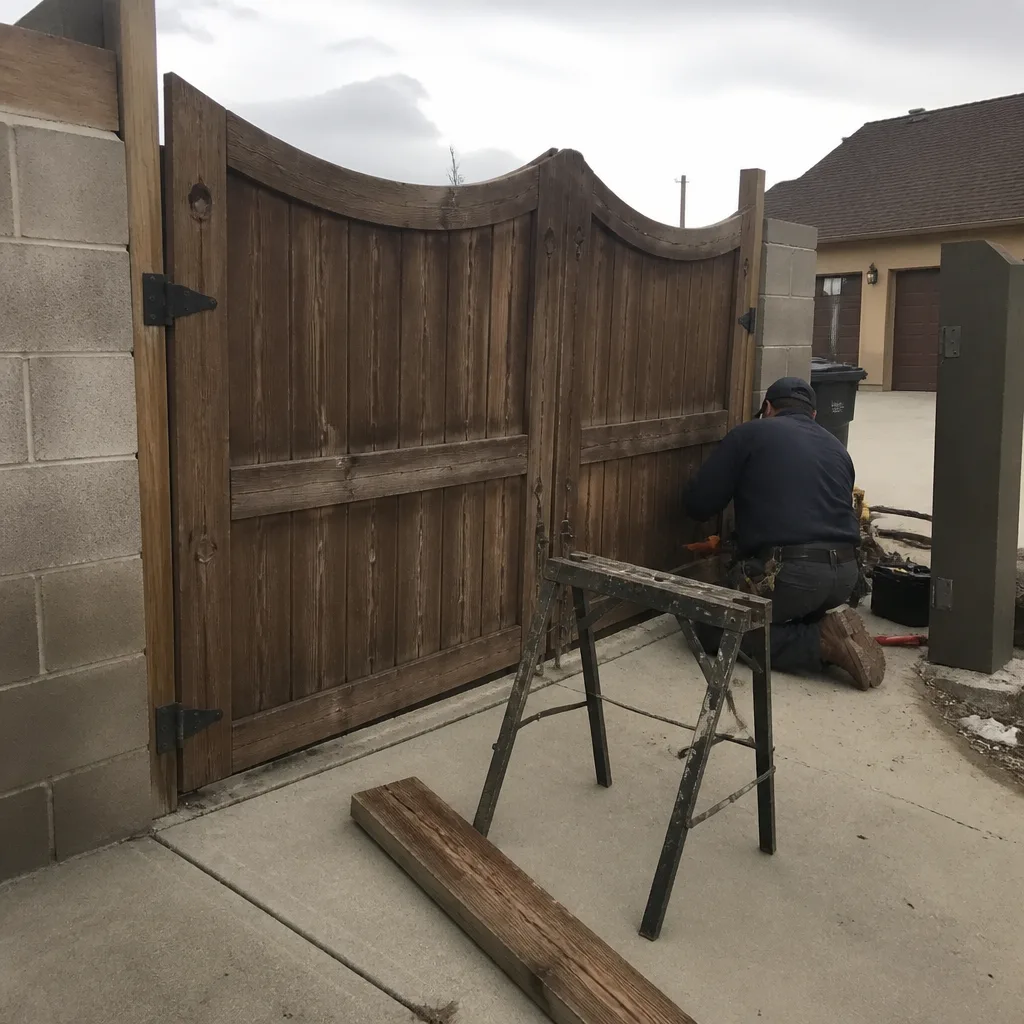
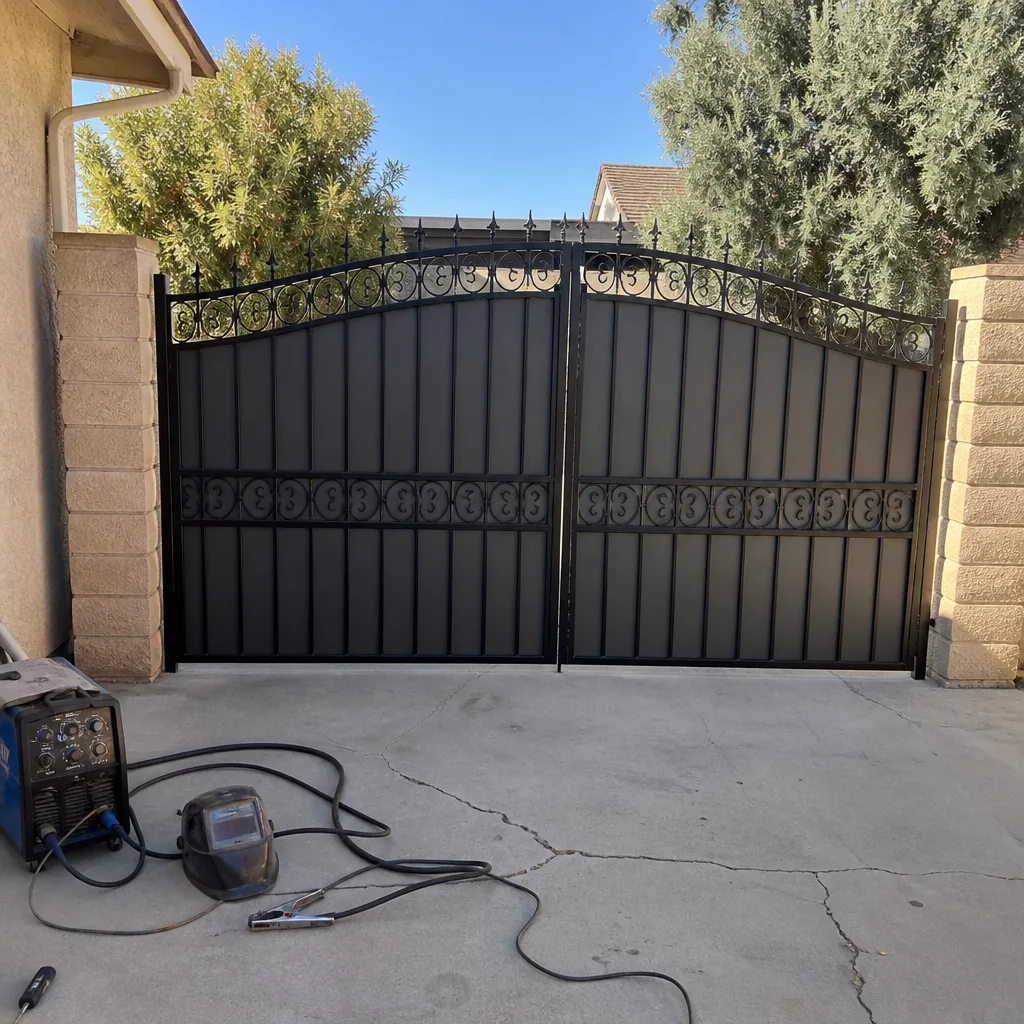
See the difference
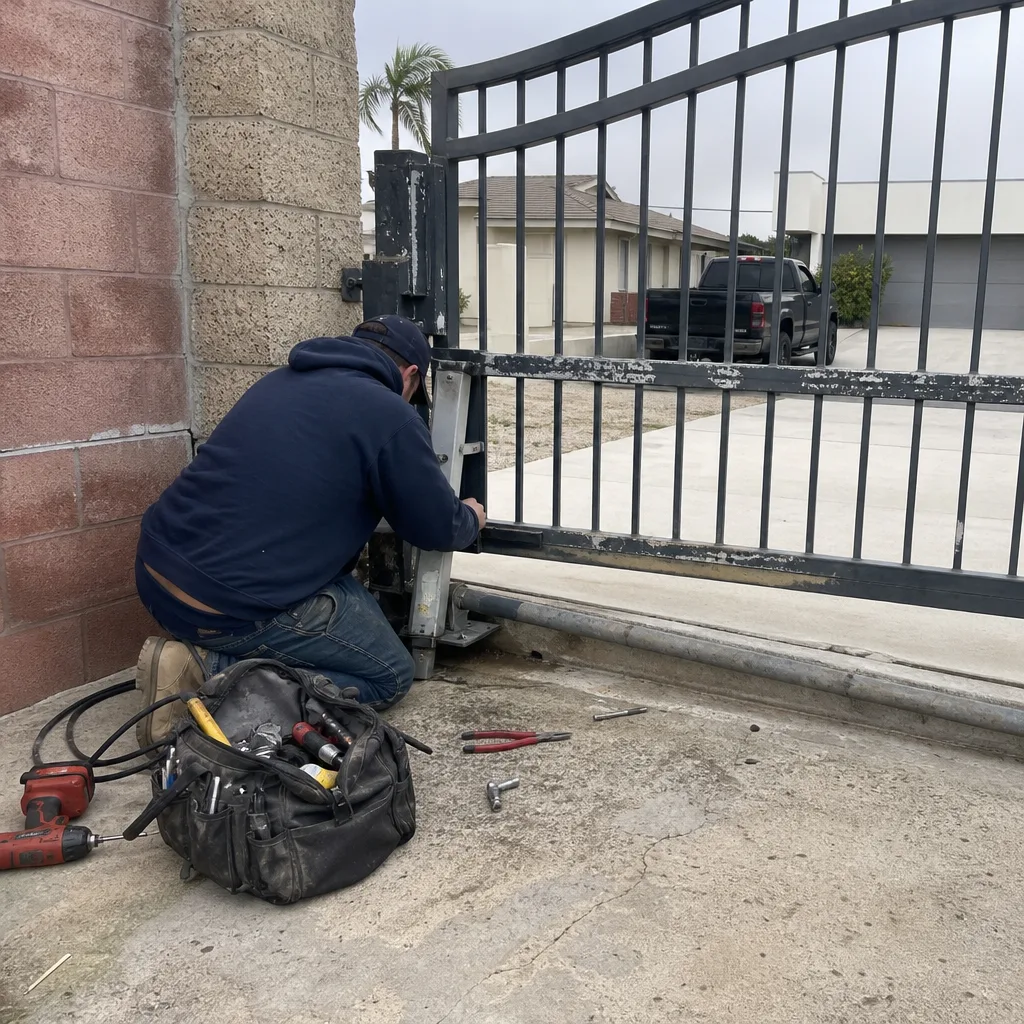 Before
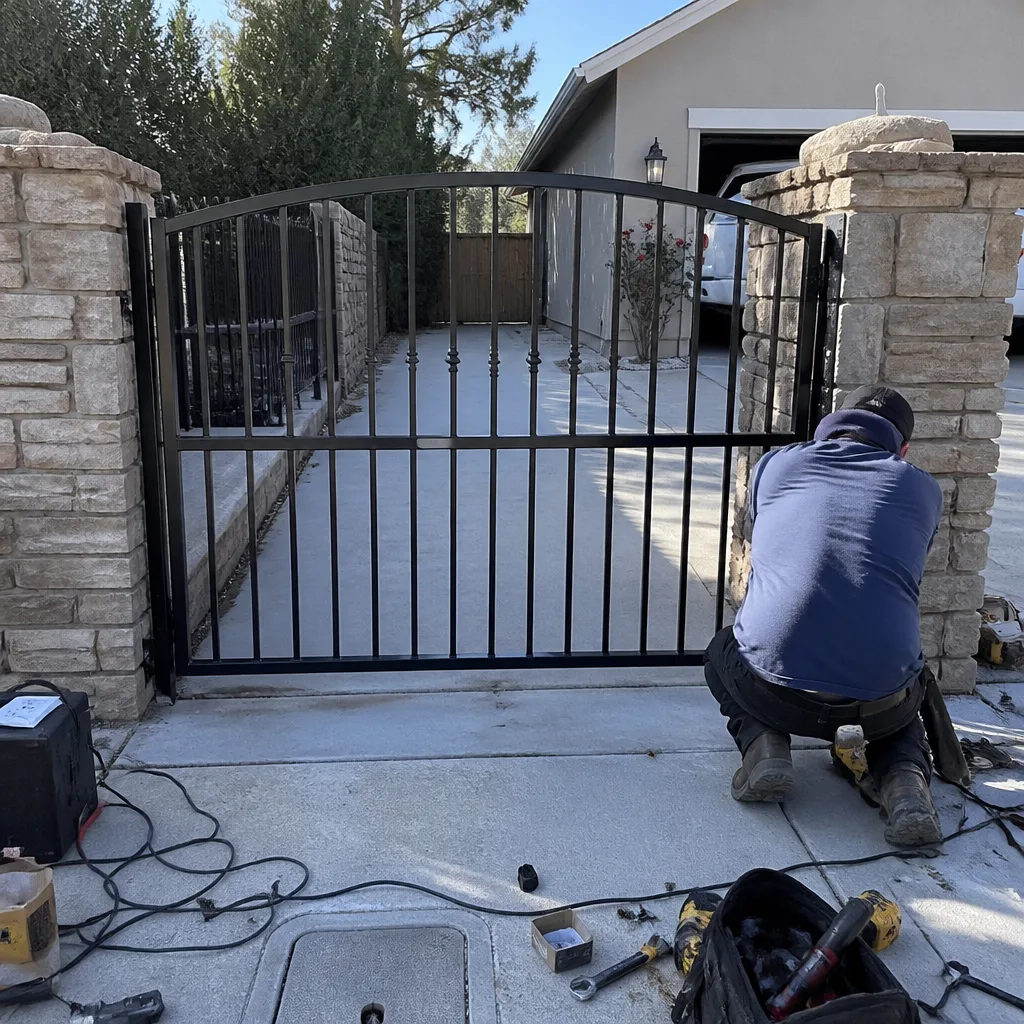 After
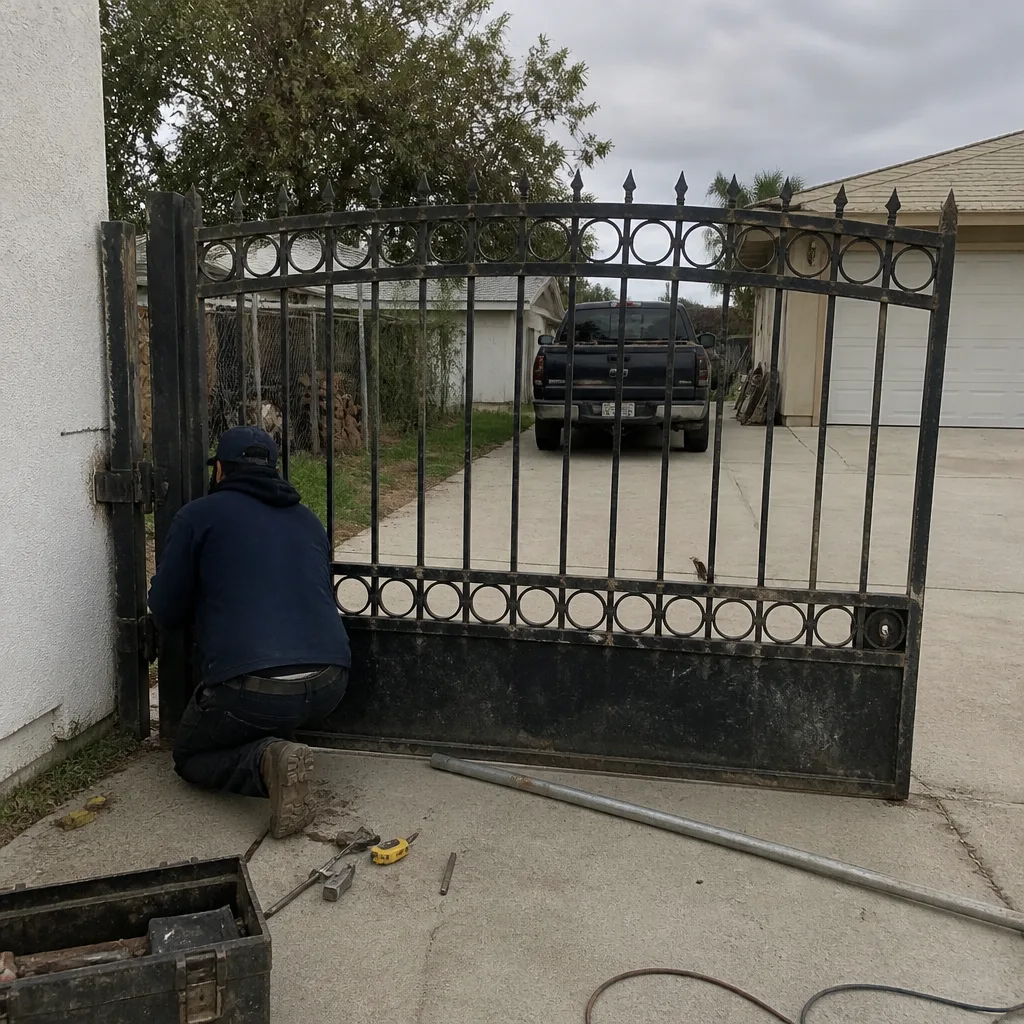 Before
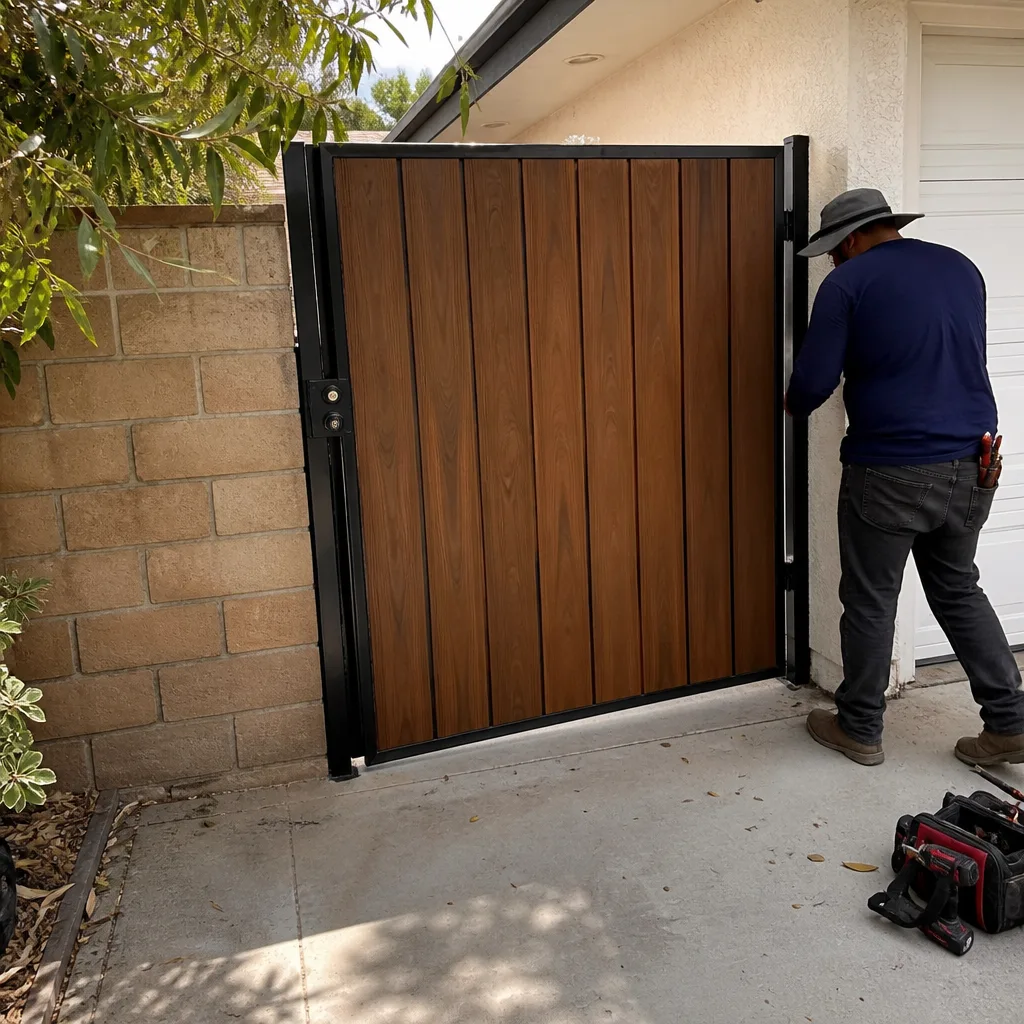 After
 Before
 After